



Backyard Harvests Reduce Waste
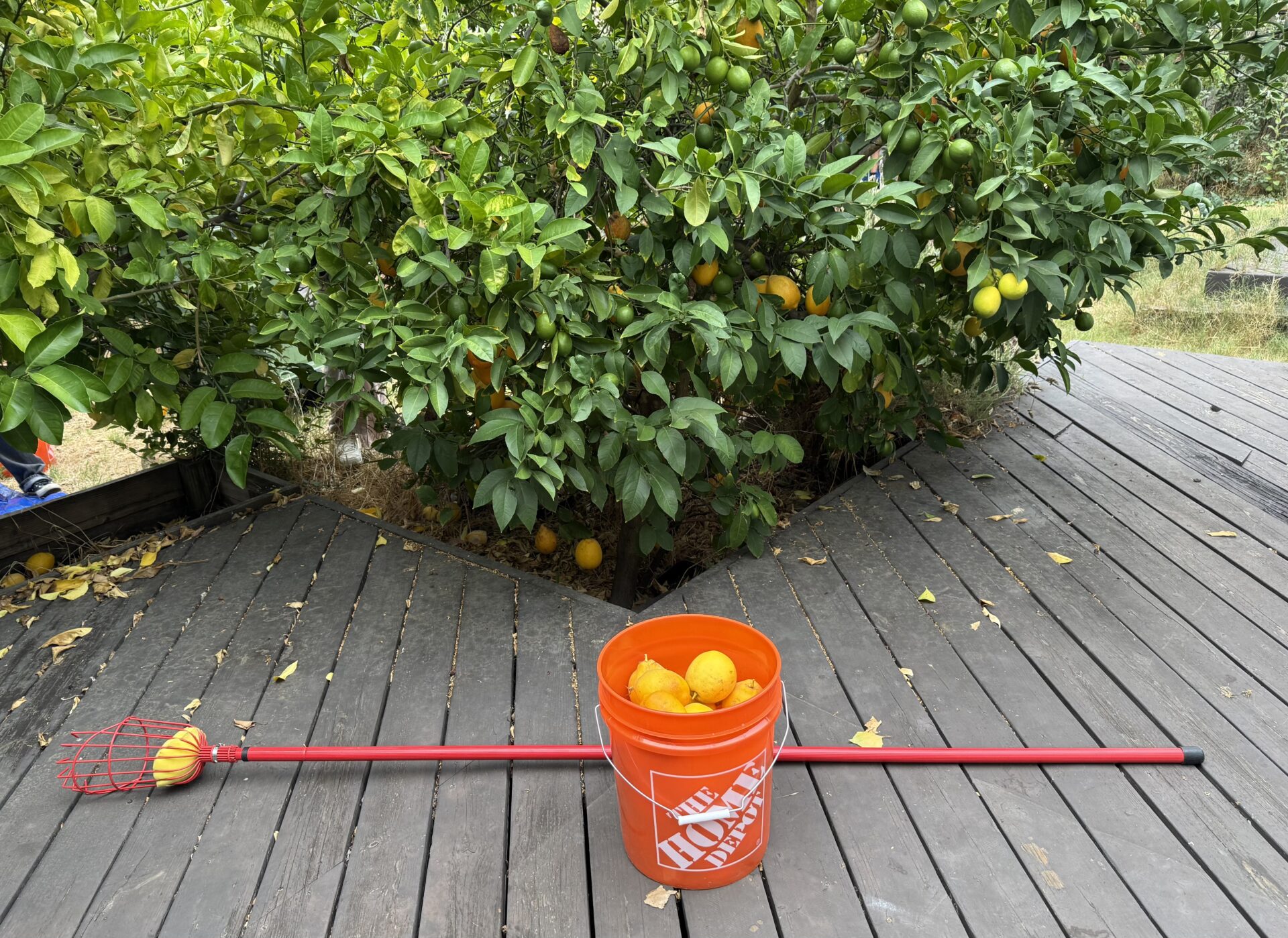
Lemons homegrown in Santa Clara. Photo: Stephanie Lam
In the backyard of a Santa Clara home, scores of ripe yellow lemons and green apples dangle from overgrown trees.
If the fruits aren’t picked and consumed within a few weeks time, they will all rot on the branches, releasing harmful gases and contributing to the roughly 677,167 tons of organic materials wasted by Santa Clara County residents each year.
Unless Cupertino resident Vidula Aiyer can get to the bounty first.
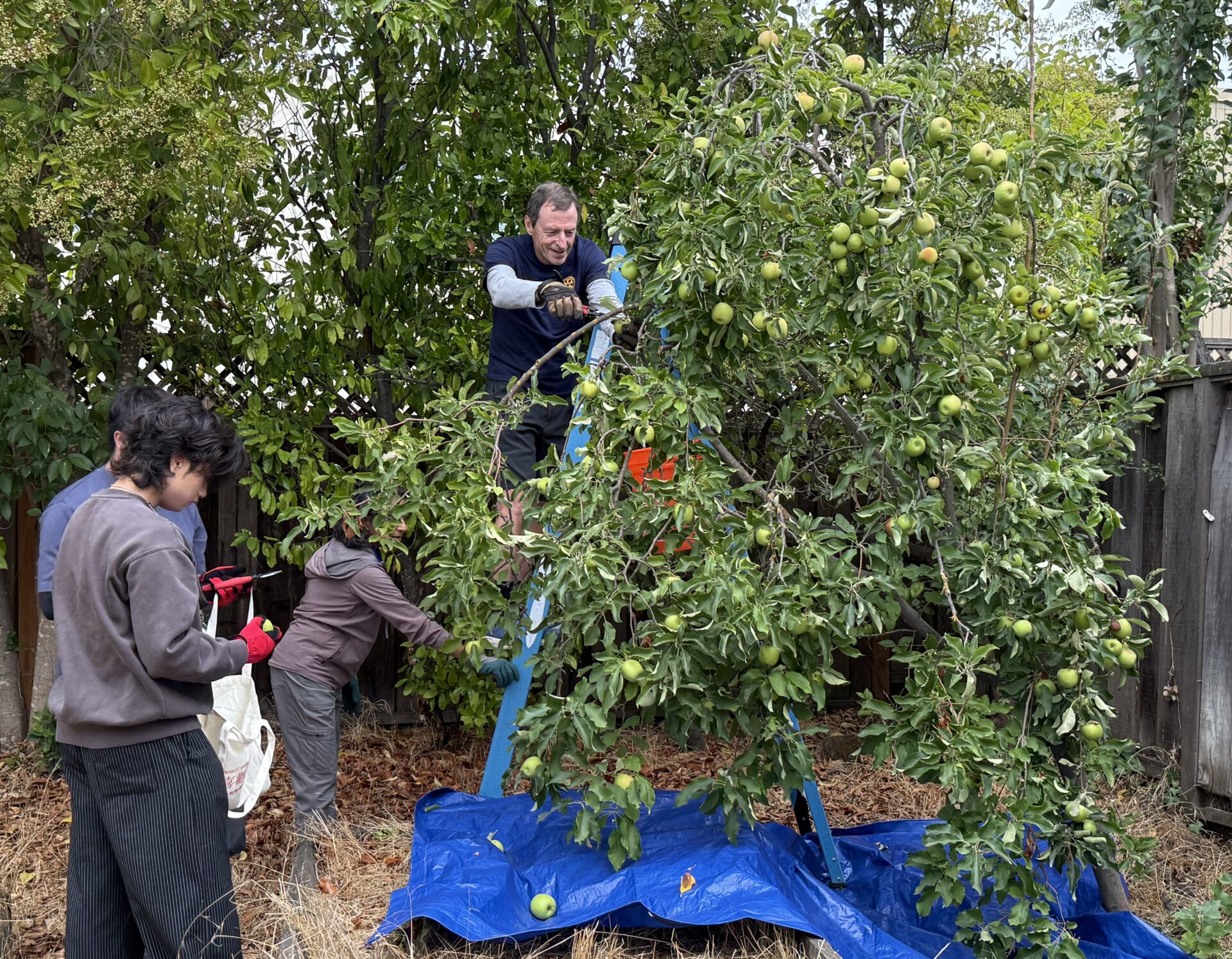
Volunteers harvest apples from an overgrown tree in a backyard in Santa Clara. Photo: Stephanie Lam
Aiyer leads the city’s only backyard fruit harvesting program, which launched in April and is sponsored by the Rotary Club of Cupertino. Once a month, Aiyer and a team of volunteers will answer requests from local residents to pick up leftover produce from their backyards. Fruits are plucked and placed in plastic buckets before getting dropped off at West Valley Community Services, an organization that helps food-insecure families in the South Bay.
The fruit-picking efforts are also a way to keep good produce out of landfills and composts, Aiyer says. Her small team can pick tens of pounds of fruits with each visit.
“We’re not just driven by how much we can harvest. The goal is to eliminate wastage,” she says. “We want people to become a little bit more aware of what is happening in their yards.”
Aiyer isn’t the only local mobilizing to salvage backyard fruits. Across the Bay Area, similar harvesting programs are in full bloom, spurred on by people’s desire to cut back on food waste and support local food pantries.
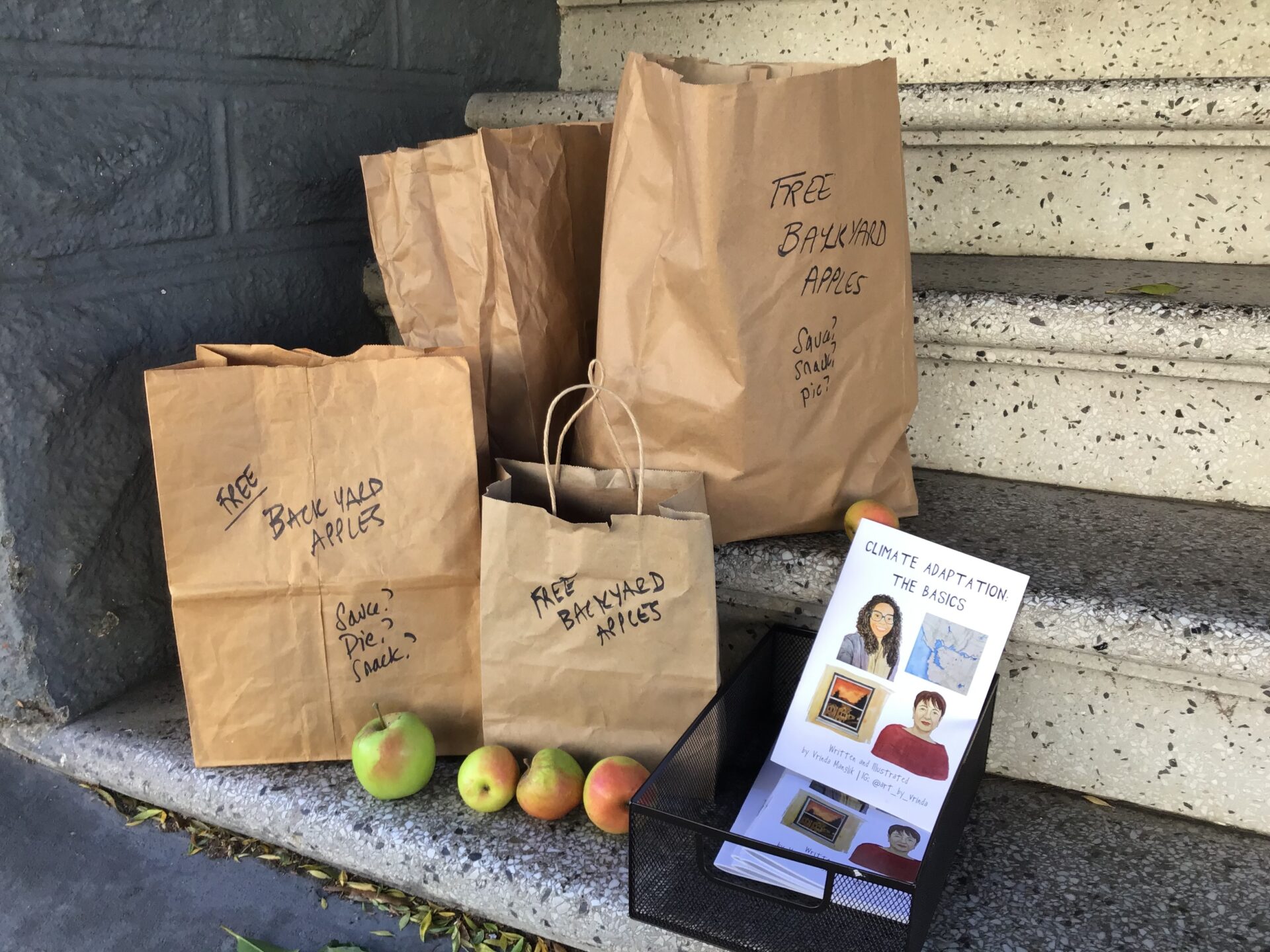
Backyard apples shared on a San Francisco stoop. Photo: Ariel R Okamoto
Food waste is estimated to represent 30-40% of the nation’s food supply, according to the U.S. Department of Agriculture. Rotting produce can release methane, a greenhouse gas 25-times stronger than carbon dioxide. Methane accounts for one-third of all human-caused greenhouse gas emissions and generates 8% of greenhouse gases annually, according to the Food and Agriculture Organization of the United Nations.
In San Francisco, the nonprofit volunteer group Village Harvests collects up to a quarter of a million pounds of fruit each year from homes and small orchards. On a weekly basis, members of the Alameda Backyard Growers, which is a network of gardeners in Alameda, visit different homes to pick fruits. Contra Costa Fruit Rescue also has harvest events in the Pleasanton, San Ramon, and Danville area, and kept 81,552 pounds of fresh fruit out of the trash this year.
There are plenty of other reasons why these harvest events are popular among community members, according to Village Harvest. They provide opportunities for neighbors and community organizations to build camaraderie, preserve agricultural heritage and skills, and promote the sustainable use of urban resources.
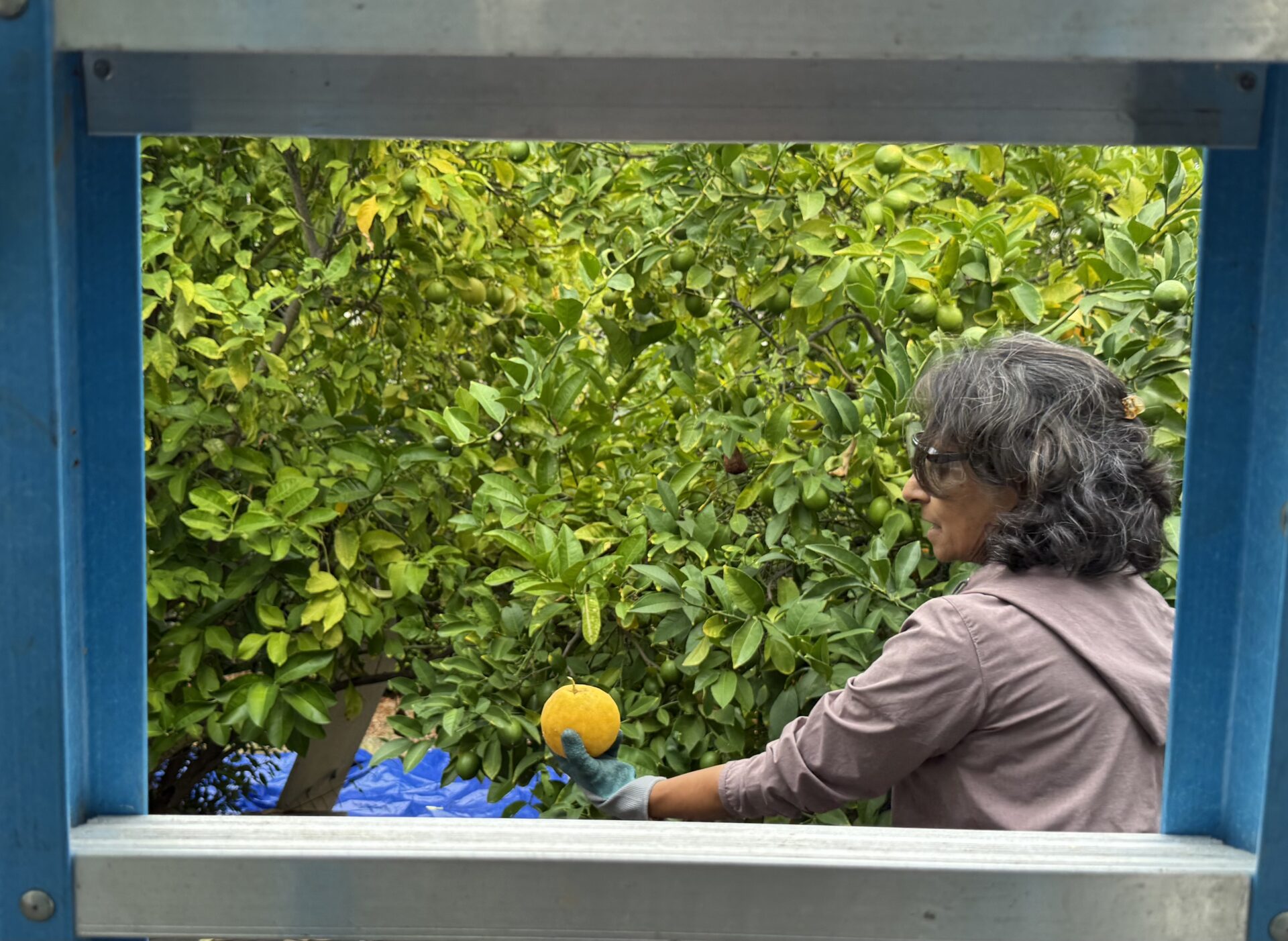
Vidula Aiyer picking lemons. Photo: Stephanie Lam
On a recent Sunday in September, Aiyer was picking lemons and apples from the Santa Clara home along with a few college-age students and fellow Rotary Club member Steve Lefevre. A gardening enthusiast, Lefevre says the harvest events provide him with an outlet to do what he loves.
“It’s kind of fun to do both,” Lefevre says, his body sticking out from behind a lemon tree. “You get some fresh air and do some good.”
Other Recent Posts
Fire Weather in the Wind
As the hot Nevada air cools every fall, it gets pushed west to lower pressure areas over the Central Valley, where the wind heats up and dries out.
My Morning Cleaning Up the Oakland Estuary
On Oakland’s Creek to Bay Day, I joined 100 volunteers for I Heart Oakland-Alameda Estuary to remove shoreline trash.
RCDs Pay Extra Attention to North Bay High Schoolers
A $15,000 grant will help three North Bay conservation districts evaluate youth education programs and prepare high school students for environmental careers.
Creeks Make Good & Bad Homes
San Jose State researcher Costanza Rampini explores why the houseless favor creek banks, and how they weather the flood risk.
Bay Area Braces for Record-Breaking El Niño
Record high water temperatures in the Pacific are expected to bring dangerous sea level rise, waves, and rain to the region this winter.
Regional Housing Agency Invests in Affordability
The Bay Area Housing Finance Authority is launching a loan program to support the construction of mixed-income rental properties.
The End is Coming for California’s Untouchable Grass
The law, which applies to grass that isn’t used for recreational purposes, could cut urban water use across California by more than 20% says Oakland thinktank.