



Purple Air Warnings Not Enough
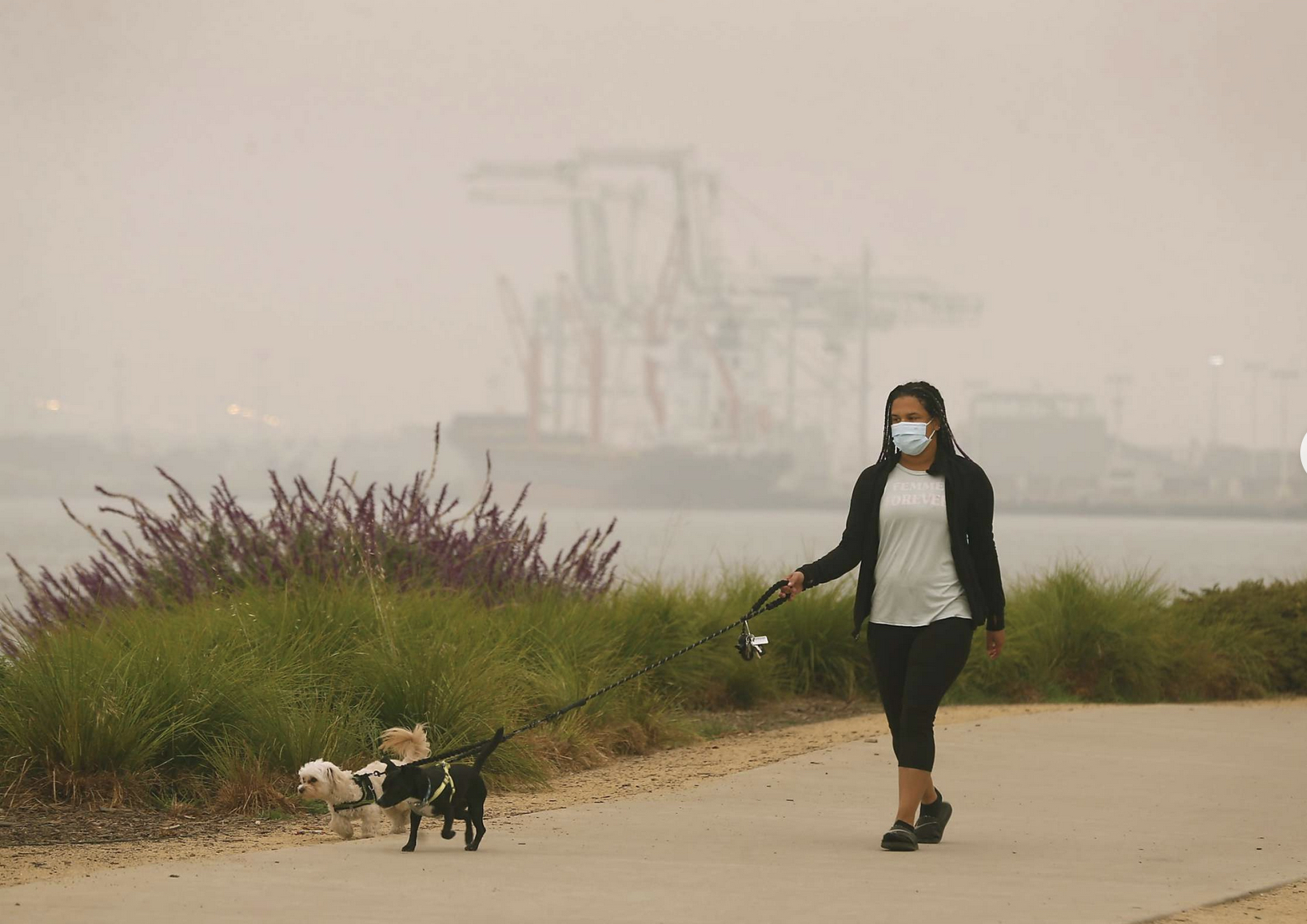
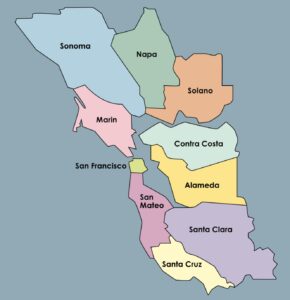
If late fall fires start up again after the October deluge, Alameda County will already have smoke alert protocols in place. The county developed specific thresholds and delivery systems for alerts over the past two years. “Our geography creates a particular need for us to address smoke,” says county sustainability project manager Sarah Church. Church earned the title “smoke quarterback” from her work convening a variety of partners in county health, emergency, and environmental services to discuss how to address the smoke, which blanketed much of the East Bay for long unhealthy periods of “red air” in recent summers. With prevailing winds off the Pacific blowing up against the East Bay hills, smoke often gets trapped in low inland areas of the county.
In crafting their new alerts, the county also worked to remove jargon and use plain language. The “Purple Air” real-time air quality app is not a click away on a smart phone for all, for example. “We found when we tested messages using EPA terms like ‘orange air’ and ‘red air’ for levels of air pollution, people didn’t know what we were talking about,” says Church.
Results of focus groups also suggested that some members of public were less likely to pay attention to county smoke alerts on their phones or Facebook than to information from a trusted local institution. As a result, the county created a new subscription within their alert system available to community institutions such as churches, youth organizations, senior centers, and worker centers.
The county also defined air quality thresholds and duration periods for alerts, and protocols for county health and other officials to implement. Experience with these air quality communications also informed the county’s COVID-19 response.
Such protocols are part of a body of fast-developing models for better regional communication about when to close schools or how to manage clean air shelters, among other wildfire season challenges discussed at a recent meeting of the Bay Area Climate Action Network, where Church shared what she learned with other cities and counties.
“Climate change threats are now, and we all have to come up to speed very quickly, ” she said. “No one can do it alone.”
Other Recent Posts
Regional Housing Agency Invests in Affordability
The Bay Area Housing Finance Authority is launching a loan program to support the construction of mixed-income rental properties.
The End is Coming for California’s Untouchable Grass
The law, which applies to grass that isn’t used for recreational purposes, could cut urban water use across California by more than 20% says Oakland thinktank.
Sonoma Vineyard Workers Burn toward a Better Future
A group of immigrant farmworkers are forming a worker-owned cooperative to bring back Indigenous burning practices that used to revitalize the soil.
Los trabajadores de los viñedos de Sonoma queman por un futuro mejor
Un grupo de trabajadores agrícolas inmigrantes está formando una cooperativa de propiedad de los trabajadores para recuperar las prácticas indígenas de quema que solían revitalizar el suelo año tras año.
New Voices Shape Design of Berkeley’s North Basin Strip
Twenty acres of parkland between the highway and the Berkeley shore are slated for a coast-resilient makeover, with input from locals and stakeholders.
It’s Always Sunny In North Fair Oaks
Residents of the unincorporated community launched their second campaign in two years to get the county to care for dying street trees.
Siempre está soleado en North Fair Oaks
Los residentes de la comunidad no incorporada lanzaron su segunda campaña en dos años para lograr que el condado se ocupe de los árboles de la calle que se están muriendo.
Can Nature Help California’s Coast Fight Fire and Floods?
Local and state leaders gather for September summit on how to mainstream nature-based infrastructure.
Guide to Nature-Based Infrastructure Around the Bay Area
Regional leaders are testing eight types of climate adaptation and shoreline flood protection projects that work with nature instead of against it. Here’s an overview.
How Can I Get Clean, Green, Climate-Forward Job Training in the Bay Area?
Looking for a hands-on job working outdoors that actually pays? Here’s a list of training programs.