

Weaving Fire Protection Out Of What’s Already There
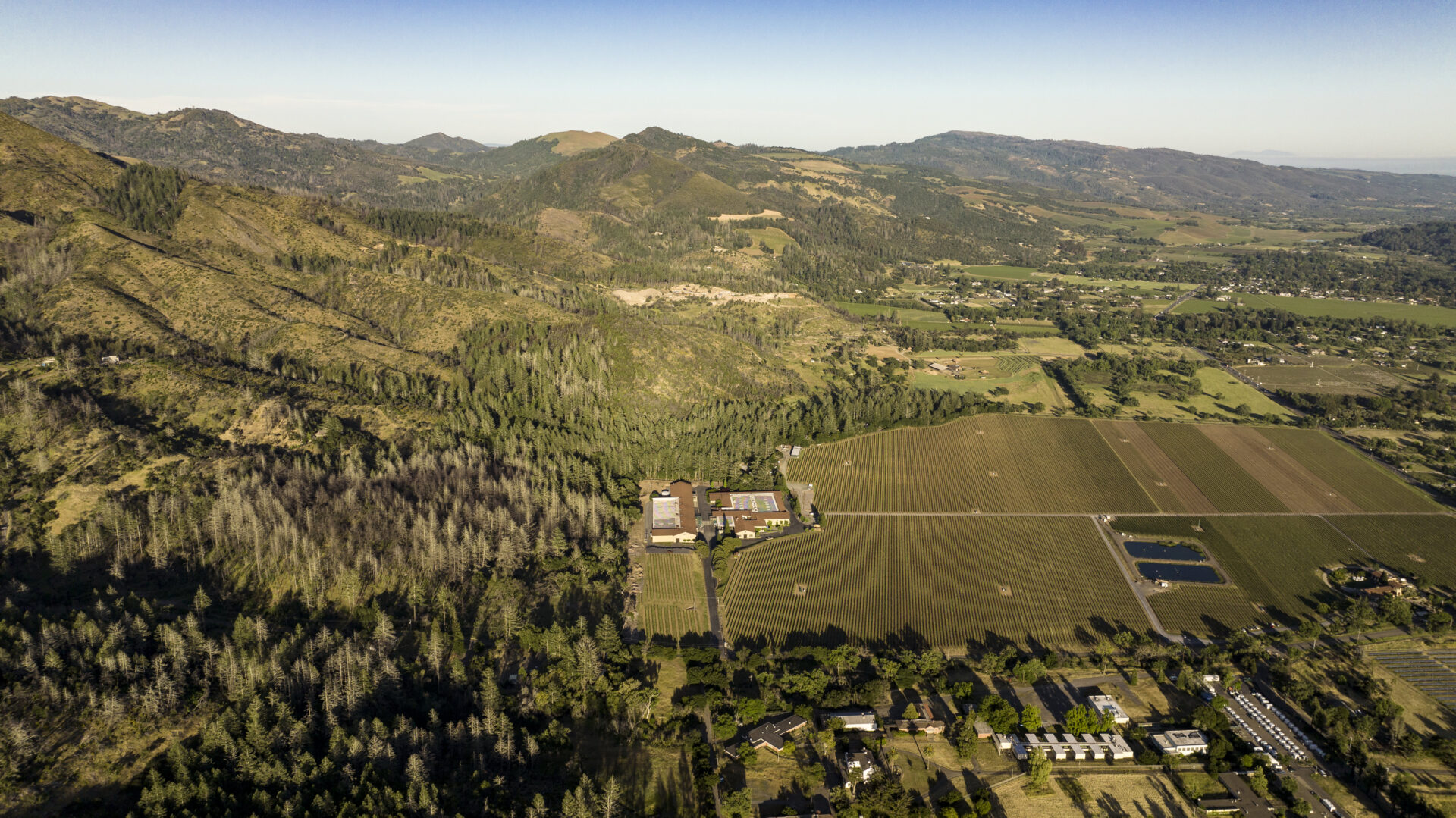
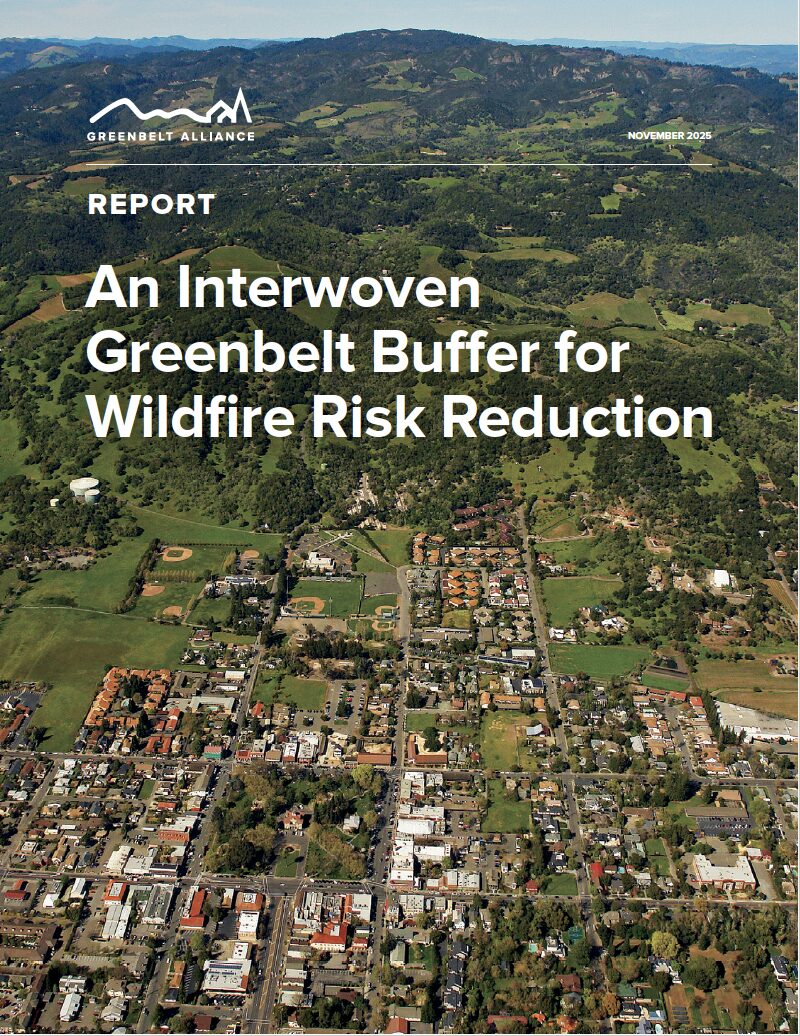
In the hillsides above Sonoma Springs, a patchwork of vineyards and oak woodlands already does something remarkable: it slows wildfire. The challenge is figuring out how to stitch together this natural advantage with the surrounding land into something that can protect an entire community.
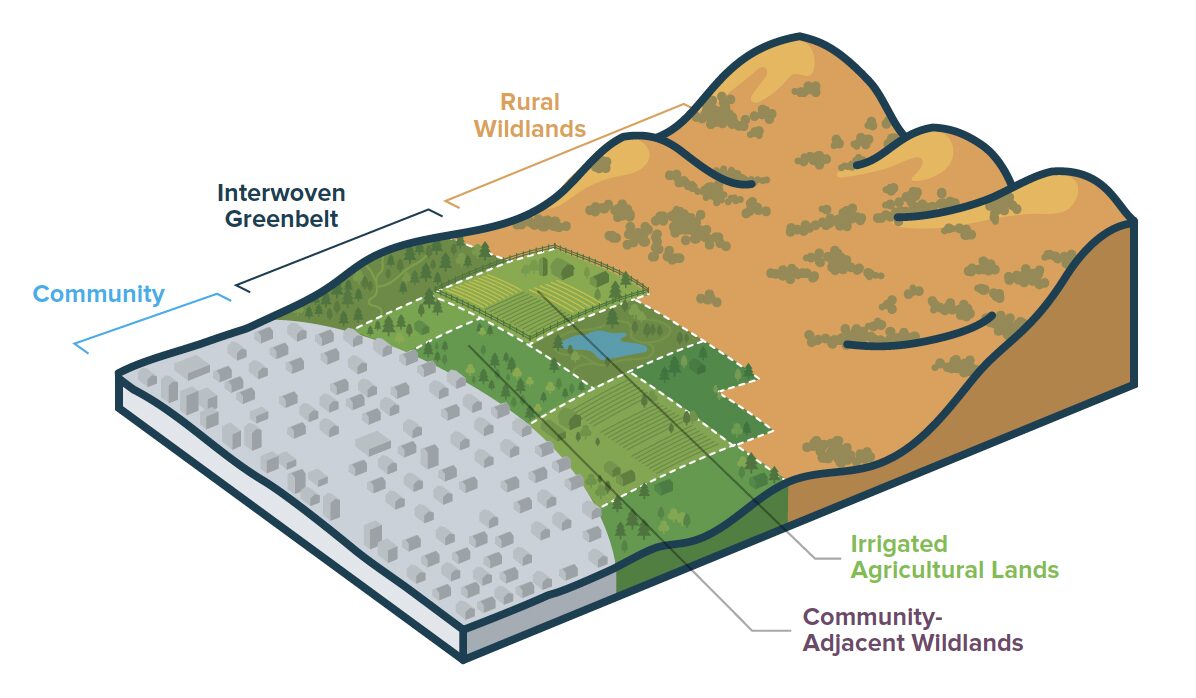
That’s the puzzle the Greenbelt Alliance tackles in their latest report, and the solution they’ve landed on is refreshingly pragmatic. Instead of trying to buy up and convert a continuous ring of publicly owned greenbelt — impossibly expensive in places where houses nestle between working vineyards and private woodlands — they propose knitting together what’s already there. They call it the Interwoven Greenbelt Buffer: a mosaic of irrigated farmland, managed grasslands, and strategically thinned forests that collectively mimics the protective effects of a traditional greenbelt.
The pilot site reveals why this matters. Sonoma Springs is typical of vulnerable communities across the West: dense residential development bleeding into hillsides owned by dozens of small private landowners, with narrow evacuation routes and a population that includes many renters and non-English speakers who face extra barriers to preparing for fire. One in eight Californians now lives in the most dangerous fire zones, and insurance companies are bailing.
Art: Greenbelt Alliance
Other Recent Posts
Agroecology Commons Weathers a Weird Winter and Political Storms
A year after our first Agroecology Commons visit, the El Sobrante farm has a new greenhouse foundation, thriving farmer training program, and some unexpected wildlife.
Finding Community at the Bay Area Climate Literacy Exchange
A third of our food supply goes to waste, and Bay Area students are learning how to fix it one school cafeteria at a time.
Easy Spring Vegetables for Small Gardens
Snap peas and Tokyo turnips are hardy, cool-season vegetables well-suited to Bay Area gardens. Here’s how to grow and cook them.
At Canticle Farm, Food and Community Are Prayer for a Better World
On a residential street in East Oakland’s Fruitvale neighborhood, a front yard becomes a food distribution network every Friday.
What Do Teens Think is Healthy Food?
Student reporting fellow Sachi Bansal asks three high school seniors in Fairfield about how they define healthy food, and what they think of the new food pyramid.
En Canticle Farm, la comida y la comunidad son las oraciones para un mundo mejor
Canticle Farm está reinventando el concepto de vecindario a través de la tierra compartida, la comida gratuita y la acogida radical.
En la granja agroecológica Agroecology Commons, las nutrias han vuelto
Un año tras nuestra primera visita a Agroecology Commons, la granja en El Sobrante tiene una nueva base para un invernadero, un próspero programa de entrenamiento para agricultores y una fauna inesperada.
The report breaks the landscape into four zones, each with its own fire personality and management needs. The Community Zone, the residential core, needs widespread home hardening and defensible space. The Community-Adjacent Wildlands Zone faces the biggest challenges for resilience, with steep slopes and many privately-owned parcels. The Agricultural Zone includes the irrigated vineyards that proved their worth during the 2017 Nuns Fire in Sonoma, and can serve as a crucial fire break. And the Rural Wildlands Zone is a critical habitat and migration pathway with fire-adapted species that can benefit from prescribed burns.
Greenbelt Alliance lays out examples of what it will take to make this work: funding mechanisms like assessment districts or insurance partnerships, policy tools like overlay zones, and a coordinating body — perhaps a Fire Safe Council, homeowner’s association, or joint powers agreement — to herd all those private landowners toward collective action. It’s complex, admittedly. But it’s easier than relying only on land acquisition and easements — and it’s a lot easier than living in the path of fire without help.