



Feds Shoulder Marin City’s 80-Year-Old Drainage Problem
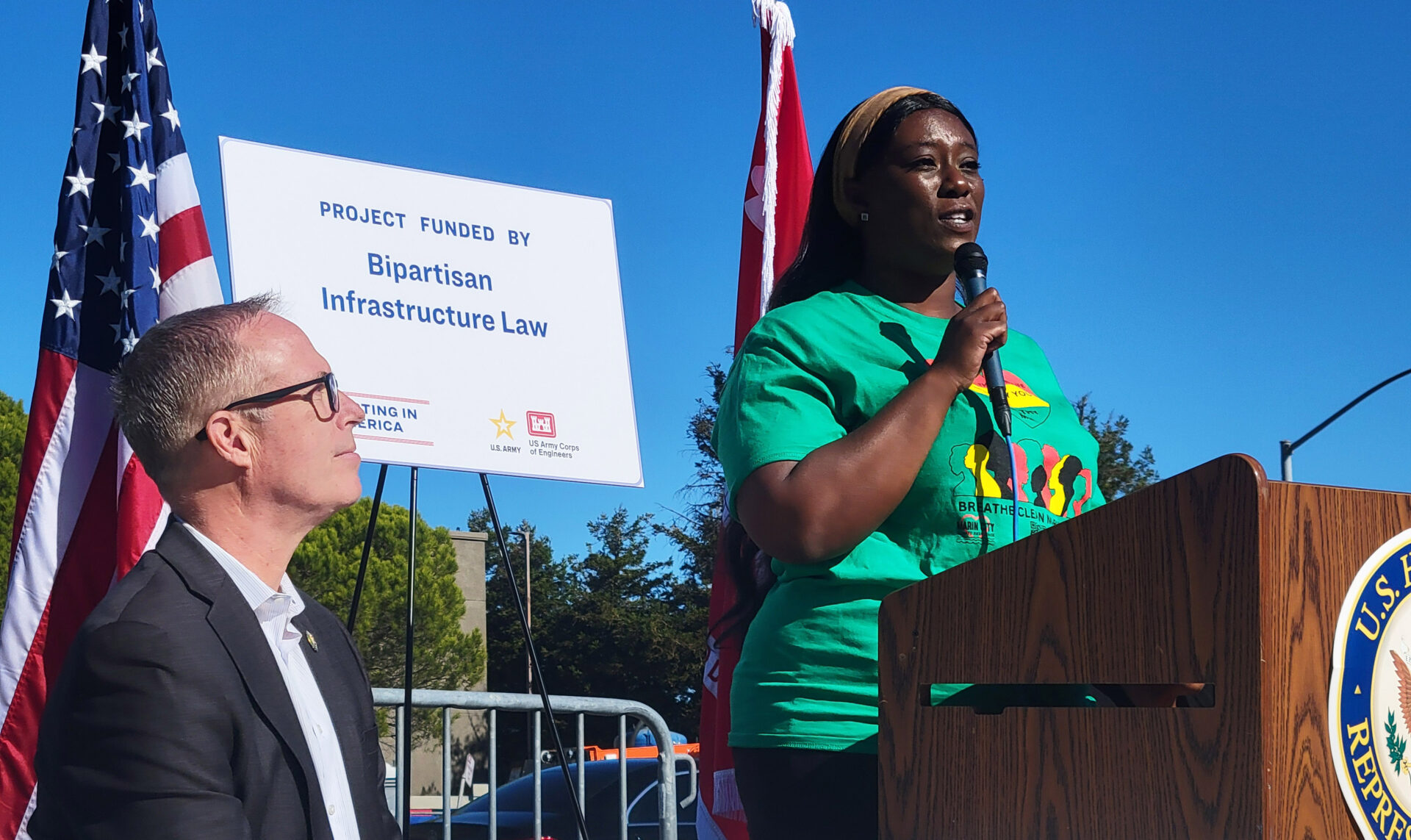
Resident Chinaka Green and Congressman Jared Huffman at the press conference. Photo: Brandon Beach, USACE
In Marin City, floodwaters have been a chronic reminder of the community’s long-standing neglect — but a federal project could finally break that cycle. Marin City was selected to be one of 12 communities across the country who will participate in a Congressional Pilot Program led by the U.S. Army Corps of Engineers, for which the federal government will cover 100% of the cost of a flood-reduction project in Marin, up to $13.5 million.
At a kick-off event on November 7 at the corner of Donahue and Drake, residents and activists shared their experiences with 80 years of constant flooding.
Donald Smith has lived in Marin City for 76 years. “There used to be a barber shop right over there named ‘Clarence,’” he said. “You had to have a weather map to go get a haircut because you don’t know if it’s going to be flooded out or not.”
Chinaka Green, associate director of Marin City Climate Resilience, described having to park in Sausalito and walk home after the Marin City exit flooded. “My son and I were pretty tall, and the water was to our knees,” she said. She walked alongside other families, who had to carry their small children on their shoulders. “We do deserve better here in Marin City. We don’t deserve to continue to have to walk through contaminated flood waters.”
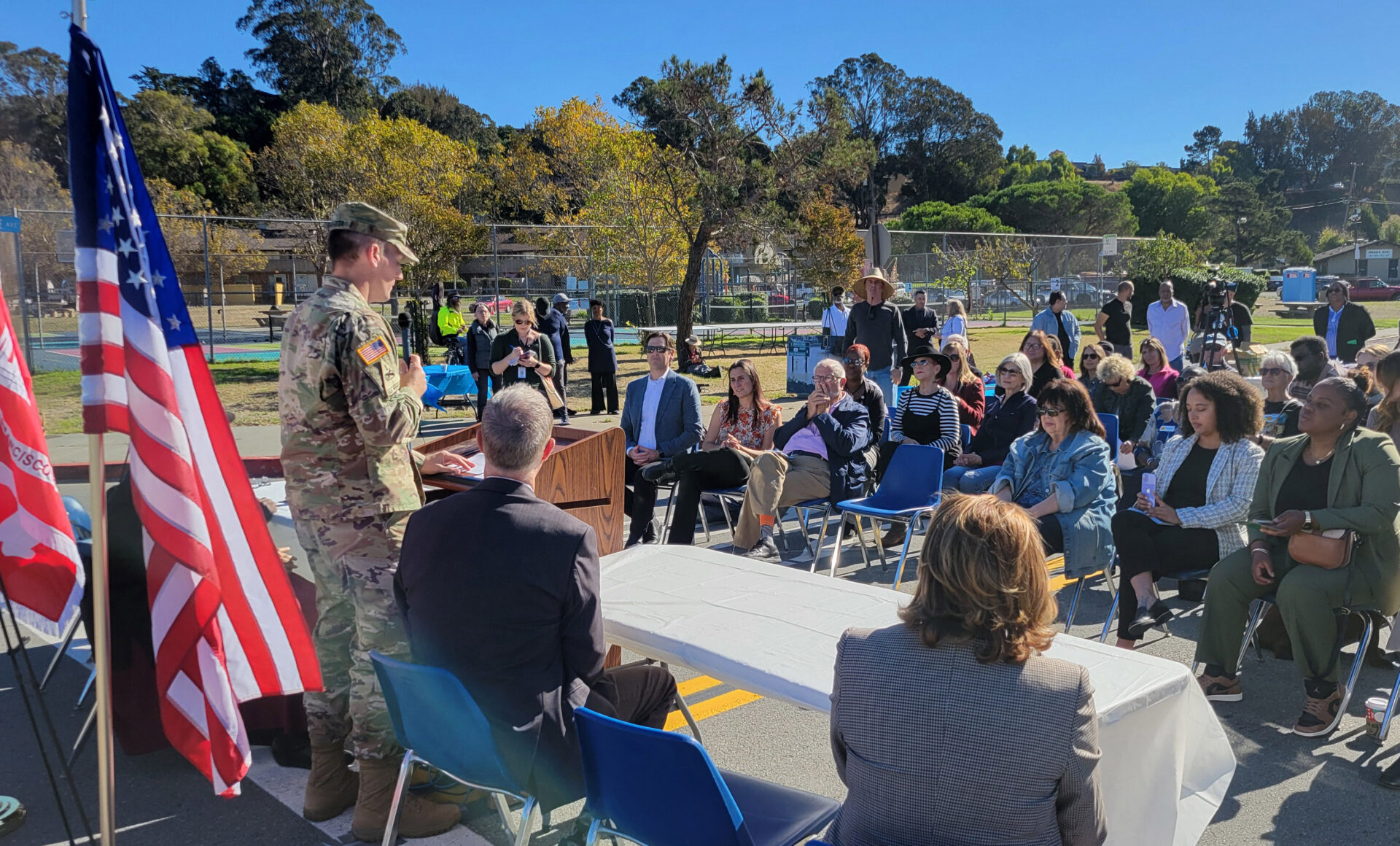
Timothy Shebesta, Commander of the USACE San Francisco District, speaks to the community. Photo: Brandon Beach, USACE
In the background, a construction crew installed a temporary drainage system on Donahue St. to relieve flooding in the short-term; the Army Corps project will develop a more permanent solution.
Congressman Jared Huffman described the program as a “shining star of good news.” “Can everyone hear me over the construction noise?” he laughed. “We want to hear more construction noise in this community.”
He recognized that the primarily Black community, founded during World War II as workers migrated from the South and Midwest to build ships in Sausalito, has been long neglected. “The community qualifies for reparations and should be given high priority due to the historic institutional racism that residents have suffered for generations,” he said.
Funding for the pilot comes from the Bipartisan Infrastructure Law passed by Congress in 2021, and authorized under Section 165(a) of the Water Resources Development Act of 2020. This new authorization allows the Corps to pursue small civil works projects and to pay 100% of the cost, rather than requiring local cost sharing.
Next, the Army Corps will coordinate with the Marin Community Services District on a project management plan and partnering agreement before officially kicking off work on a feasibility study in 2025. According to the Corps, the planning team will then explore a suite of alternative solutions to the city’s flooding issues with community input driving the process.
Other Recent Posts
New Study Shows Rain Gardens Filter Chemicals Out of Stormwater
Scientists found rain gardens dramatically reduce toxic chemicals in stormwater while providing biodiversity and cooling.
The Tricky Art of Growing Oysters in the Lab So They Can Survive in the Field
The Nature Conservancy, the Amah Mutsun Tribal Band, and others are growing oysters in the lab and planting them in the wild in estuaries around San Francisco Bay.
Printing Without Plastic: The Vintage Machine Winning Over Eco-Conscious Artists
This comic guide to risograph printing explains how the 1980s Japanese machine cuts energy use and avoids plastic toner.
East Bay Kids Fight Extreme Heat in their Schoolyards
Many California schools are ill-equipped to tackle heat, with many campuses lacking sufficient tree coverage. These students are fighting to change that.
How a North Bay Regional Park Helped Me Reconnect With Nature — and Myself
A young Fairfield resident reflects on how hiking during the pandemic became a refuge from digital overload and the growing realities of climate change.
Wild Pigs Rough Up Bay Area Greens
They tear up landscapes in search of food, prey on native wildlife, and damage streams, and warming could bring them closer to urban areas.
Residents Chose Different Ways to Respond to Contra Costa Flood Challenges
Graduates of a shoreline leadership program in Contra Costa County recently pitched their ideas for sea level rise education and adaptation.