


Regional Storm Capture Facility Going to Ground
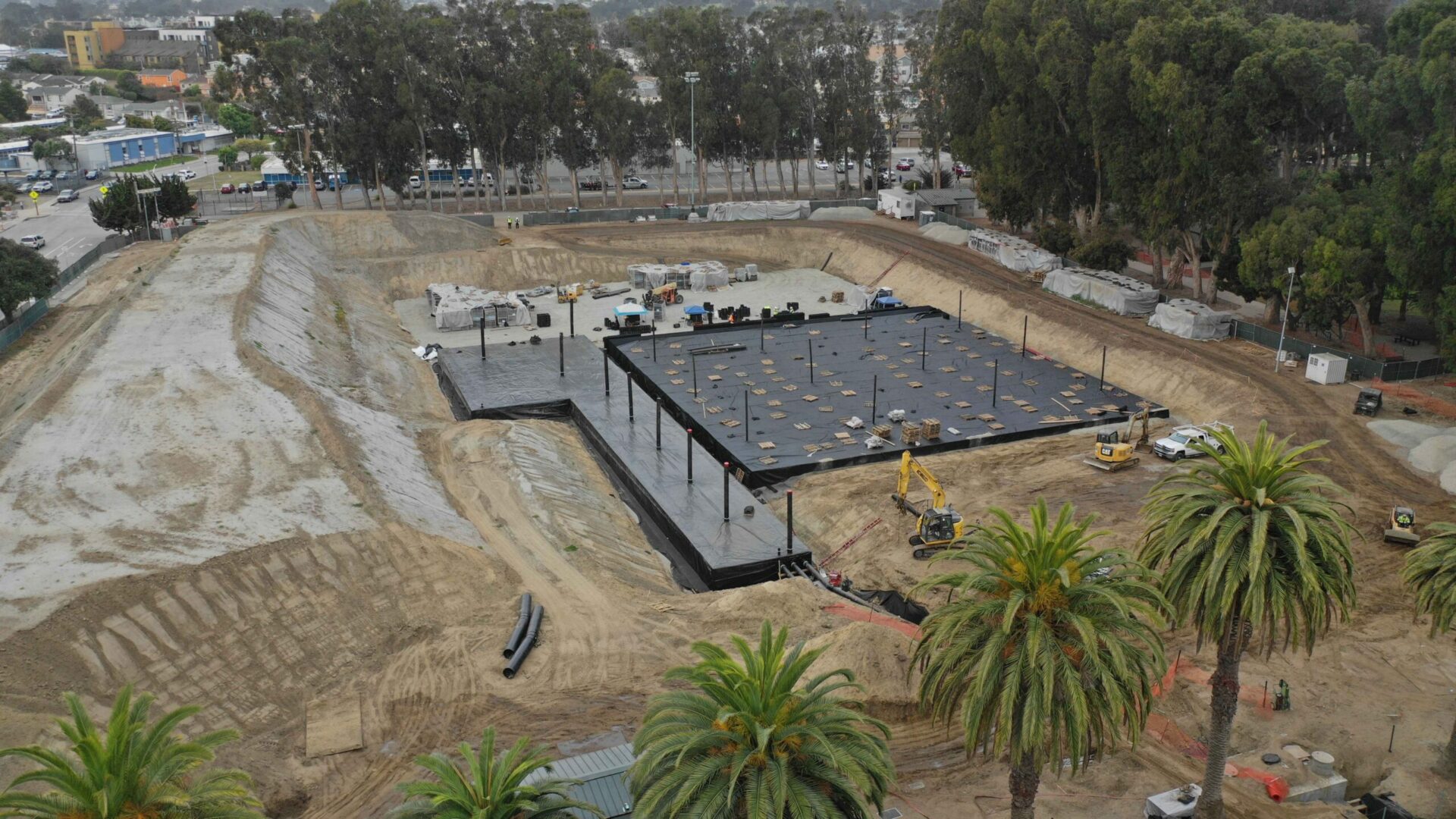
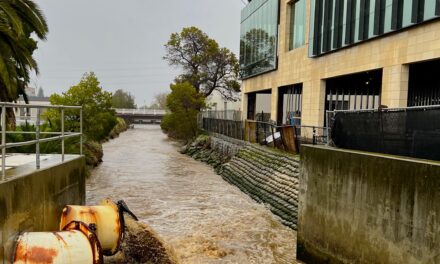
With rains overwhelming local drains in late October, the visible construction progress over the summer on Orange Memorial Park, a regional stormwater capture facility in South San Francisco, seems timely.
More than 6,500 acres of the Colma Creek watershed, in six municipalities, drain through the new regional facility. The facility, scheduled for completion in 2022, includes trash screens, a sediment removal chamber, and a giant storage basin under sports fields. It is designed to filter pollutants in runoff, percolate groundwater, and irrigate local parks and trailsides (offsetting potable water demand).
Former San Mateo County stormwater director Matt Fabry calls it “An ambitious multi-benefit project with water quality and resilience benefits.”
Areas sensitive to erosion on the half-constructed park weathered the recent atmospheric rain event under tarps and behind silt fences.
Current construction activities for the complex stormwater capture project are focused on excavation of a large subsurface drainage system. Crews recently installed modules for a 1.4 million gallon-below-ground cistern and infiltration gallery, and are working to connect pipework, maintenance ports and manholes. Installation of the modules will continue into November, followed by back filling of the entire system.
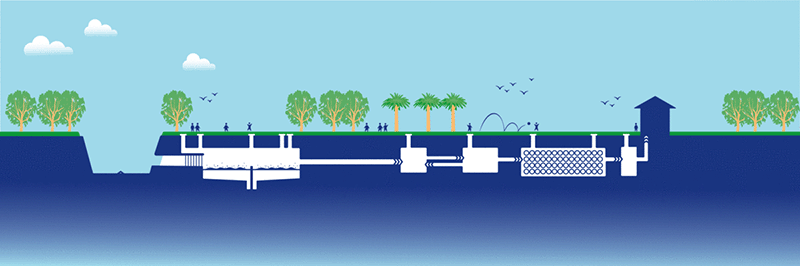
Two parts of the project located within Colma Creek, including a trash and sediment capture system (aka grit filter), required permits from the Peninsula’s fledgling Sea Level Rise and Resiliency District, US Fish and Wildlife, and the Regional Water Quality Control Board. Work in the creek also required completion before October 1 to avoid disturbing birds nesting in the riparian zone. Surface restoration will be a next step.
“We had to switch regulatory gears mid-permitting from the county flood district to the new sea level rise and resiliency district,” says project manager Bianca Liu, from the City of San Francisco. “There’s a lot of eyes on us because this the first regional scale stormwater capture and green infrastructure project, and it sets a precedent for the future.”
Project costs are $15.5 million, bankrolled by Caltrans and local jurisdictions to fulfill stormwater management mandates and mitigate for trash, PCBs, and other polluted runoff to the Bay. The project also optimizes water use and groundwater recharge in times of drought.
“When the capture basin is full, we’ll be putting the excess, clean water rather than dirty water, back into the creek,” says Liu.
The project is one of a variety of multi-partner initiatives to improve water quality and flood capacity along Colma Creek, including projects still in proposal stages inspired by the 2018 Resilient by Design Bay Area Challenge vision for the Colma Creek Watershed.
With Orange Memorial Park under construction, meanwhile, the debate over how to optimize infrastructure investments far into the future now has one tangible new example.
“This wasn’t your typical infrastructure project, the regional scale created a lot of challenges in permitting, funding and interjurisdictional decision-making. Our next challenge will be how to collaborate on O&M,” says Liu, referring to operations and maintenance responsibilities and budgets that no municipality wants to shoulder alone.
Keeping the new park and its complex underground hardware working far into the future won’t be cheap. But kids will be able to kick and bat balls on sports fields on top of the stormwater basin by 2023.
Other Recent Posts
How Can I Get Clean, Green, Climate-Forward Job Training in the Bay Area?
Looking for a hands-on job working outdoors that actually pays? Here’s a list of training programs.
Santa Rosa Residents Rethink Trees
The heat-burdened Roseland neighborhood is learning how to monitor temperatures and developing an action plan focused on tree shade.
How to Make Conservation a Career
California nonprofits are developing paid apprenticeships to prepare workers for the growing ecological restoration economy.
Raft of Resilience Initiatives Keeps Tahoe Blue
Beach robots, boat inspections, forest thinning, and wetland restoration are among the projects helping the lake confront environmental threats.
Weathering the Present While Training for the Future
A stewardship immersion experience from the School for Inclement Weather and Weaving Earth combines ecological knowledge and spiritual connection.
Feds Meddling With Protections For California Coast
NOAA is reviewing California’s Coastal Management Program in a renewed push for offshore oil and gas drilling.
New Study Shows Rain Gardens Filter Chemicals Out of Stormwater
Scientists found rain gardens dramatically reduce toxic chemicals in stormwater while providing biodiversity and cooling.
The Tricky Art of Growing Oysters in the Lab So They Can Survive in the Field
The Nature Conservancy, the Amah Mutsun Tribal Band, and others are growing oysters in the lab and planting them in the wild in estuaries around San Francisco Bay.
Printing Without Plastic: The Vintage Machine Winning Over Eco-Conscious Artists
This comic guide to risograph printing explains how the 1980s Japanese machine cuts energy use and avoids plastic toner.
East Bay Kids Fight Extreme Heat in their Schoolyards
Many California schools are ill-equipped to tackle heat, with many campuses lacking sufficient tree coverage. These students are fighting to change that.