



Feathered Flames

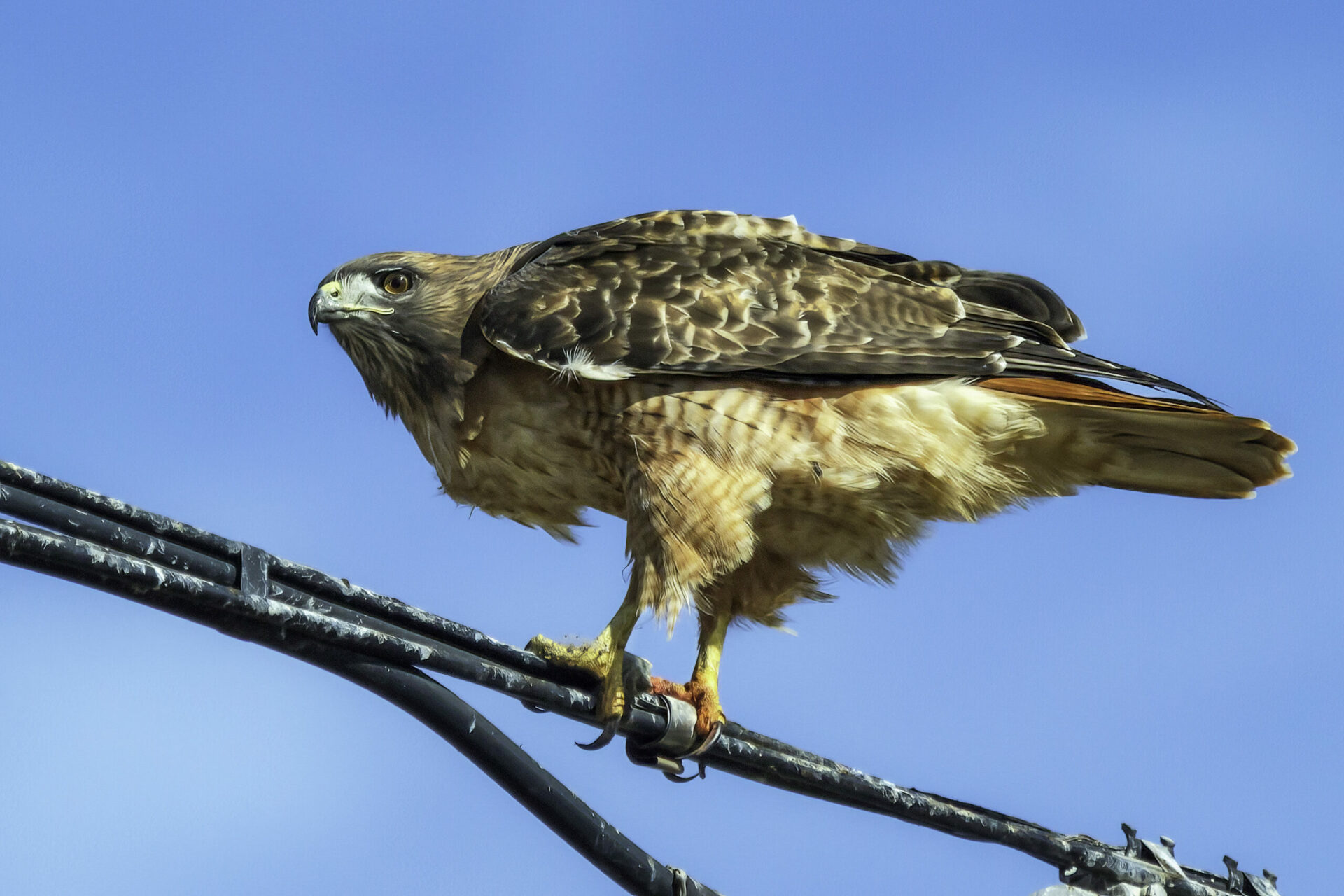
Red-tailed hawk on wire. Photo: Bob Gunderson.
Among the more well-known causes of wildfire — lightning, volcanic activity, neglected cigarettes, gender reveal parties gone awry — there remains a less notorious culprit: electrocuted birds.
When birds settle on charged portions of the transmission lines or utility poles that span the skyline, they may be electrocuted, fall from the line, and ignite the vegetation and infrastructure below. And in regions with hot, arid climates, where dry grasses and shrubs provide the ideal fuel for flames, these sparks can result in wildfires.
“Birds frequently perch to rest or to hunt on utility poles because they are often the highest and most prominent point in the landscape,” explains Pacific Gas and Electric (PG&E) Spokesperson Deanna Contreras.
Larger-bodied birds — most often raptors like eagles, great horned owls, hawks, and turkey vultures — are most susceptible to electrocution due to their size, as they may come into contact with two transmission wires at once, forming an electrical circuit, or place undue weight on an energized piece of equipment.
Over 10 million avian mortalities occur due to electrocutions each year, with an estimated 44 cases resulting in wildfire in the United States between 2014 and 2018, according to researchers with the Wildlife Society Bulletin. Krysta Rogers, Senior Environmental Scientist for the California Department of Fish and Wildlife, notes that as of August 2022, “20 of the birds [she] received for postmortem examination had evidence of electrocution, or were suspected of being electrocuted.” Electrocutions accounted for about 3.6% of total deaths among the birds Rogers examined between 2015 and 2021, though it is difficult to determine whether fires resulted from these shocks.
Utility companies can take measures to prevent bird electrocutions, however. PG&E has adopted
Other Recent Posts
Regional Housing Agency Invests in Affordability
The Bay Area Housing Finance Authority is launching a loan program to support the construction of mixed-income rental properties.
The End is Coming for California’s Untouchable Grass
The law, which applies to grass that isn’t used for recreational purposes, could cut urban water use across California by more than 20% says Oakland thinktank.
Sonoma Vineyard Workers Burn toward a Better Future
A group of immigrant farmworkers are forming a worker-owned cooperative to bring back Indigenous burning practices that used to revitalize the soil.
Los trabajadores de los viñedos de Sonoma queman por un futuro mejor
Un grupo de trabajadores agrícolas inmigrantes está formando una cooperativa de propiedad de los trabajadores para recuperar las prácticas indígenas de quema que solían revitalizar el suelo año tras año.
New Voices Shape Design of Berkeley’s North Basin Strip
Twenty acres of parkland between the highway and the Berkeley shore are slated for a coast-resilient makeover, with input from locals and stakeholders.
It’s Always Sunny In North Fair Oaks
Residents of the unincorporated community launched their second campaign in two years to get the county to care for dying street trees.
Siempre está soleado en North Fair Oaks
Los residentes de la comunidad no incorporada lanzaron su segunda campaña en dos años para lograr que el condado se ocupe de los árboles de la calle que se están muriendo.
Can Nature Help California’s Coast Fight Fire and Floods?
Local and state leaders gather for September summit on how to mainstream nature-based infrastructure.
Guide to Nature-Based Infrastructure Around the Bay Area
Regional leaders are testing eight types of climate adaptation and shoreline flood protection projects that work with nature instead of against it. Here’s an overview.
How Can I Get Clean, Green, Climate-Forward Job Training in the Bay Area?
Looking for a hands-on job working outdoors that actually pays? Here’s a list of training programs.
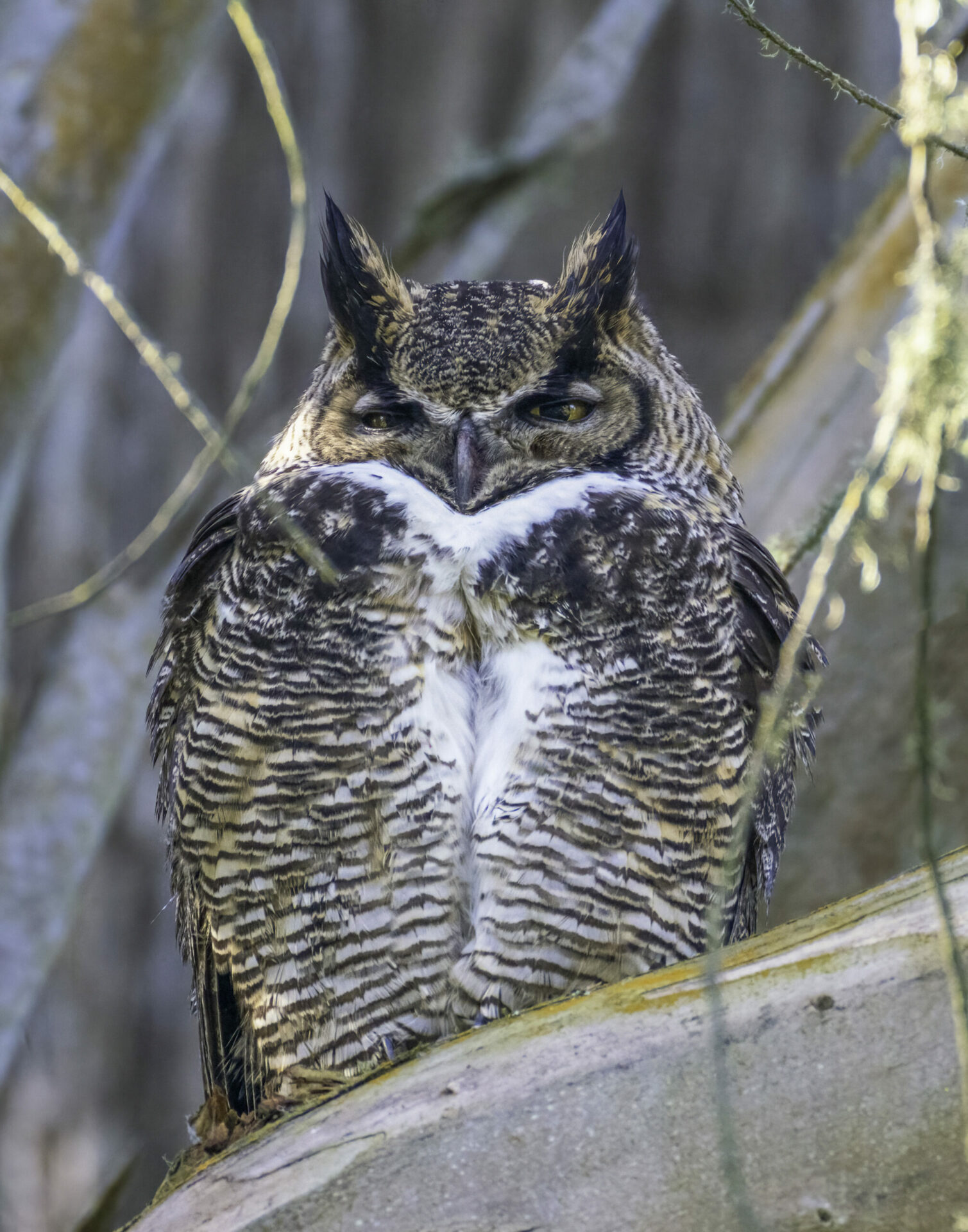
Great-horned owl, another susceptible raptor. Photo: Bob Gunderson.
an Avian Protection Plan to advise best practices for bird health and partners with the U.S. Fish and Wildlife Service to address bird safety issues. According to Contreras, more than 28,000 of PG&E’s utility poles have been retrofitted with protective covers to prevent direct contact by birds, with the company aiming to retrofit 2,000 more poles each year. Many also have bird flight diverters that reflect in low-light conditions to help birds avoid collision with power lines.
In addition to preventive action on the part of utility companies, climate change mitigation and proper fire management remain crucial to disaster prevention. Though wildfires caused by bird electrocutions are less of a concern on the coasts, where air is cooler and wetter, any potential for fire in a drought-vulnerable California poses a severe threat. Snuffing out these risks means protecting ourselves, wildlife, and the birds soaring across the skyline.