






How to Keep Our Furry Friends Cool in Record Temperatures

Photo Daniella Jimenez
When temperatures soar and residents of the Bay do their best to keep cool, many often forget what this can mean for our pets. With their fluffy tails, soft paws and fuzzy ears, our furry friends could be in more danger from these extreme temperatures. With that in mind, what can we do to help?
Beth Woolbright is a founding board member and executive director of the Bay Area chapter of House Rabbit Society, a nonprofit organization dedicated to the rescue, care, and adoption of domestic rabbits. As someone who has worked closely with rabbits for most of her life, Woolbright understands how sensitive they can be to warm weather and what overheating can look like for them.
“Rabbits get hot at about 77-80 degrees,” Woolbright says. “Above 80 degrees, you can actually watch a rabbit kind of melt before your eyes, where they start getting flatter and flatter to put as much of their surface onto a floor to get as much cooling surface as they can.”
Since high temperatures can impact their immune systems, Woolbright and the other workers make sure to keep their rabbits in a temperature-controlled environment. However, they also have alternative methods for cooling.
“We’ve come up with lots of techniques to mitigate the heat for when people don’t have air conditioning,” she says.
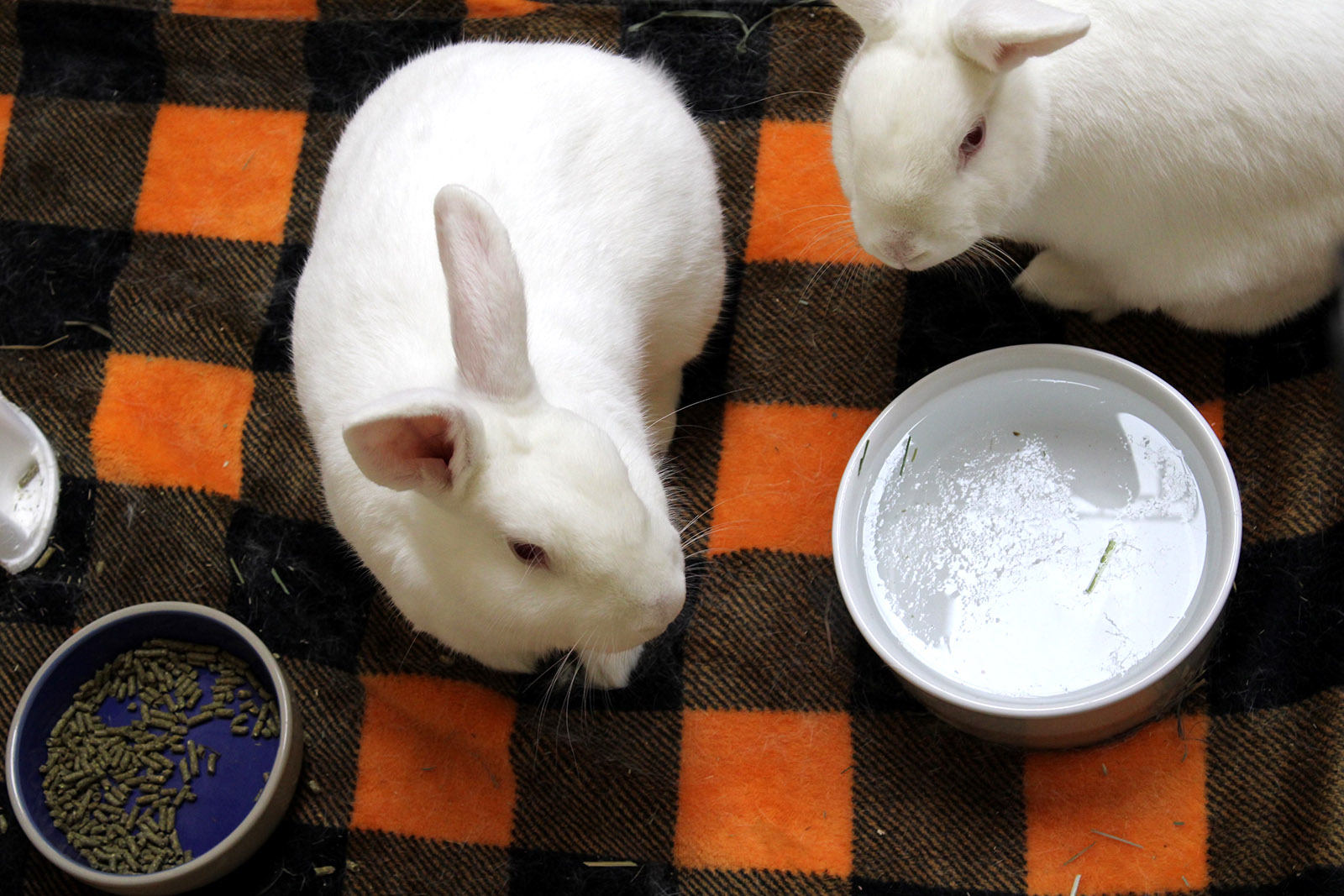
Ice chips in rabbit water. Photo: Daniella Jimenez
To further beat the heat, Woolbright recommends using ice blocks and cold tiles for the rabbits to spread out on. Other ways to keep them cool include putting ice cubes in their water, giving them plenty of shade, using fans, and lightly spraying their ears with cool water.
For other pets, such as dogs, a recent American Red Cross article suggests helping your dog avoid hot surfaces, such as asphalt, keeping them inside during peak temperature hours, and keeping their hair trimmed, among other tips.
Some East Bay residents use similar techniques. Oakland resident Kelli Bordessa and her dog Rowdy are no strangers to the heat — for her, hydration, cool walks, and plenty of air are key to keeping her beloved companion safe.
“We just try to take him out to the park or outside when it’s not too hot,” Bordessa says. “Water is also important. We also set up fans on his crate.”

Chloe (red blanket) and Rowdy. Photos: Andres Larios and Kelly Bordessa.
Oakland resident Andres J. Larios takes a similar approach with his dog, Chloe.
“We try our best to make sure we have cold spaces for her,” Larios says. “She loves the cold tile in the restroom.”
While trying to beat the heat, it’s crucial to keep your pet in mind. Whether you choose to follow the techniques of professionals like Woolbright, or practical tips from fellow owners, there are plenty of ways to create a safe and comfortable environment for your pet.

Ruby lounging in the heat. Photo: Laili Rubissow
Other Recent Posts
How Can I Get Clean, Green, Climate-Forward Job Training in the Bay Area?
Looking for a hands-on job working outdoors that actually pays? Here’s a list of training programs.
Santa Rosa Residents Rethink Trees
The heat-burdened Roseland neighborhood is learning how to monitor temperatures and developing an action plan focused on tree shade.
How to Make Conservation a Career
California nonprofits are developing paid apprenticeships to prepare workers for the growing ecological restoration economy.
Raft of Resilience Initiatives Keeps Tahoe Blue
Beach robots, boat inspections, forest thinning, and wetland restoration are among the projects helping the lake confront environmental threats.
Weathering the Present While Training for the Future
A stewardship immersion experience from the School for Inclement Weather and Weaving Earth combines ecological knowledge and spiritual connection.
Feds Meddling With Protections For California Coast
NOAA is reviewing California’s Coastal Management Program in a renewed push for offshore oil and gas drilling.
New Study Shows Rain Gardens Filter Chemicals Out of Stormwater
Scientists found rain gardens dramatically reduce toxic chemicals in stormwater while providing biodiversity and cooling.