




Fall Plantings Build Pollinator Habitats in Concord

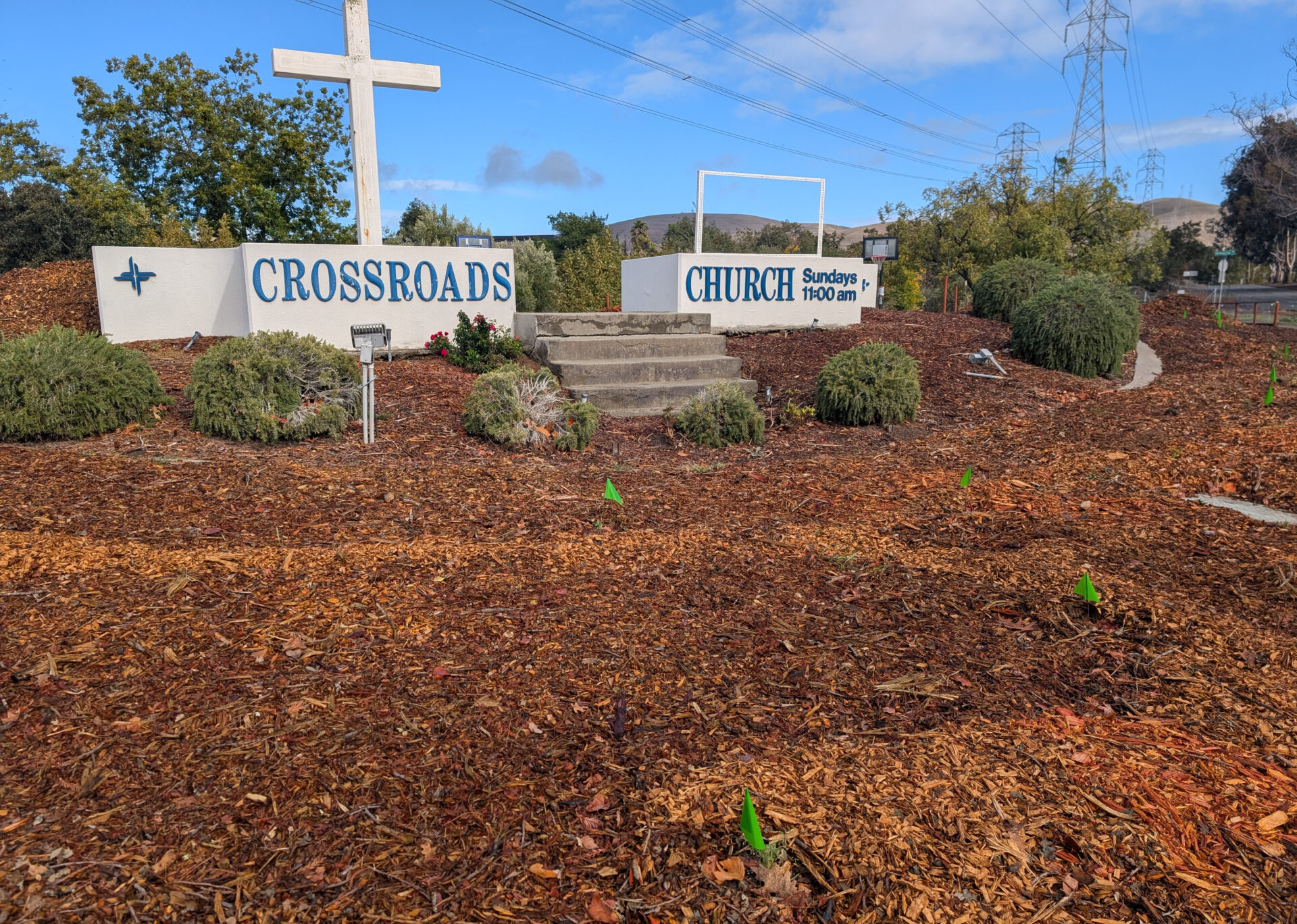
Front lot of Crossroads Church showcases established plantings. Photo: Alex Hardt
Amid the annual monarch butterfly sighting season, local audiences throughout the Bay Area flock to coastal overwintering sites in hopes of catching a glimpse of their fluttering arrival. Popular migration areas like Natural Bridges State Beach’s Monarch Preserve and the Lighthouse Field have seen thousands of monarchs this year, according to early season reports by the Xerces Society.
But as temperatures heat up and irregular seasonal shifts become more common with climate change, local monarchs are facing damaged or lost habitats. These issues have contributed to their alarming population decline of more than 95% since researchers began tracking their migration in the 1980s.
Declining pollinator populations also extend beyond monarchs to other insects and small mammals that help pollinate native plants to produce seeds, fruits, and new plants. Common bee species like Crotch’s bumble bee have faced a similar population decline of nearly 98% over the past decade because of deteriorating habitat conditions. Likewise, scientists at Washington State University are projecting that up to 70% of honeybee colonies in the United States could be lost this year, despite the plethora of benefits they provide for agricultural production.
As the Bay Area welcomes the rainy season, young native plants to counter these losses have been freshly placed by Concord residents.
On November 15, a collaborative effort by the Contra Costa Resource Conservation District and Crossroads Covenant Church gathered over a dozen volunteers together to plant a fresh pollinator garden on the church’s Concord site.
“There are many rewarding aspects of pollinator conservation work, but I’d say the most inspiring is when we get to teach and empower [others] to plant native plants,” says Lisa Damerel, the district’s watershed conservation manager.
Other Recent Posts
Noticias en español
Encuentra más historias en español esta primavera, dentro de nuestro boletín KneeDeep con vecinos, y aquí en nuestro sitio.
Building Sustainably with Mass Timber
This building method can help clear forests of smaller trees that burn easily while also reducing the carbon footprint of new homes and offices.
Hardscapes That Filter Rain
Heavy rain can overwhelm storm drains and pollute waterways, but materials like permeable pavements help filter runoff and prevent flooding.
The Gray-Green Alchemy of Baycrete
Baycrete is a nature-based hybrid of concrete, shell, and sand designed to attract oysters and create shallow water reefs in SF Bay.
Tools Tweak Beaver Dams
Humans find ways to co-exist with beavers, tweaking dams to prevent flooding and create more climate resilience.
Hopes and Fears for Sierra Snowpack
February’s drought and deluge confirms that uncertainty may be a given for California snowpack, western water supply, and wildfire risk.
Errands by E-Bike
Electric cargo bikes are climate-friendly car replacements for everyday activities, from taking the kids to school to grocery shopping.
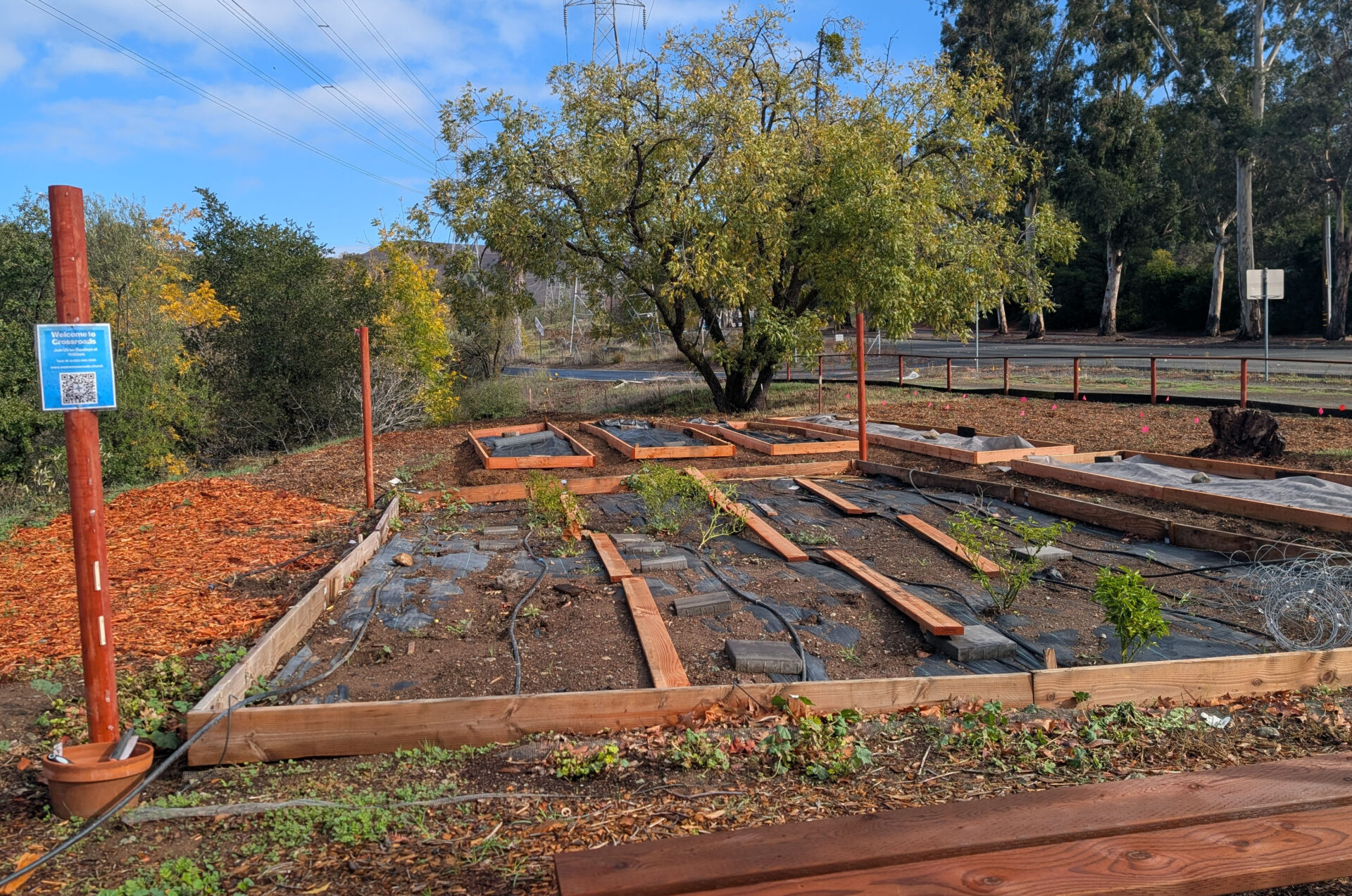
Newly planted vegetable and pollinator gardens at Crossroads Church. Photo: Alex Hardt
The resource conservation district has set out to plant seven new sustainable pollinator habitats throughout Contra Costa County by the end of this year. The recently established pollinator garden at Crossroads Church is its latest project.
Damerel is particularly inspired to see the impact of the gardens at the ecological level. “We see monarchs and other pollinators using the plants that we planted, sometimes even within less than a year after we’ve planted them,” she says. “This is proof that we are supporting pollinators with these gardens.”
Crossroads lead pastor Alex Hardt, who helped develop the pollinator garden with the conservation district last summer, says bringing the project to fruition required buy-in across the community.
Hardt collaborated with environmental justice advocate Josh Sonnenfeld and Matt Davis, head of a Concord neighborhood initiative called the Free Tomato Project, to bring together local members of the church, the Free Tomato Project and RCD volunteers.
“It’s a really cool thing, cause it’s a community effort to make this possible,” says Hardt.
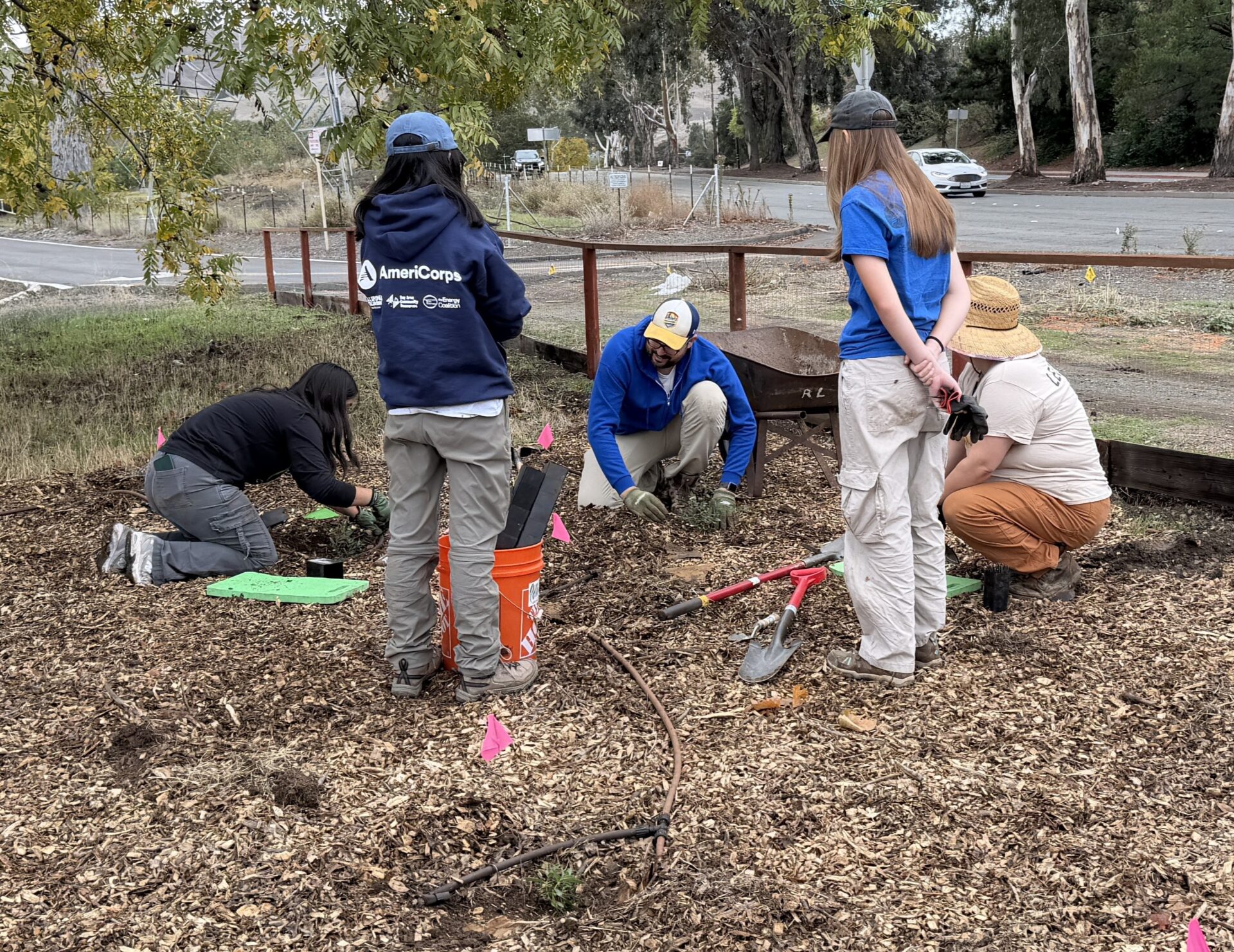
On the day of the pollinator planting event, more than 15 volunteers spent the morning helping establish a new home for local pollinator communities.
“We noticed that more and more people were asking questions about how we can help pollinators,” says Damerel. “There’s just been an increase in visibility in that issue. And so we’re really honored to help facilitate those experiences.”
As mentioned by Hardt in a follow-up interview, non-invasive California native herbs like narrowleaf milkweed, California goldenrod, and foothill penstemon are plants that support pollinator groups like monarchs and bumblebees in Contra Costa County. Shrubs specially chosen to support pollinators include sticky monkeyflower, California buckwheat, and coyote brush.
“We’re supposed to be caretakers of this world,” says Hardt. “From the church standpoint, if we can help to care for people, if we can help care for animals, if we can help care for pollinators, we should be doing that, because all of those things have an impact on our ecosystem.”
Though the day of labor and getting their hands in the dirt has passed, the process of building sustainable pollinator homes is just beginning to bloom. The visible growth of the plants is expected to be seen by late spring of next year.
Over in Sonoma County, nonprofit Apis Arborea is emphasizing pollinator habit restoration 12-20 feet above ground throughout lush, traditional forest nesting sites. Through their pioneering strategy coined “wilding,” the organization fosters connections among farming communities, landowners, and schools to introduce specially designed log hives, or what they call “TreeNests,” into traditional nesting sites for pollinator honeybees.
“There is this need of looking at the lay of the land that is systems-based and concerned with new ways of empowering community members, whether they are human or non-human,” says Michael Thiele, founder and executive director.
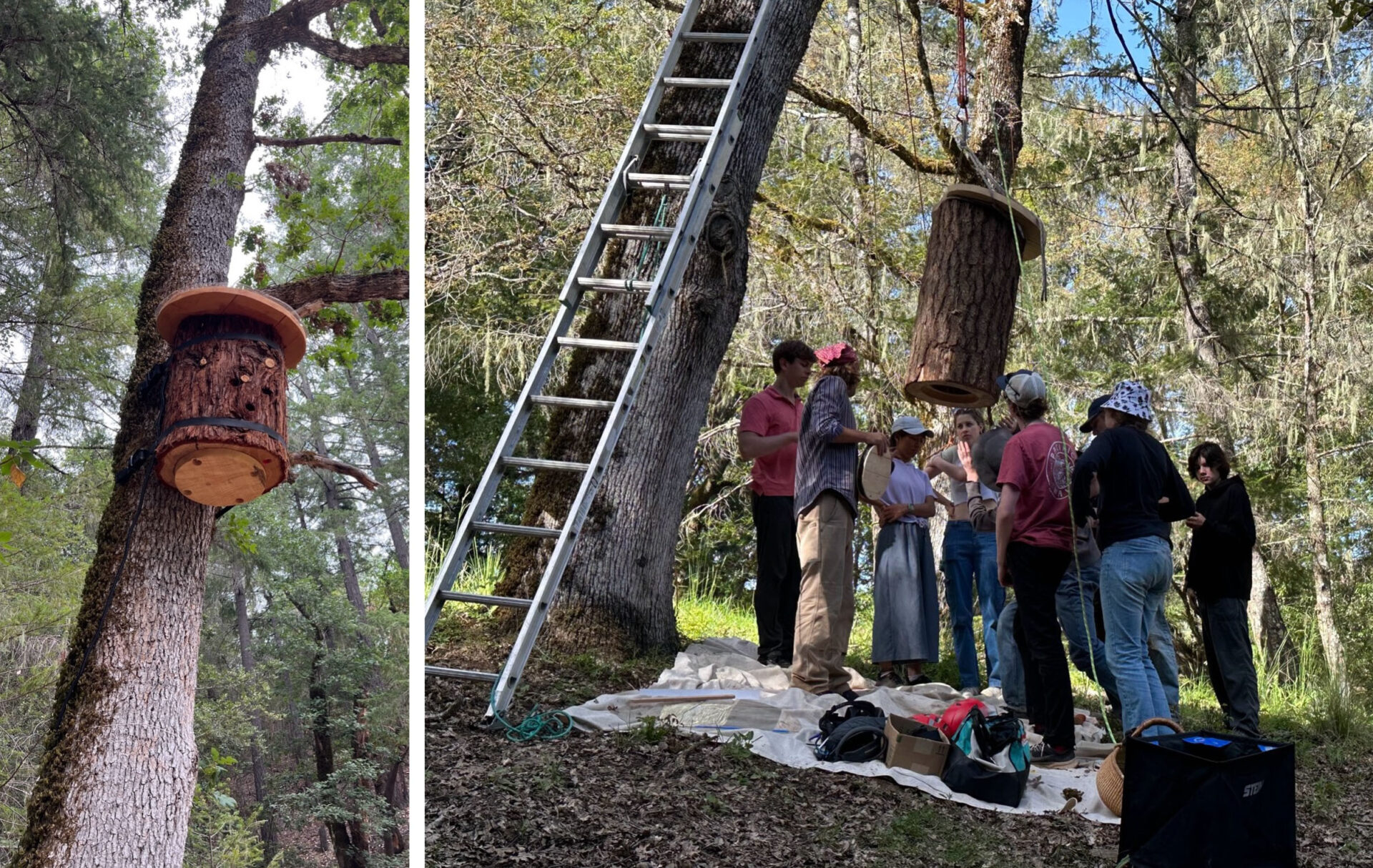
Left: A TreeNest, Apis Arborea’s name for a hive made out of a log that uses biomimicry to meet the needs of honeybee colonies. Right: Apis Arborea speaks about wilding projects with ninth-graders at Filigreen Farm near Boonville. Photos: Courtesy of Michael Thiele
The group blends holistic and scientific practices in preservation of the busy community pollinators, following their habitats’ endurance amid the threat of climate change.They aim to promote practices catered to “self-healing” in the damaged ecologies of honeybees.
“One major pollinator garden is not enough,” says Thiele. “All of the East Bay should be one large pollinator garden.”
This story was updated on 12/18/25 to correct errors.