




Raft of Resilience Initiatives Keeps Tahoe Blue
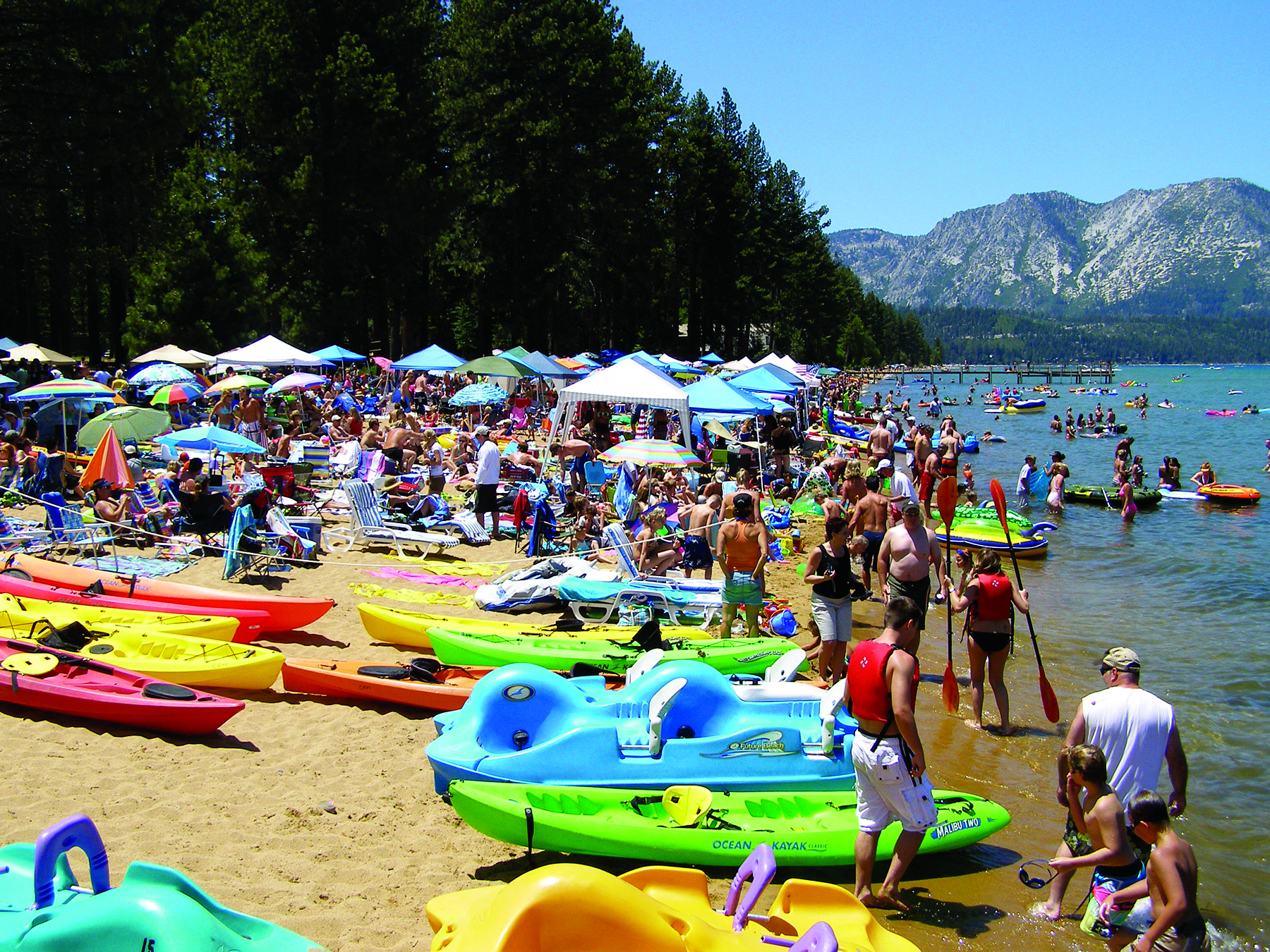
It’s not a national park or a major city, but Lake Tahoe can feel like both: a place of breathtaking natural beauty but also crushing crowds. More than a million Northern Californians visit annually, including thousands of Bay Area families who have had cabins on the lake for generations. Many may be aware of ongoing pressures on the lake’s health from tourism, development, fire, and invasive species — pressures now amplified by climate change. Most visitors, however, are probably unaware of just how much critical conservation and restoration work is underway to protect this unique body of water and the watersheds and forests that surround it.
While many regions lack the capacity to rise to the increasing environmental and climate challenges of the 21st century, Tahoe is ready. The region has had the necessary institutional infrastructure in place for decades in the form of Team Tahoe, the unofficial name for a collaborative of more than 80 different entities ranging from fire and water districts to federal agencies, cities, nonprofits, and local business interests. To meet today’s challenges, Team Tahoe has pursued both innovation, such as portable boat-cleaning stations and beach-cleaning robots, and tried-and-true tactics like forest thinning and meadow and wetlands restoration projects. Across those efforts, Tahoe serves as a model for lake regions nationwide.
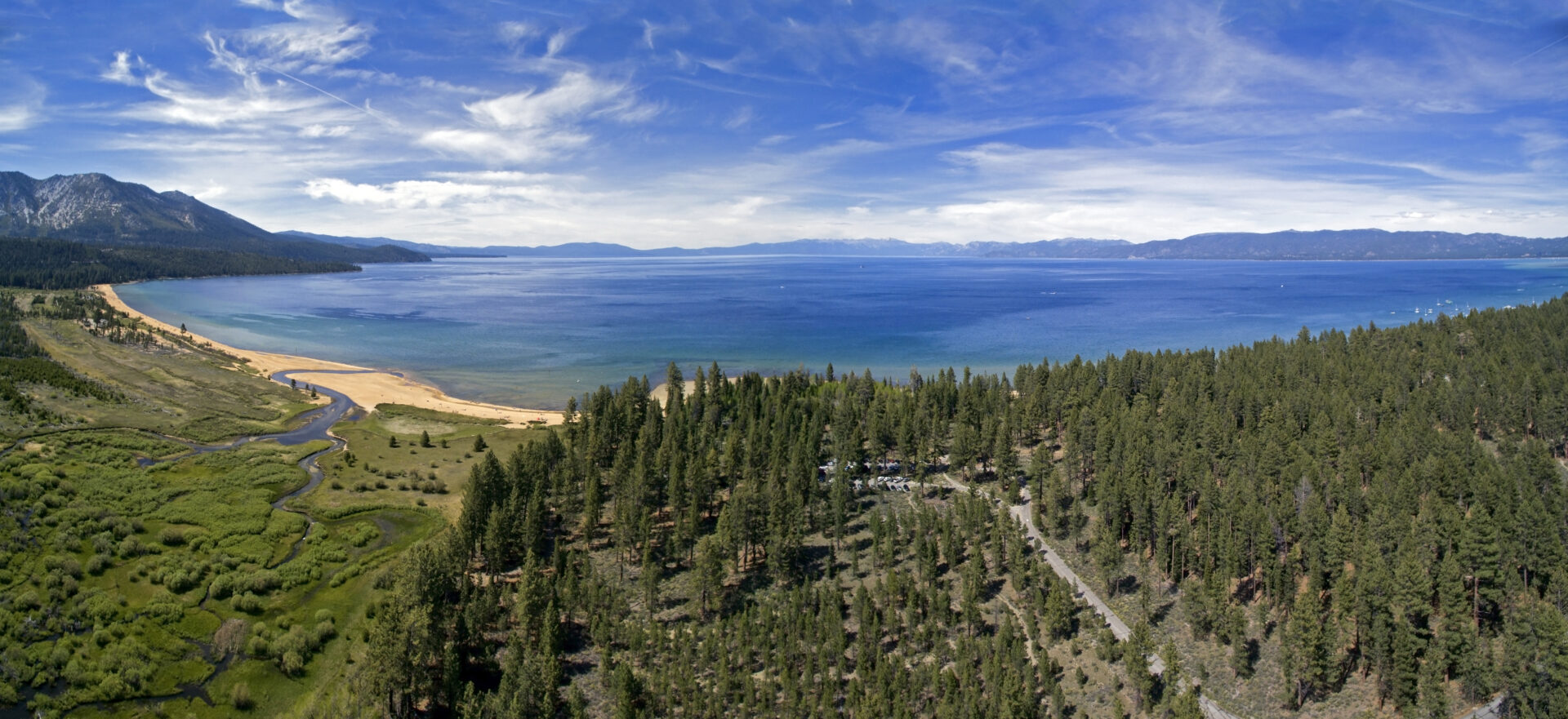
Photo: Drone Promotions
The variety and scope of resilience projects in progress around America’s second-deepest lake is impressive. In the last two decades, billions of dollars have been spent as stakeholders learn what works and what doesn’t to keep the lake blue, the beaches clean, and the encircling forests green. Bay Area planners and managers could learn a lot from this model.
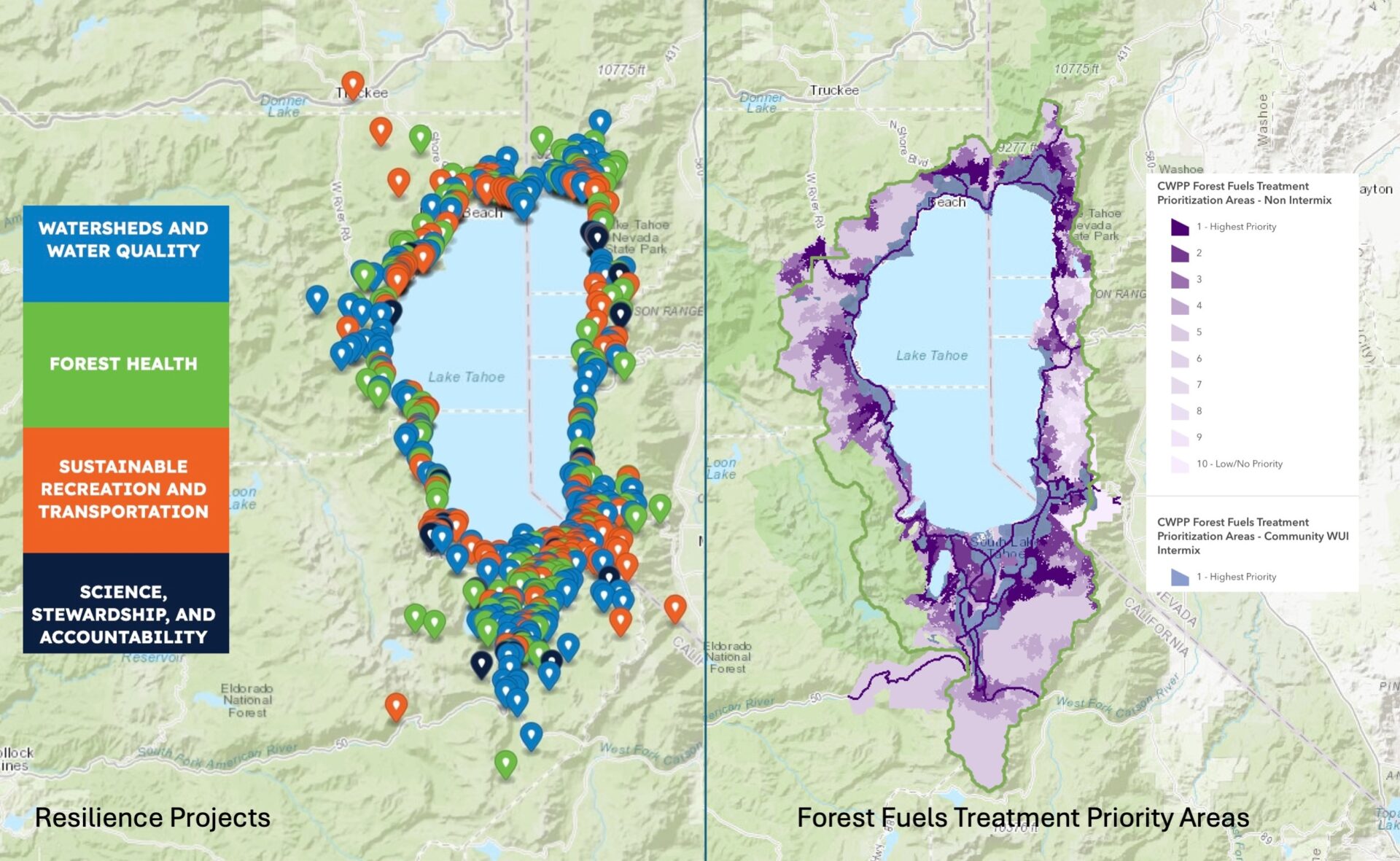
Team Tahoe projects as of 2026 (left); priority areas for fire fuel reduction (right). Source: TRPA
Guardian of the Lake
Without the National Park Service or a city council to steer its fate, the Tahoe Basin is protected by a loosely affiliated network of government agencies, nonprofits, and engaged locals. Kim Caringer, chief partnerships officer at the Tahoe Regional Planning Agency, calls Tahoe “the Olympics of collaborative conservation.”
It’s a fitting analogy. The first televised Olympics, the 1960 Winter Games at Tahoe, was what first enticed viewers to visit the lake. This led to air pollution, lake pollution, and unplanned development that threatened to pave paradise — but also to the creation of TRPA (informally Team Tahoe) in 1969 to rein in those threats. Ever since, Team Tahoe’s strategy has been to collaborate and coordinate like mad.

Meeting of Tahoe regional planning group: Photo: TRPA
All told, Team Tahoe has 80-plus entities working together: dozens of nonprofits and private partners, 21 state agencies, 12 federal agencies, five counties, and three conservation districts. Collectively, they have completed a staggering 909 projects costing $3.2 billion; 100 more are ongoing, tipping the total beyond 1,000. Many include multiple funders, a reflection of the collaborative trust built by Team Tahoe.
“A city the size of San Francisco was [once] planned for the Tahoe Basin, but people came together and said that’s not what they wanted,” says Caringer.
Today, science informs how projects are prioritized in four main areas: water quality, forest policy, sustainable transportation, and stewardship.
Neighbors Unite Against Wildfires
Anyone who visits Tahoe can see that the fire-prone mountain forests encircling the lake descend all the way to the lake’s marshes and beaches. These forests have burst into flames with alarming regularity and ferocity in the last couple of decades, and particularly as global temperatures have warmed. Indeed, wildfires frequently foul the Tahoe region’s air and water and destroy wildlife habitat.
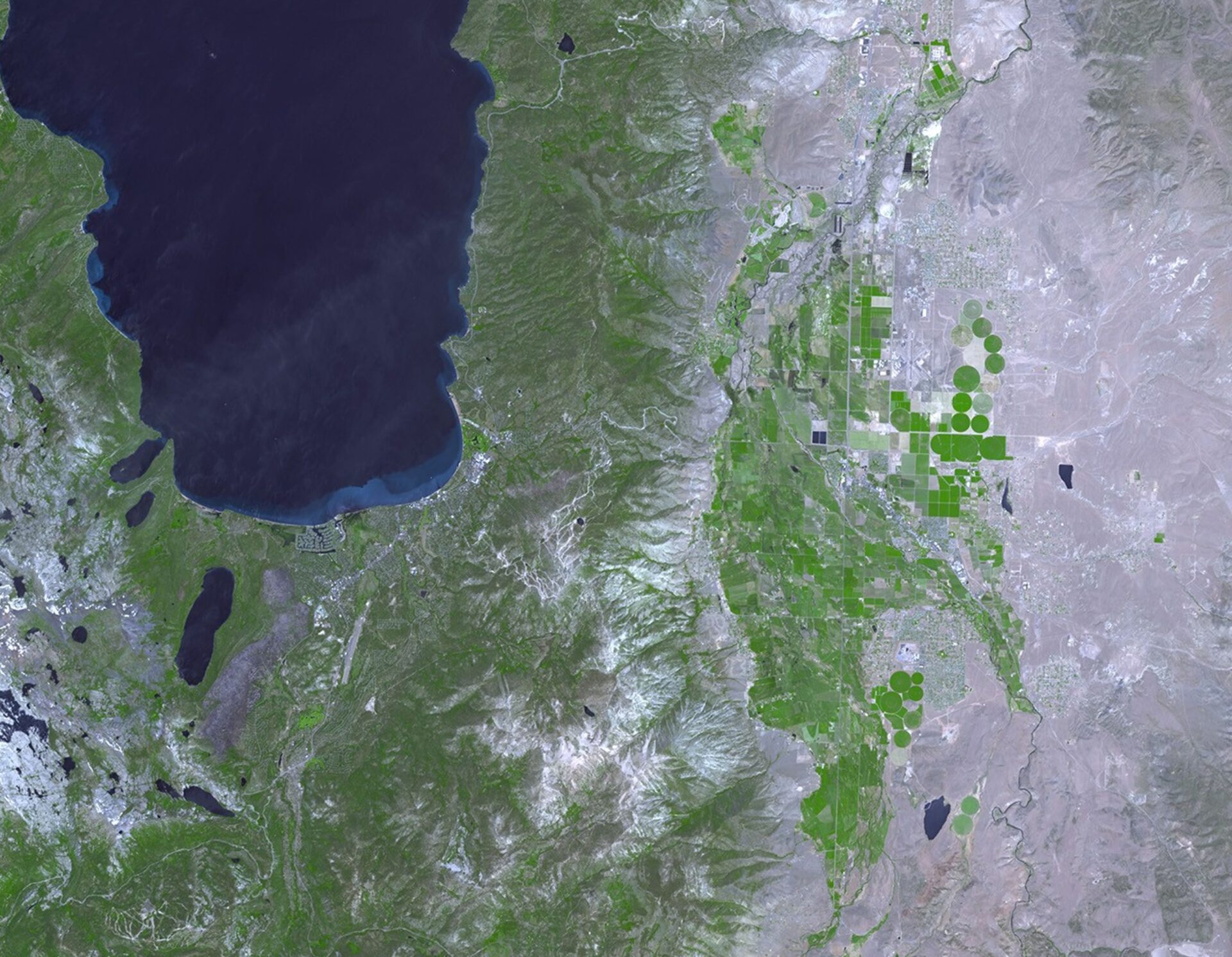
Grey burn scar of Angora fire in 2009, which locals refer to as their “wake-up” call about fire risk ahead. Photo: NASA
“With rising temperatures, we live in the age of mega-fires, and Tahoe is a very high fire danger zone,” says TRPA Executive Director Julie Regan. “The next fire is not a matter of if; it’s a matter of when. So we’ve updated our forest health standards to incorporate all the new science.”
But it’s not just the planners taking steps to reduce fire risk and increase forest resilience. Tahoe residents like Leona Allen are fighting fire with, yes, collaboration. Working with fire agencies, Allen is one of Tahoe’s 200 volunteer fire-adapted community leaders.
“When I worked the 2021 Caldor Fire as a volunteer wildland firefighter, I knew that my Christmas Valley [South Tahoe] neighborhood would be fine because we practiced evacuations,” Allen says. “We knew we could get the elderly couple and the guy in the wheelchair out. And we had done things that helped us save every home. When you have a defensible space throughout a neighborhood, the fire goes around it, saving everyone’s homes. Plus, we can keep our fire insurance and get to know our neighbors.”
“Fire agencies always coordinated on fire suppression, but not pre-fire management,” adds Milan Yeates of the Tahoe Fires and Fuel Team. “The 2007 Angora Fire, which burned 3,100 acres and destroyed 254 homes, was a wake-up call.”
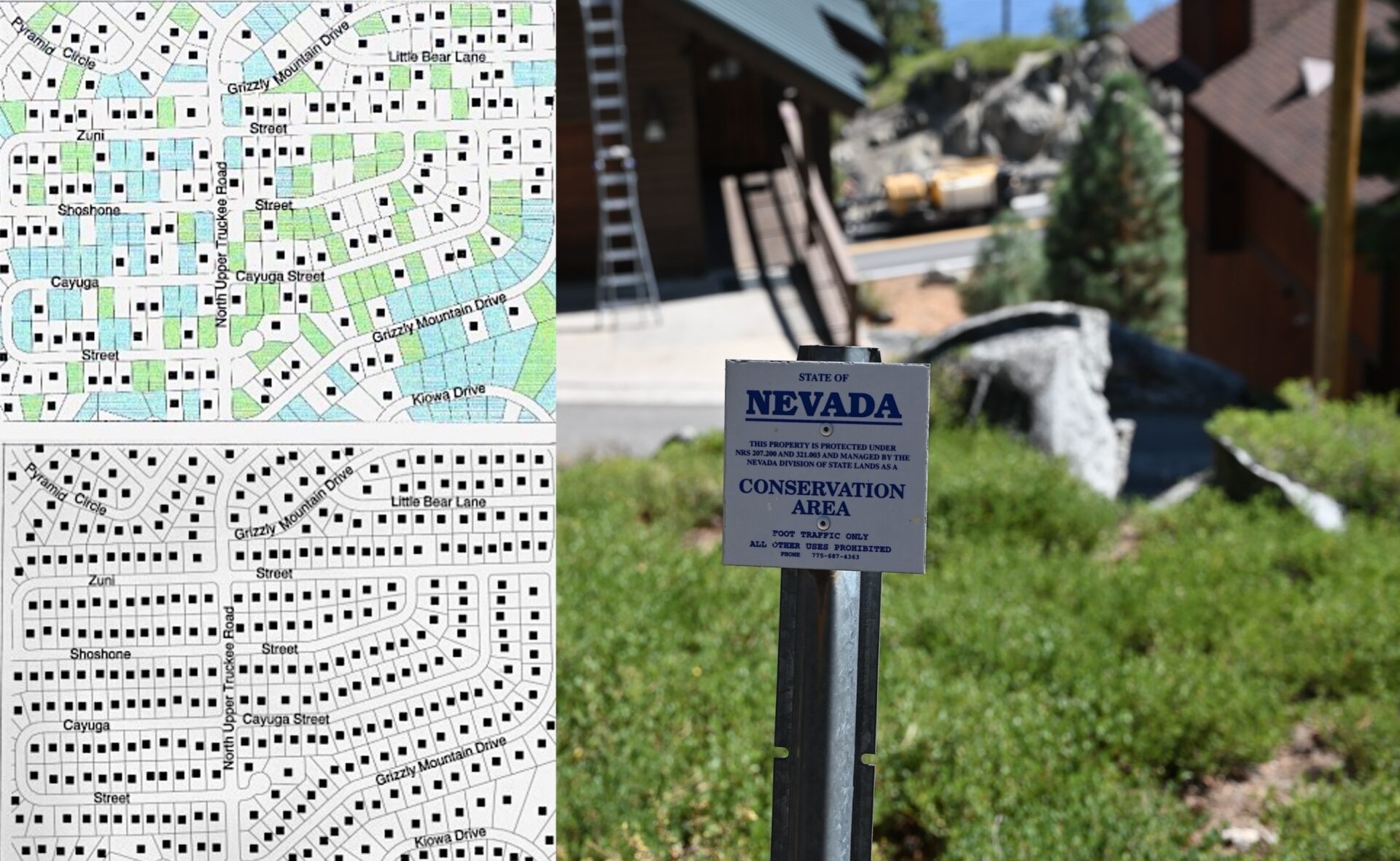
Tahoe neighborhood protected from fire by open, publicly-owned conservation lots (blue & green) versus the alternative of full development (bottom diagram); home hardening (shake roof replacement) near defensible open space. Images: TRPA
That fire demonstrated to Tahoe agencies the need for more coordination and more measures that can return the forest to conditions that produce less aggressive, more controllable wildfires. Among those measures: thousands of small open-space purchases to curb overdevelopment in neighborhoods, home-hardening assistance (hundreds of wood-shake roofs have been replaced with FEMA funding), forest thinning (100,000 acres to date), improving groundwater access for firefighting, and the sharing of resources and funding.
Trout for a Tribe
Meanwhile, on Tahoe’s West Shore, the Meeks Meadow Restoration Project has been underway for a decade. In a collaboration among Team Tahoe, the U.S. Forest Service, and the Washoe tribe, a marina dredged from the lake at the woodsy Meeks Bay resort in the 1960s has been removed, along with nonnative vegetation, as part of a sustained effort to return the land to its past as a natural meadow.
“We’re trying to make our ancestors proud by bringing native species back,” says Cale Pete of the Washoe Environmental Protection Department. “The Tahoe Basin lies at the heart of the Washoe people, so it was devastating to be moved to our reservations in the Carson Valley. We now only own a few slivers of land at Tahoe, but we’re trying to reestablish our presence. The land needs us.”
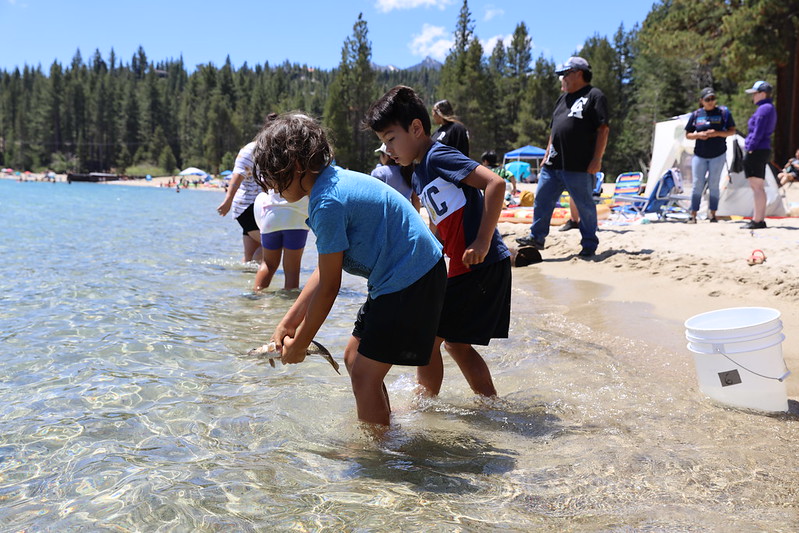
Washoe tribe children release trout into the lake. Photo: USFWS
The Washoe, who lived at the lake for more than 6,000 years, once relied heavily on native trout and meadow plants for sustenance.
“We’re also trying to bring back the Lahontan cutthroat trout,” notes Pete, who oversaw the release of more than 1,000 of the trout into Meeks Bay in June by fellow Washoe tribe members and U.S. Fish and Wildlife Service employees.
This native fish species largely disappeared in the 1930s, and Meeks Bay’s 283-acre Máyala Wáta meadow was overtaken by invasive vegetation, especially groundwater-sucking, fire-prone lodgepole pines.
The Washoe are doing most of the meadow restoration work; the removed pines are used as firewood by Washoe elders.
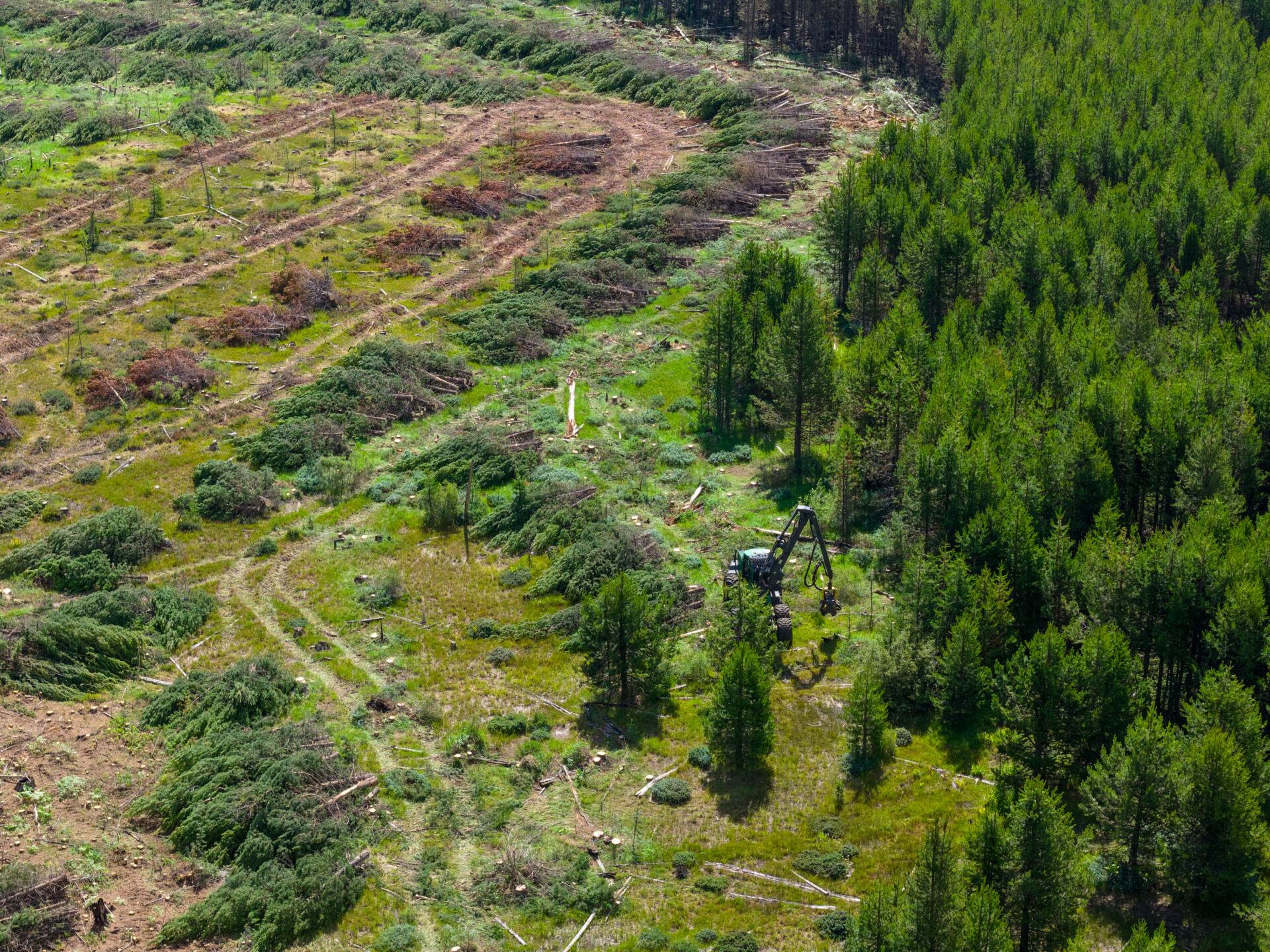
Clearing pine from the Máyala Wáta restoration site in July 2026. Photo: Tahoe Conservancy
“What I really want is to have this land given back to us,” Pete adds. “Our removal hurt the land, and it’s so significant to our people. We still practice our traditions here. I was with a tribal elder, Benny Fillmore, when he told some Washoe youth who were here on a windy day, ‘The trees are bending over to listen to us.’ We want this project to serve as a template for other tribes around the country.”
Moving a Motel and Old Fill to Make Way for a River
Most marsh restorations go unnoticed, but Tahoe residents and visitors couldn’t help but see the demolition last fall of the Motel 6 on Highway 50’s motel row, four miles from the high-rise casino hotels at Stateline. The removal of that motel and an adjacent restaurant are the most visible pieces of the Upper Truckee River watershed restoration project, a landscape-scale effort overseen by Tahoe agencies since 2001 to repair damage to the lake’s largest creek watershed.
The Upper Truckee travels 23 miles from the Luther Pass area to South Lake Tahoe, supplying 30% of the region’s water and occupying 55 square miles.
“Everything that’s happened at Tahoe, from stream degradation and deforestation to urbanization and the introduction of invasive species, has happened in this watershed,” says Keep Tahoe Blue Chief Strategist Jesse Patterson.
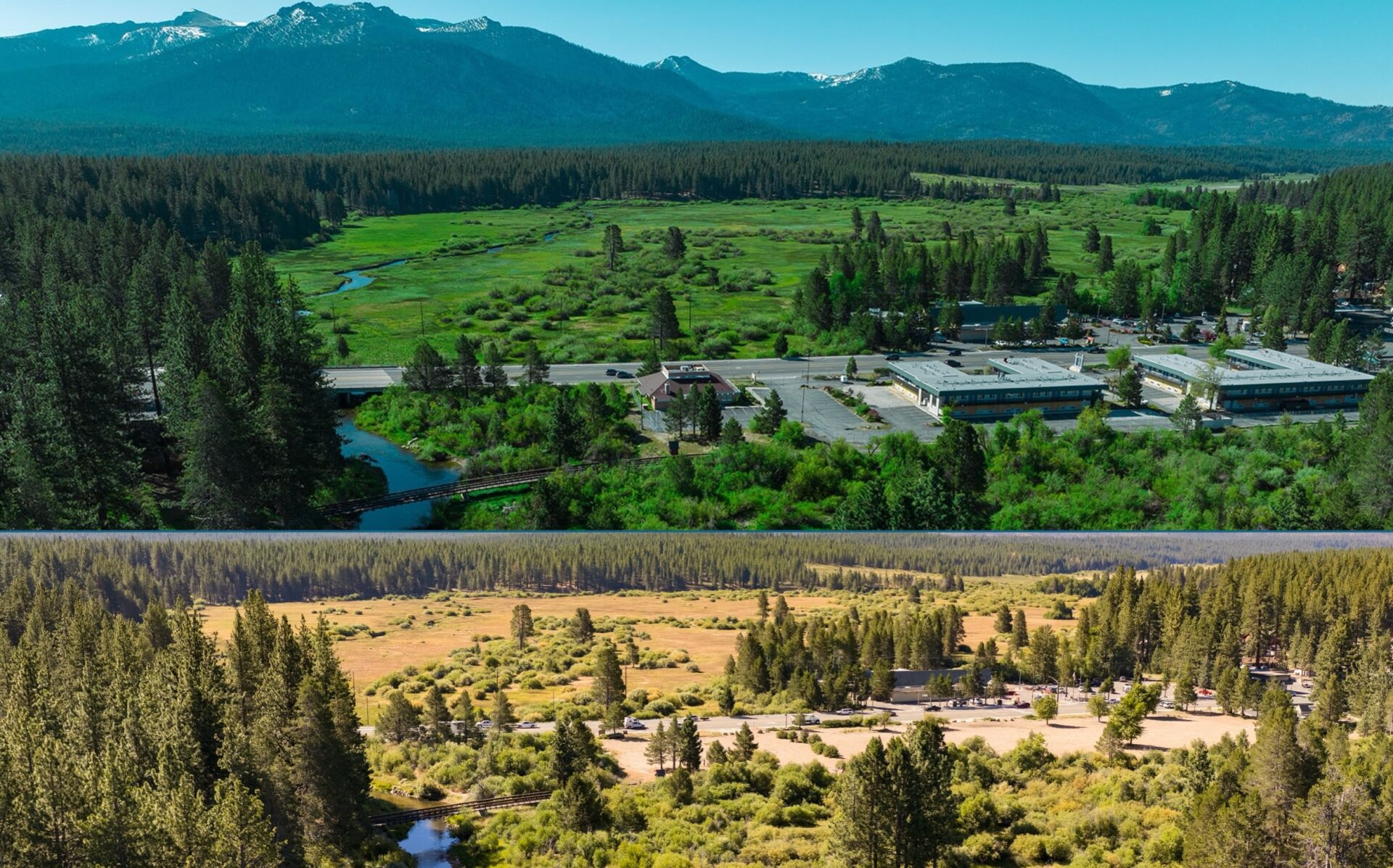
Motel 6 site before (2024) and after (2026) removal, making room in the river floodplain for nature to recover. Photos: Cal Tahoe Conservancy
Environmental projects in progress within the watershed include the restoration of floodplains and corridors for wildlife, the protection of climate refugia, and even the removal of past developments to recover natural habitats. One example is taking place within the massive Tahoe Keys development where the creek watershed once entered the lake as an extensive freshwater marsh. Similar to Foster City on San Francisco Bay, another ill-advised landfill community built in the 1960s, Tahoe Keys destroyed half of the area’s marshlands, replacing natural lagoons with luxury homes and man-made canals dredged from the lake.
Although the Keys development remains today, nearly 90,000 truckloads of fill have been hauled away to return the land to the lake. So far, the project has restored 1,100 acres of wetlands and added a new boardwalk path and other trails — a far cry from the golf course, condos, freeway, and Emerald Bay-crossing bridge once proposed for the area.
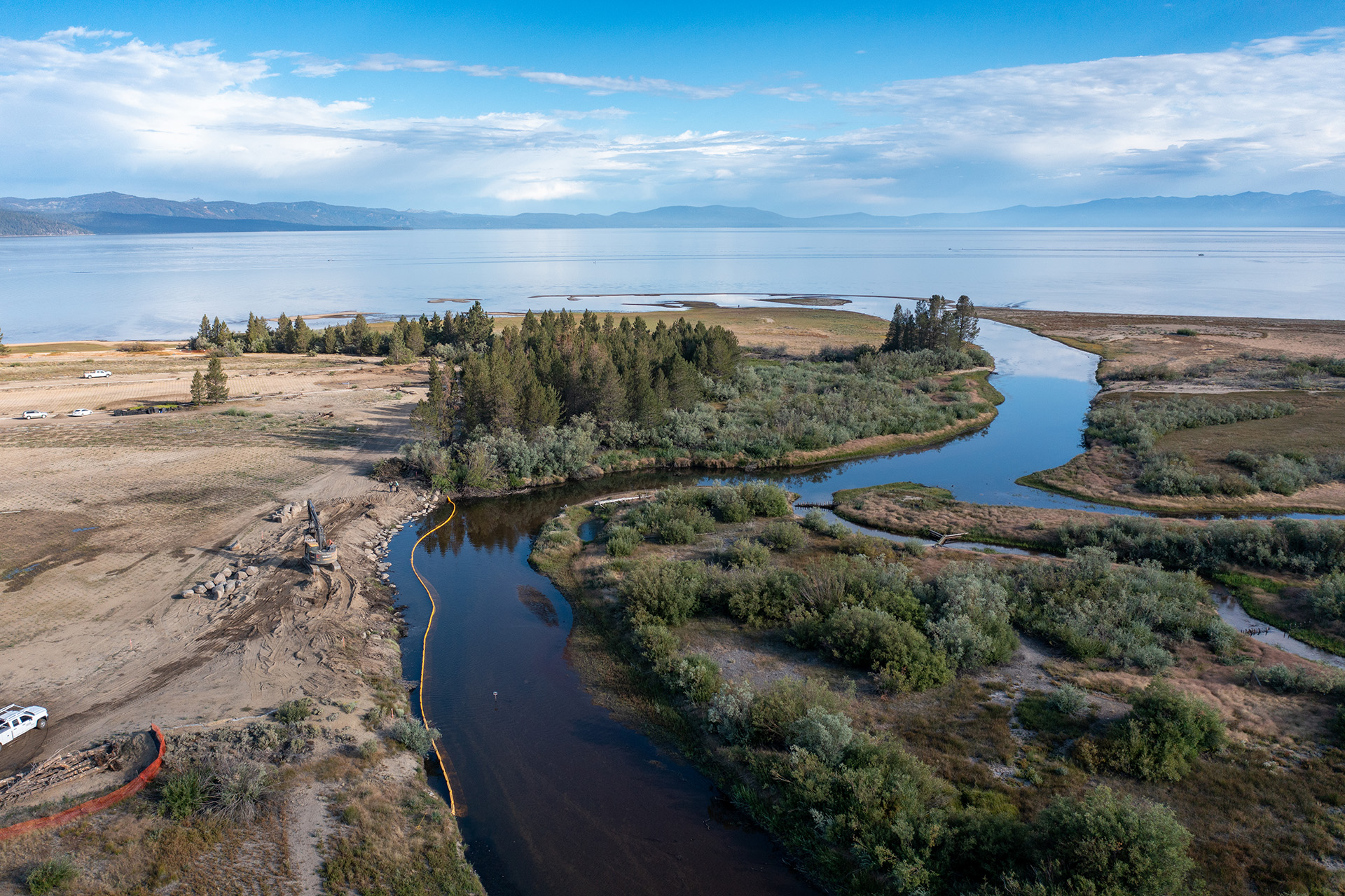
Fill removal from Tahoe Keys lagoon development allows the river mouth to feed new freshwater wetlands at the lake’s edge. Photo: Cal Tahoe Conservancy
The Motel 6 site represents the upstream extent of the massive seasonal marsh that once bordered the river before it emptied into the lake at Tahoe Keys. Restoring this marsh corridor will allow more river water to slowly filter into the water table, making the degraded watershed more resilient to drought and climate change going forward.
“The Upper Truckee watershed has an enormous impact on reducing heat, recharging groundwater, and serving as a pathway for wildlife,” notes California Tahoe Conservancy Executive Director Jason Vasques.
Invasion of the Beach Robots
Three summer mornings a week on Tahoe’s busiest beaches, trash pickups happen between 6 and 9 a.m. The garbage collector’s name is Blanco. Picking up a bottle cap here, a candy wrapper there, Blanco is thorough.
But he isn’t human. He’s one of three robots — called “Bebots” — that prowl the lake beaches, the brainchild of Eco-Clean Solutions founder and CEO J.B. Harris.
“We only operate before nine, but when early beachgoers see our robot, they’re very curious,” says Harris. Beach-cleaning tractors have operated for decades, but they only pick up large items. So do humans. But these smaller solar- and battery-operated remote-control robots scrape for litter two inches under the sand (items fall into a trap below the bot and are sorted later) — with dramatic results.
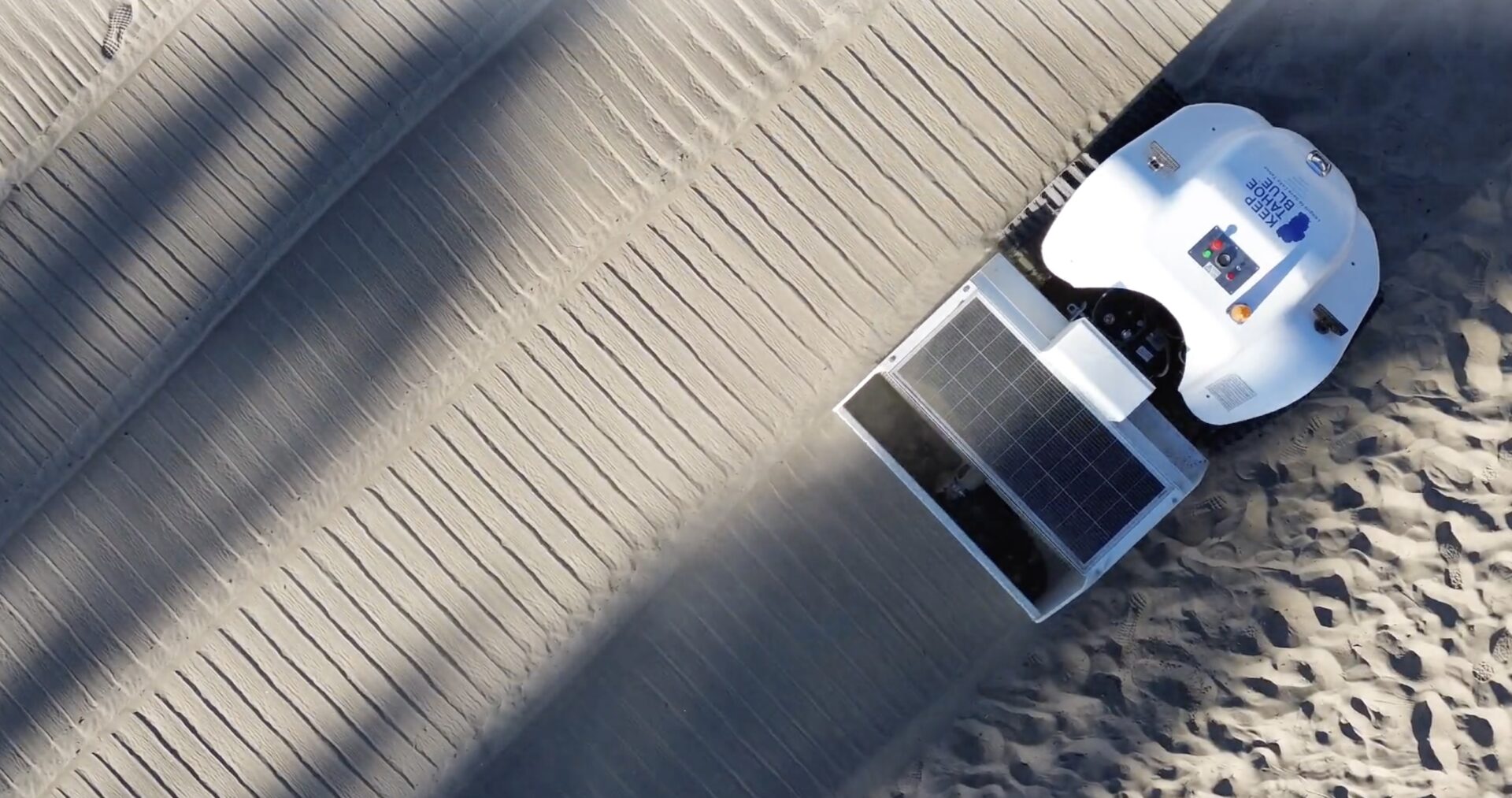
Photo: Eco-Clean Solutions
“The bot picks up 10 times the number of items [than human volunteers do] — items hidden under the sand or too small to be spotted,” says Harris.
In the last few years, Bebots have collected more than 70,000 pieces of trash on Tahoe beaches. Preventing microplastics from entering the lake is healthy not only for the ecosystem (preventing birds and fish from ingesting them), but also for beachgoers who ingest lake water.
“Once plastic items degrade into microplastics, they become far harder to remove from the sand or water, leaching chemical additives that make their way up the food chain,” says Harris.
Bebots are catching on; bots also clean beaches in North Carolina, the Great Lakes, and Asia. Meanwhile, the Tahoe Fund is beginning to use BurnBots, remote-controlled mastication units that can thin as much forest in three days as a 20-person hand crew can in 15 days.
Monitoring Water Clarity and Invasions
Each summer for 58 years, a white disc the size of a Frisbee is lowered into the lake to check the water clarity. The distance the disc has been visible shrank from 100 feet in 1968 to 64 feet in 1997 before measures taken to reverse the decline — including development restrictions, meadow restoration, and removal of aquatic weeds — began having an effect. The distance rebounded somewhat to 69 feet in 2025. The measurement drew the most attention in 1997, when President Bill Clinton and Vice President Al Gore went out on a boat with UC Davis scientists to see the problem for themselves.
“Lake clarity has been slow to respond, so scientists are studying the role of climate change and other factors,” says Robert Larsen of the Tahoe Science Advisory Council.
The council was formed in 2015 to bring scientists working in the lake region together.
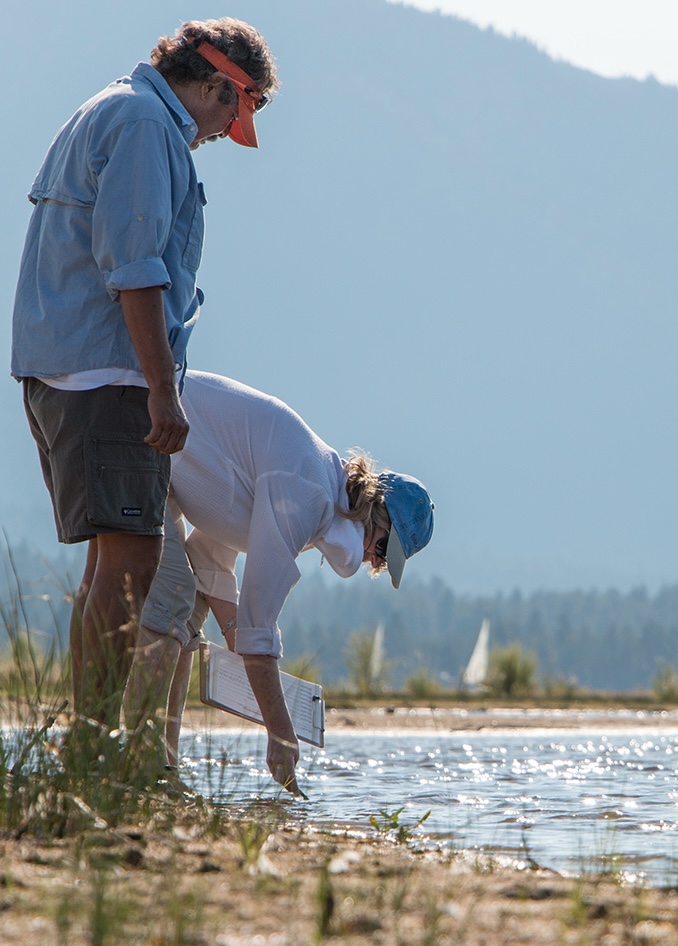
Citizens monitoring the lake have helped stamp out small infestations of the Eurasian watermilfoil, among other successes. Photo: Keep Tahoe Blue
Larsen explains that historically fine sediment particles entered the lake due to erosion from uncontrolled development and runoff from roadways, clouding the water. But the latest water clarity worry revolves around three mollusks. When golden mussels were found clinging to a Tahoe boat last year and again this spring, it was big news. While these filter feeders actually make the water clearer, the result is more sunlight into the depths of the water, promoting the growth of tiny plants and harmful algal blooms, and thereby reducing the clarity of the water.
Preventing and removing aquatic invasive species has been a major focus of environmental agencies at the lake. About a quarter of the boats stopped at Tahoe’s three mandatory inspection stations are not properly cleaned, drained, and dried, triggering a decontamination that resembles a super car wash.
Quagga, zebra, and golden mussels have been the main target of the 120,000 motorized boat inspections that have been carried out since 2008. If even a few were to hitch a ride on a boat from another waterway to Tahoe, they could multiply with devastating effects.
TRPA’s Regan is most concerned about golden mussels, first discovered in the San Francisco Estuary’s Delta in 2024 and likely arriving through ship ballast water from Asia.
“They can populate so rapidly,” she says, “and the babies, called veligers, are smaller than poppyseeds, so they’re hard to detect.” A golden mussel infestation would threaten native habitat, increase algae and invasive weed growth in the shallows, deposit sharp shells on beaches, and clog water pipelines and intakes.
Trailered boats are not the only invasion pathway into the lake, though. A mollusk discovered in the lake in 2023 was suspected to have come from a kayak or stand-up paddleboard. Thus began a campaign to inspect those watercraft, too.
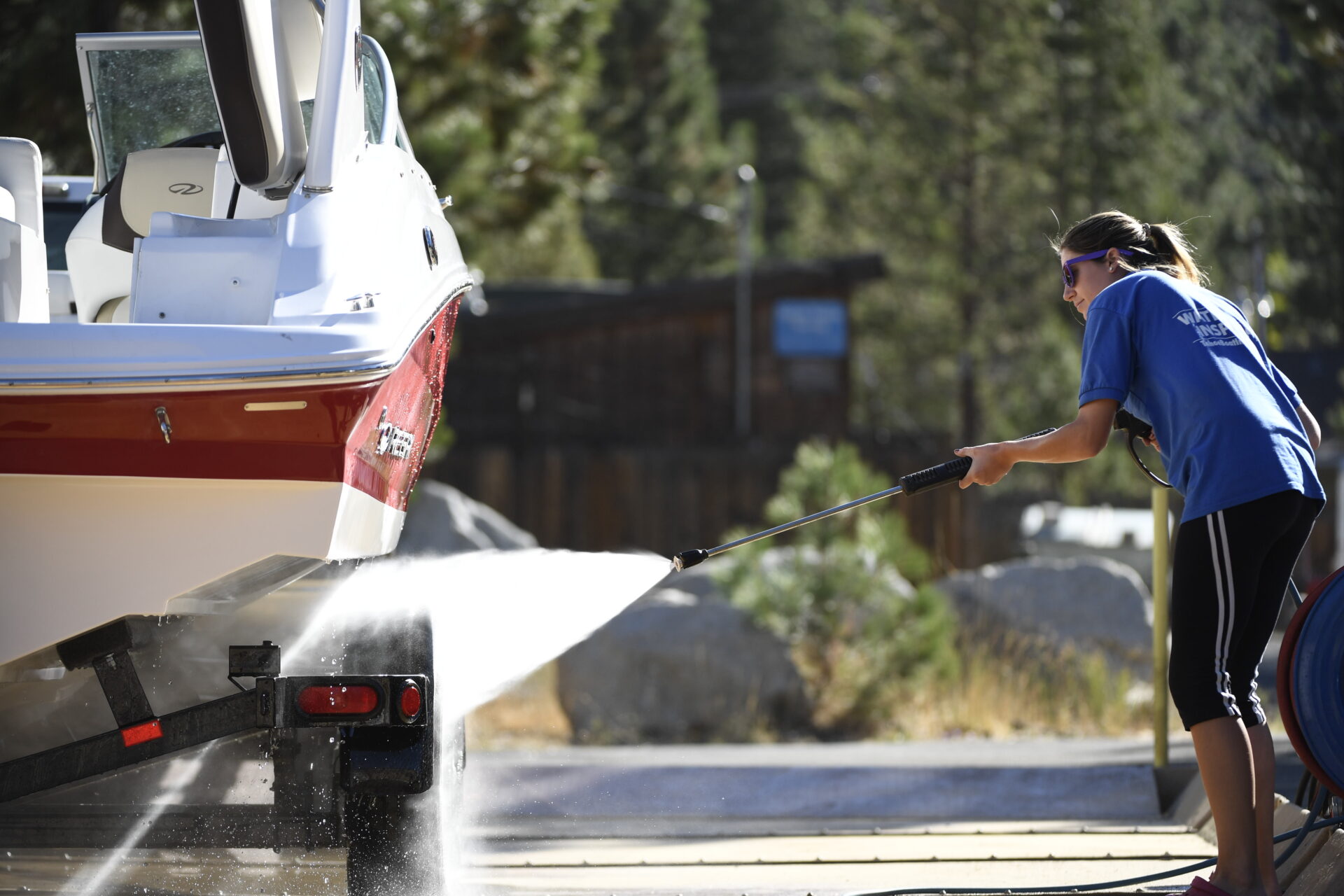
Decontaminating a boat in Tahoe before it enters the water. Photo: Corey Rich, Novus Select
Unlike mandatory motorized boat inspections (which cost between $60 and $350), however, those inspections are voluntary and free. The result has been 17,000 interactions between roving watercraft inspectors and Tahoe beachgoers, and the awarding of 8,400 “Tahoe Keepers” stickers — earned by visitors who spend 30 minutes watching a video and taking an online quiz about aquatic invasions. To further encourage prevention, Tahoe also provides visitors with CD3 (clean, drain, and dry) stations at beaches, which are mobile, solar-powered, and equipped with vacuums, blowers, and hoses.
Monthly samplings of the uppermost 40 feet of the lake now check for mollusks — early detection being much more effective than eradication post-invasion.
Collaboration as a Measure of Progress
Efforts by Team Tahoe agencies have clearly improved lake clarity, protected environmental health, and bolstered local watersheds and ecosystems, although Trump Administration funding cuts to the U.S. Forest Service, which manages three-quarters of the land in the Tahoe Basin, hasn’t helped.
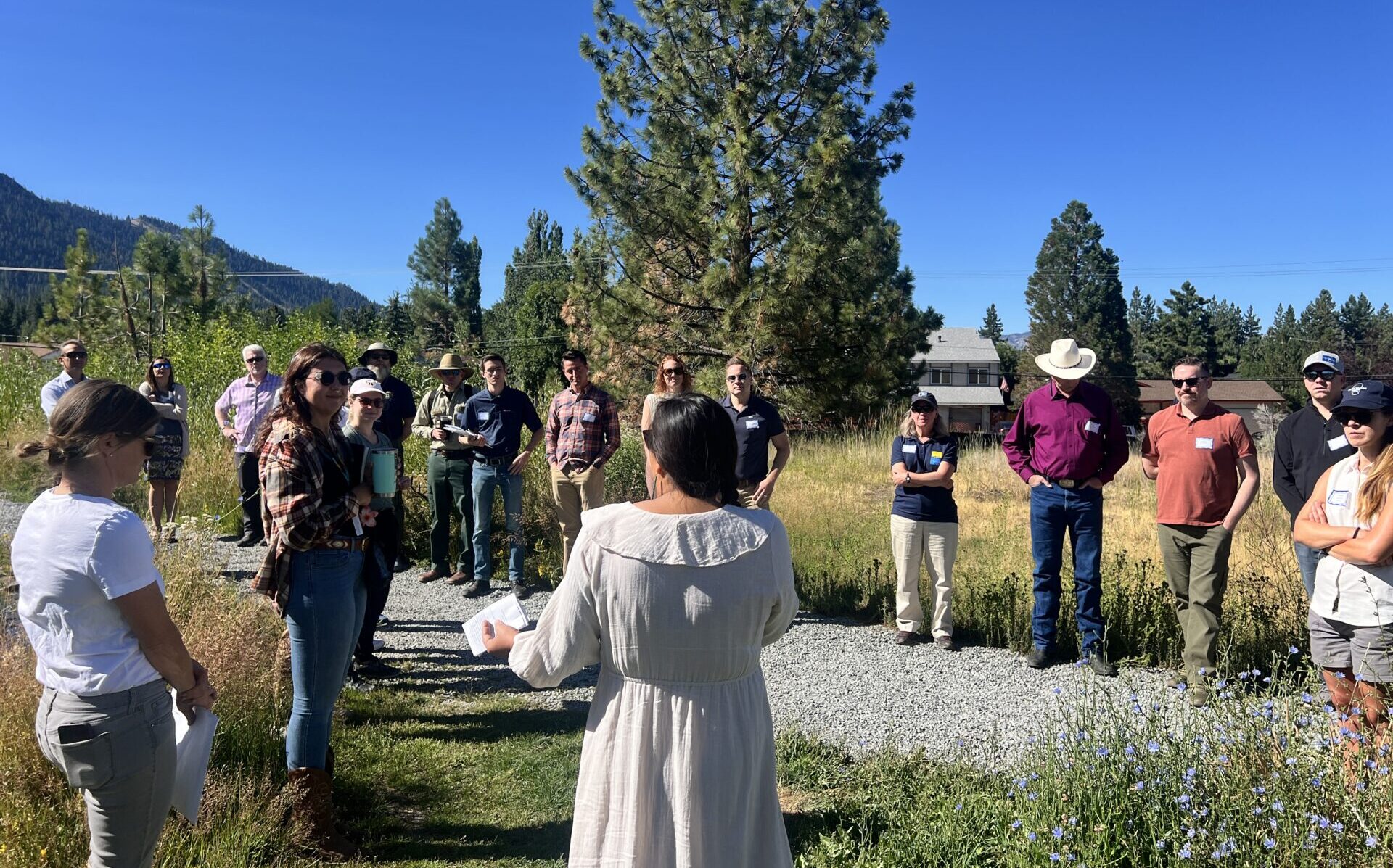
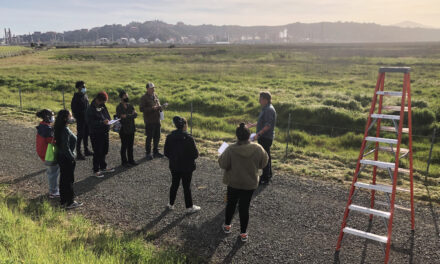
Collaborative meeting outdoors. Photo: TRPA
Undeterred, agencies working to restore the Tahoe Basin to a semblance of its pre-development natural state seem hell-bent on collaborating until they’re as blue in the face as the lake itself.
“We’ve seen that progress comes through partnerships because we do better when we work together,” says TRPA’s Regan. “While we can celebrate significant progress, much more needs to be done, especially as warming temperatures and more extreme weather events increase the threats to Lake Tahoe’s health and the safety of its communities. The stakes couldn’t be higher right now.”