


Weathering the Present While Training for the Future
A day of study at the School for Inclement Weather typically begins with the sprinkling of bird seed on a community altar. Surrounded by the redwood and evergreen forests of Kaishia Pomo land in northwest Sonoma County, facilitators and students add plants, books, bowls of water, and other keepsakes to the altar.
From June 2025 to June 2026, about 40 students joined the second season of Attune, an earth stewardship immersion program co-hosted by Weaving Earth and the School for Inclement Weather.
Lauren Hage, executive director of Weaving Earth, believes that in addition to ongoing climate emergencies, rising fascism and strenuous economic conditions have deepened an urgent need for the Attune program.The Bay Area is unique in that just 2% of the world has a similar Mediterranean climate. But increasing temperatures are causing major shifts in the Bay’s weather patterns. Projections of the decades ahead include declining fog, rising sea levels, and widespread wildfires. These environmental impacts are coupled with economic and political pressures mounting across the nation; “Bullsh*t jobs,” mass layoffs, and rising costs of living are outpacing average wages. Furthermore, burnout among American workers is now at a seven-year high.
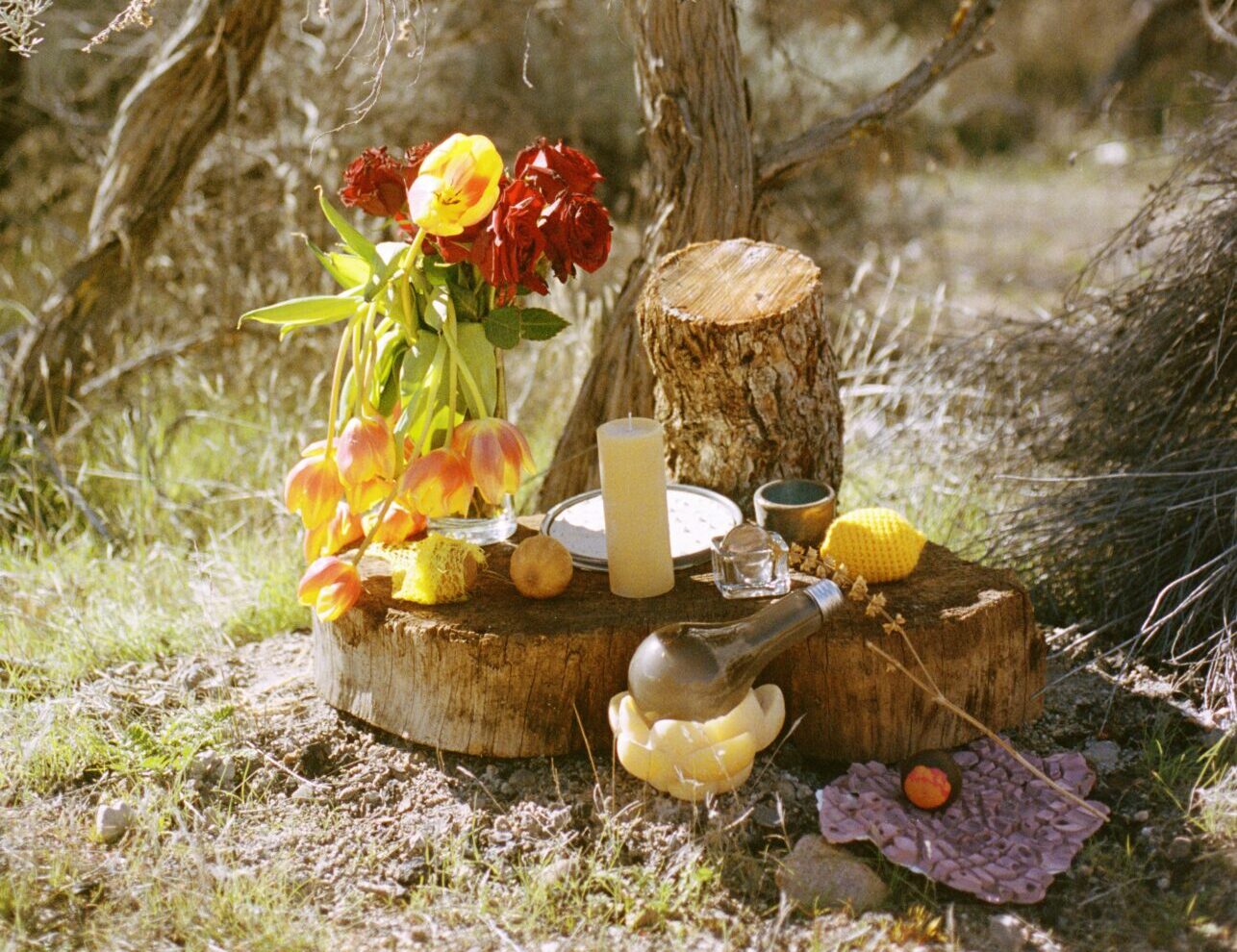
Altar at the School for Inclement Weather. Photo: TK Sloane
With so much on the line, people are seeking out programs where they can build community and develop certified skillsets in climate resilience. Attune participants have the opportunity to earn a Firefighter Type II qualification as well as certifications in Wilderness First Response and Embodied Ecology — but the program offers much more than just training for “greener jobs.”
According to Hage, the curriculum also grounds participants in ancestral land stewardship practices while helping them reconnect to their sense of intuition.
“Sometimes it’s hard to explain our work to funders because it encompasses so many pieces, and it’s all woven,” Hage admits. “One of our key goals is to compost the silos between ecology, justice, and spiritual wellness.”
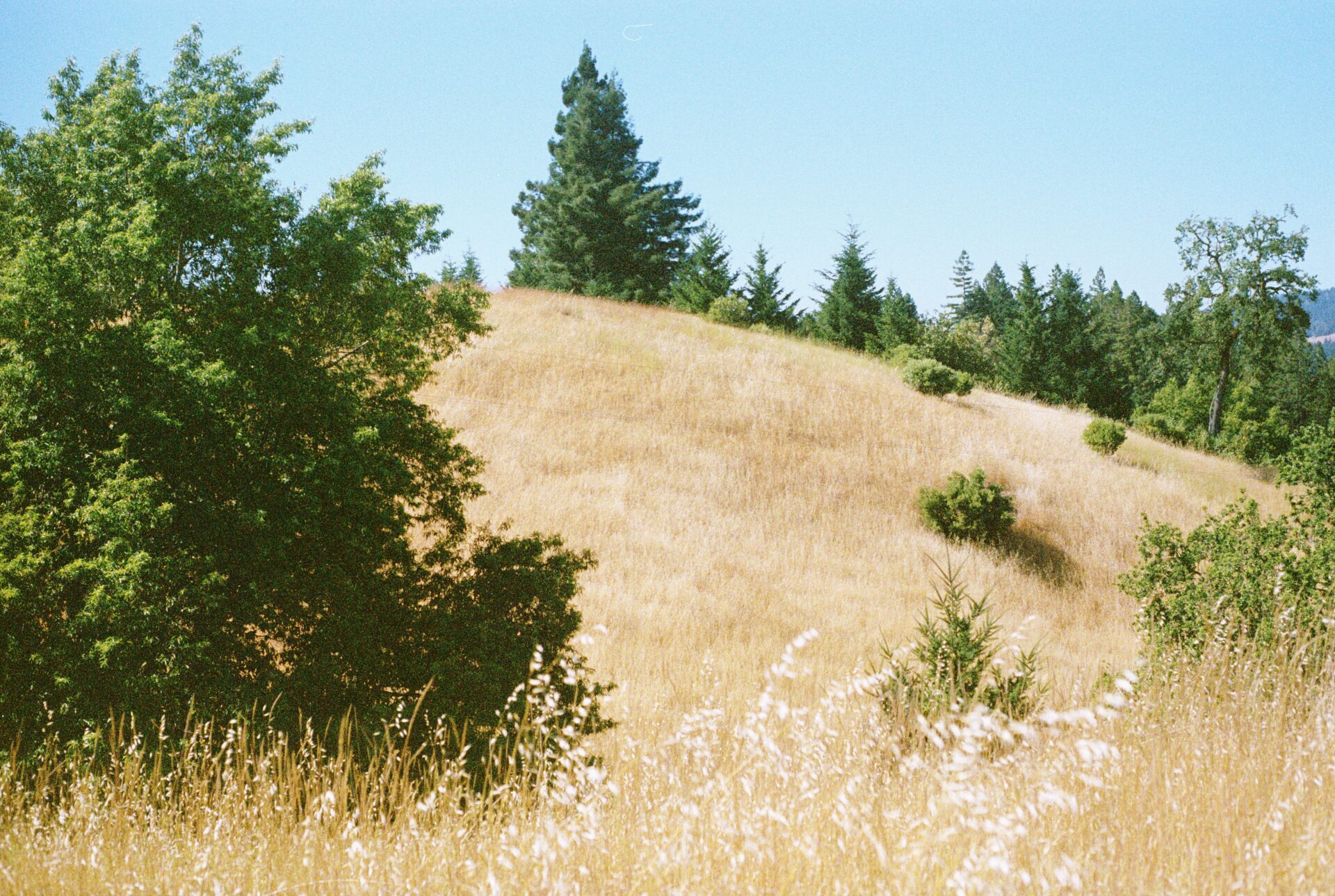
Rolling hills and forest landscape at the School for Inclement Weather. Photo: TK Sloane
Harnessing Awe
The Attune program is divided into four sessions: 1) Transforming the Shape of Alarm, 2) Fire Custodians, 3) Liberation Medicine and 4) Wild Witness. Each session is a reimagining of responses to climate crises. Typical disaster preparedness evokes images of underground bunkers and stockpiled freeze-dried food. In contrast, Attune focuses on “disaster companionship,” a term coined by program facilitator Jiordi Rosales referring to “the systems of knowledge and care that emerge from weathering the earth (and each other) in an era of planetary demise.”
In the first session, facilitators redirected students’ attention toward experiencing awe. A wide range of studies from the last decade have shown that awe has physical, mental, and social health benefits, such as reducing inflammation in our bodies, helping us think more critically, expanding our perception of time, and increasing our sense of generosity and interconnectedness.
Studying birds and mindful bird-watching is one of the many ways Attune cultivates a sense of awe and enchantment: “One of the things we talk about is how paying attention to birds shifts our somatic shape,” says Hage. “It opens up our chest, invites our heads to look around. There’s an orientation happening. There’s oftentimes a song [that] will bring a smile to our face. All of these things are very well studied somatic practices for supporting your nervous system.”

Photo: David Harper
After that, students worked toward becoming caretakers of the forest. In this session, they not only gained their Wildland Firefighter Type II qualification, but also took the time to contemplate ancestral and political traditions and histories of working with fire. This season’s Attune cohort participated in two prescribed burns: eight-acre and one-acre broadcast burns. Both consisted of redwood understory, mixed coastal hardwood understory, and grassland.
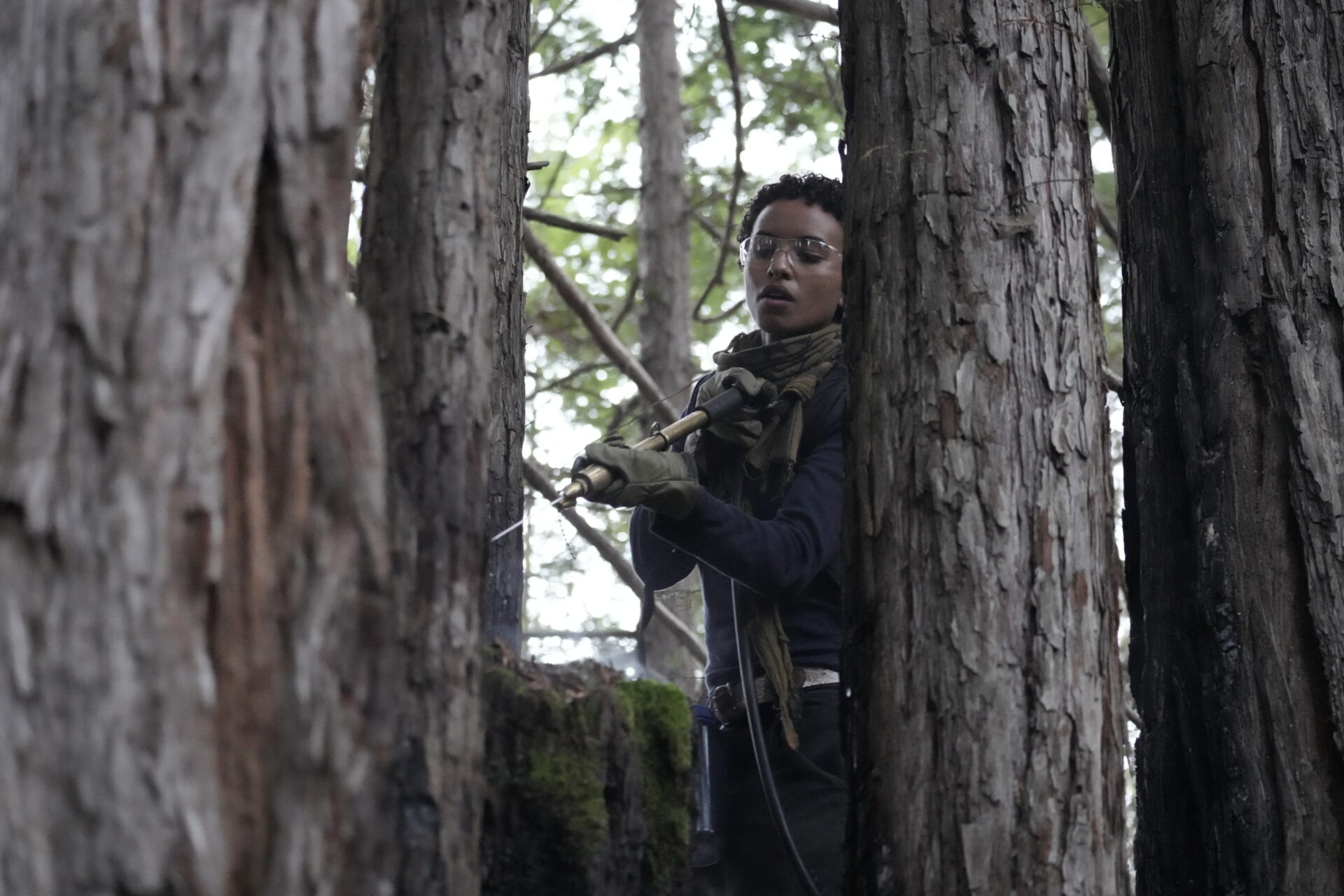
Attune participant working on the water crew of a prescribed burn at the School for Inclement Weather. Photo: David Hage
Rosales, a California Certified Burn Boss and the co-creator of the School for Inclement Weather, recently reflected on some of the challenges and lessons learned from teaching the coursework: “The FFT2 coursework is really useful but has takeover spirit and is steeped in whiteness,” he wrote. “Because of its military-style orientation to fire suppression and coordination, it requires extensive framing and balance with fire teachings rooted in Indigenous histories and practice.”
But for some participants, obtaining credentials like the FFT2 qualification was neither a priority nor a possibility.
“As a disabled person, I am not receiving the certificates because some of the physical requirements were too demanding and caused a lot of stress on my health,” says Aja Lenae, a teaching artist at the Museum of African Diaspora in San Francisco who prefers not to use their last name. “What called me here was not to do a wilderness first responder certificate. What called me here was not to become a fire janitor. What called me here was to be in witness and to be in a prayer practice and to poeticize and beautify this longing of the Earth.”
Over the course of two years of participation, Aja Lenae collaborated with program facilitators to develop a more inclusive way for people with disabilities to participate in prescribed burns. Together, they created the designated spiritual role of “witness” to the fire.
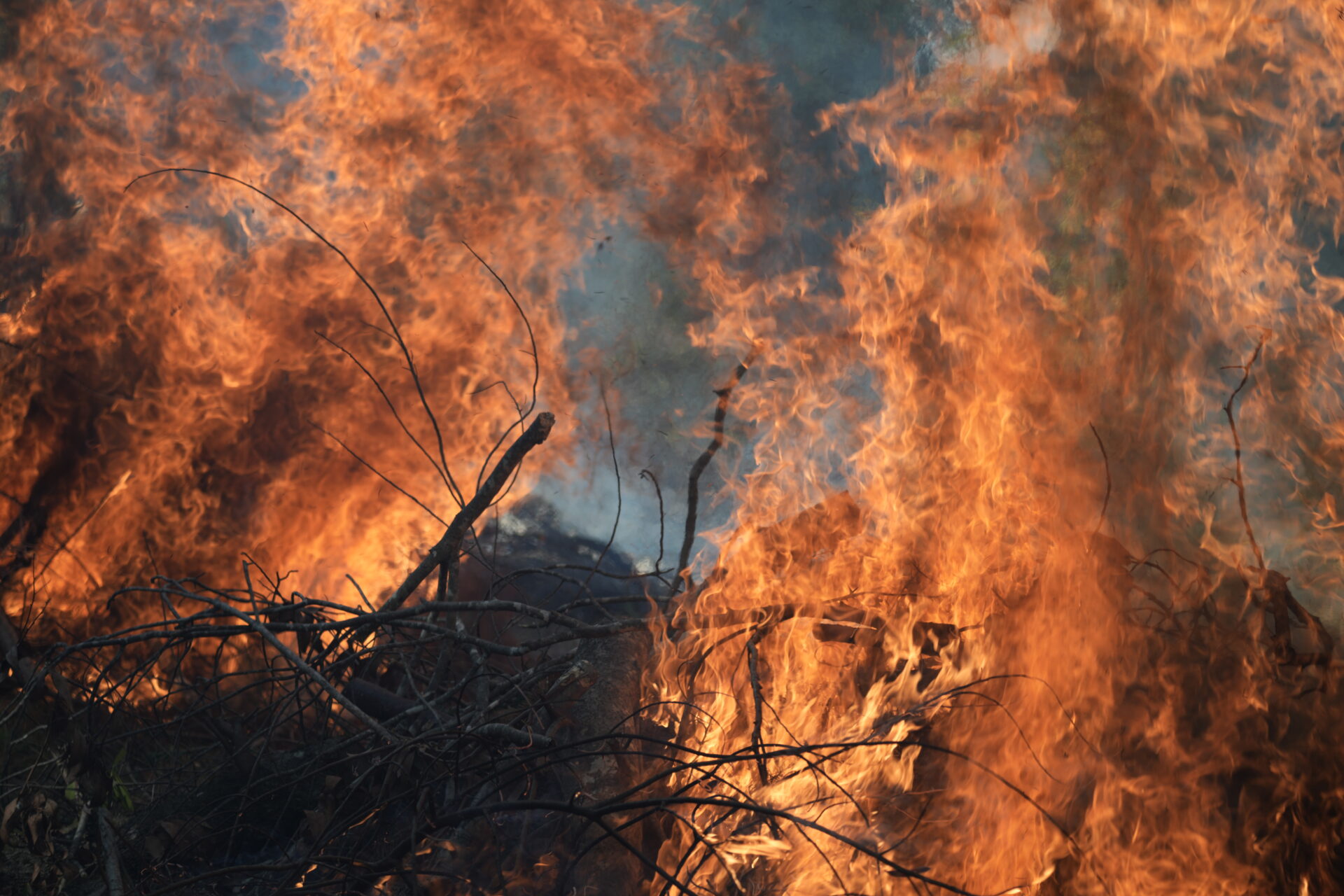
A wall of flames from a prescribed burn at the School for Inclement Weather. Photo: David Hage
“We had a little cart, and we had our altar on the cart, and we were just moving around [or] just being still and being a witness of the fire,” says Aja Lenae.
Rooting in Activism
During the third program session, specialty instructors from the Solidarity Field School taught wilderness first response and ecological first aid. In addition to covering key components of safety and medicine, the training emphasized traditional ecological knowledge and explored emergency scenarios that arise during civil disobedience, protest, and direct action, particularly in the context of protecting and defending nature as sacred (think the No Coal in Oakland or Stop Cop City movements).
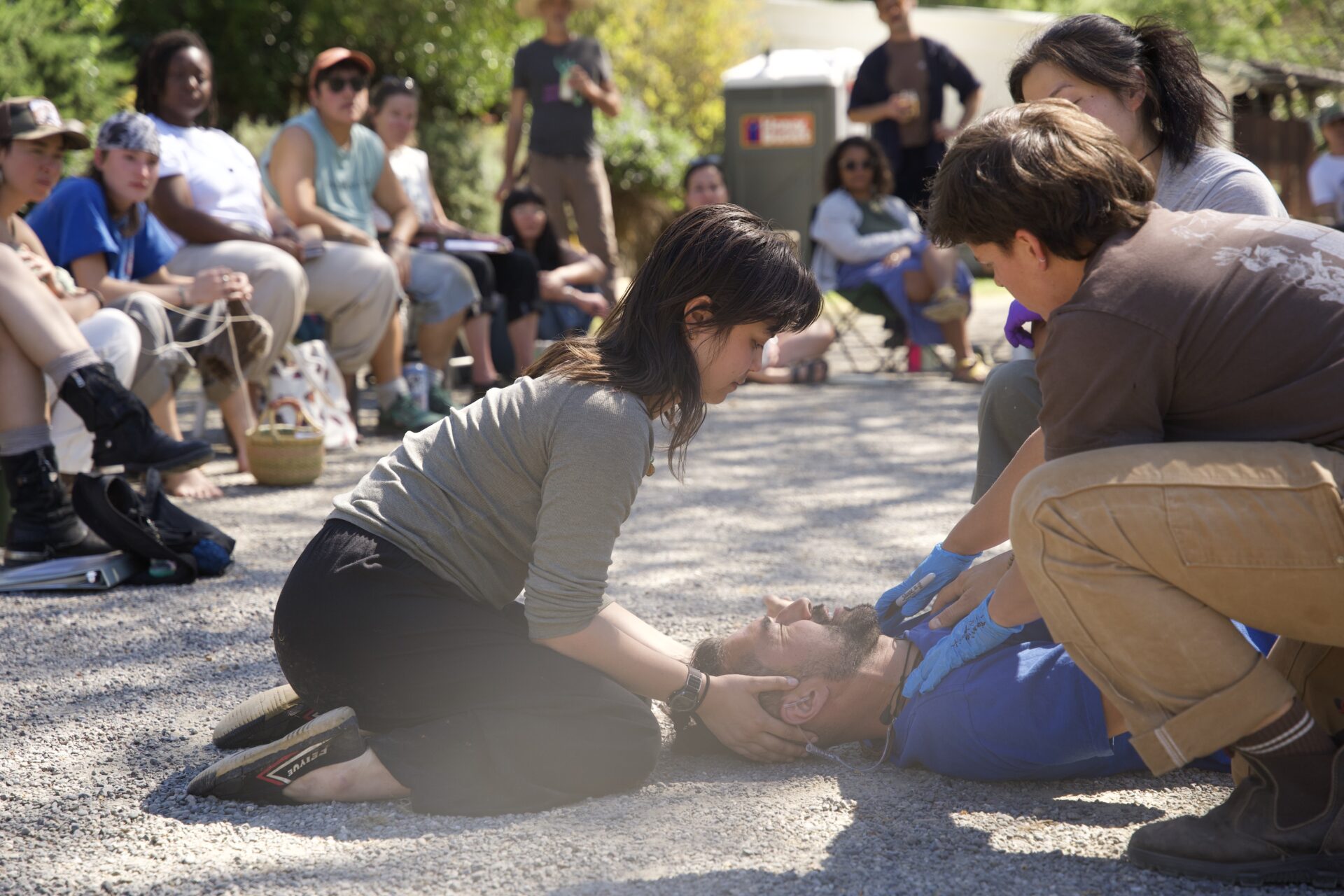
Attune participants practicing wilderness first aid. Photo: David Hage
Program facilitator Brontë Velez also recounted the history of Black paramedics who were on the frontlines providing the first version of modern emergency medical services we still use today. In 1967 during the civil rights movement, Black community members of the Hill District in Pittsburgh were denied transport during medical emergencies. In an effort to meet this critical need, a local organization called Freedom House created the first advanced ambulance service. Freedom House paramedics took their first calls during uprisings over the assassination of Dr. Martin Luther King Jr.
Wangũi Hymes, a housing activist, found the wilderness first aid training to be by far the most impactful part of the program. According to Hymes, sitting with the history of Freedom House while learning how to set bones and make splints felt deeply poetic. It reminded them that they’re part of a lineage of Black people who have taken the time to learn medical skills necessary to help heal their communities.
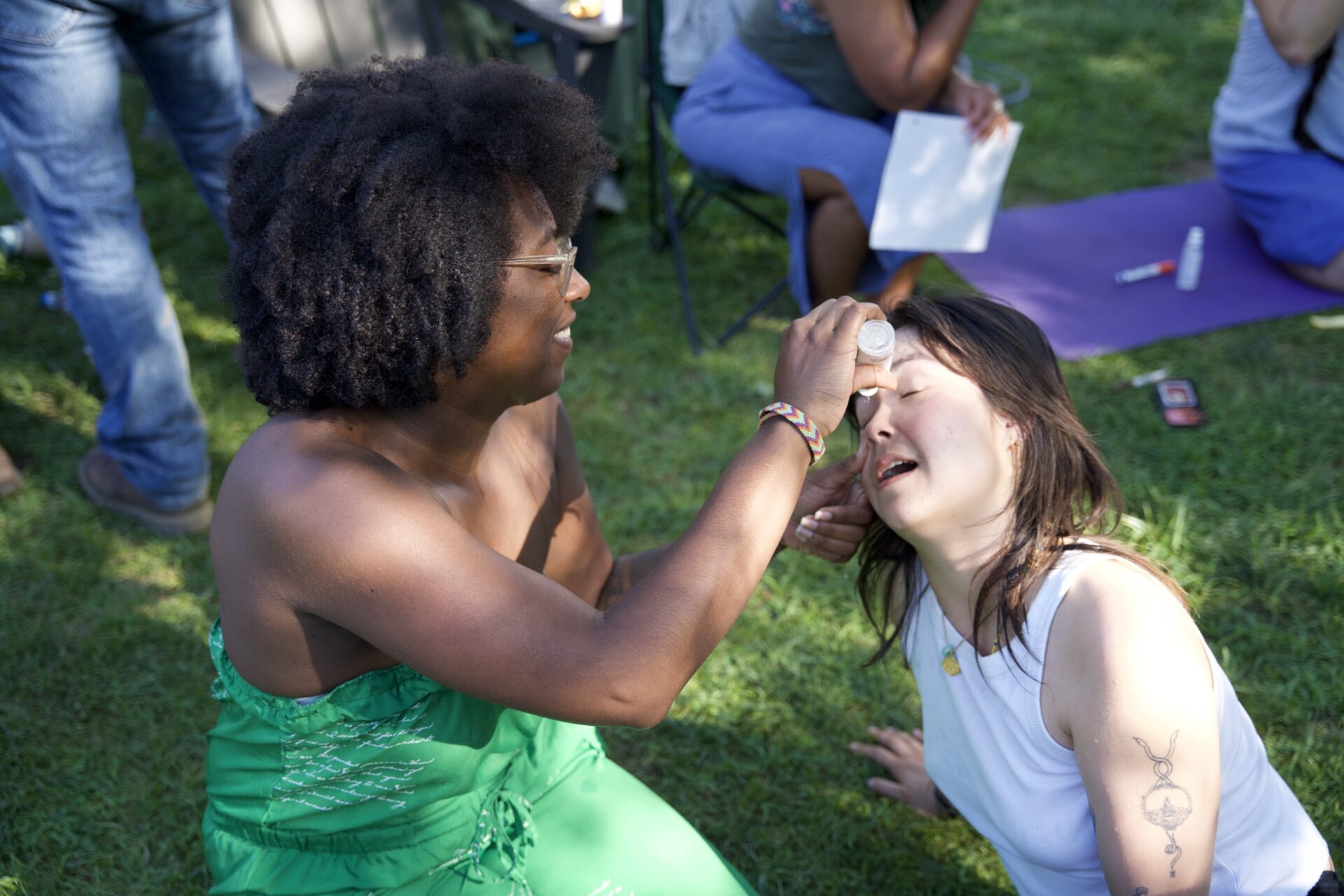
Attune participant learning how to administer eye care. Photo: Kyra Glover
“There’s stories that you hear that kind of bend time,” Hymes says. “We’re literally living in a reality where they’re cutting billions of dollars from Medicaid. And they’re literally targeting trans babies that ain’t done sh– to nobody. They’re literally closing down hospitals. We already know what the stats are when it comes to Black and Brown bodies in hospitals, whether they’re ones that can give birth or not. So I think that’s why it was such an intense week, because I felt how close the history is to today. … I have a brother who is on Medicaid because he has a pretty severe mental illness, and my mom and I have talked about what happens if he loses his Medicaid. … Having those histories so close added to the potency.”
Witnessing Changes
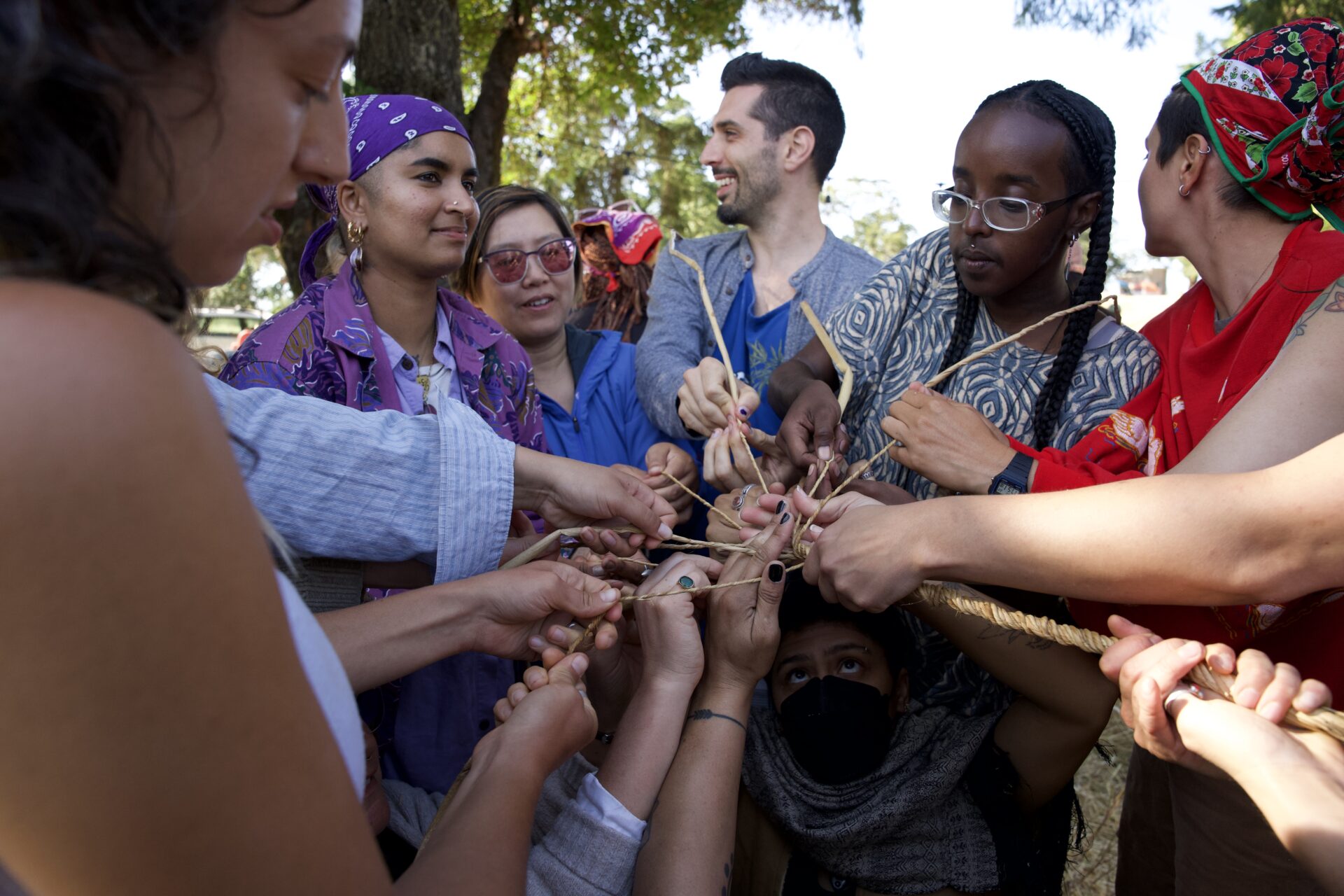
In the closing session of Attune, called Wild Witness, participants celebrated and reflected on the transitions they underwent and the lessons they learned throughout the program. During this final gathering, students engaged in activities ranging from ritual storytelling and performance art to guided meditations.
Graduates are now using their training and newfound connections to tend to their communities in a variety of ways. One serves as a clergy person at a university and has begun weaving the program’s teachings on Earth intimacy into their work. Another began training as an EMT.
For Hymes, the program sparked a lot of ideas they hope to apply in their work in the sustainable housing field and in international activism. Relationships they built at Attune helped them garner support for their organizing work with BACACHA, which is currently working to raise $40,000 to transition a plastic recycling plant in Cuba from fossil fuels to solar energy.
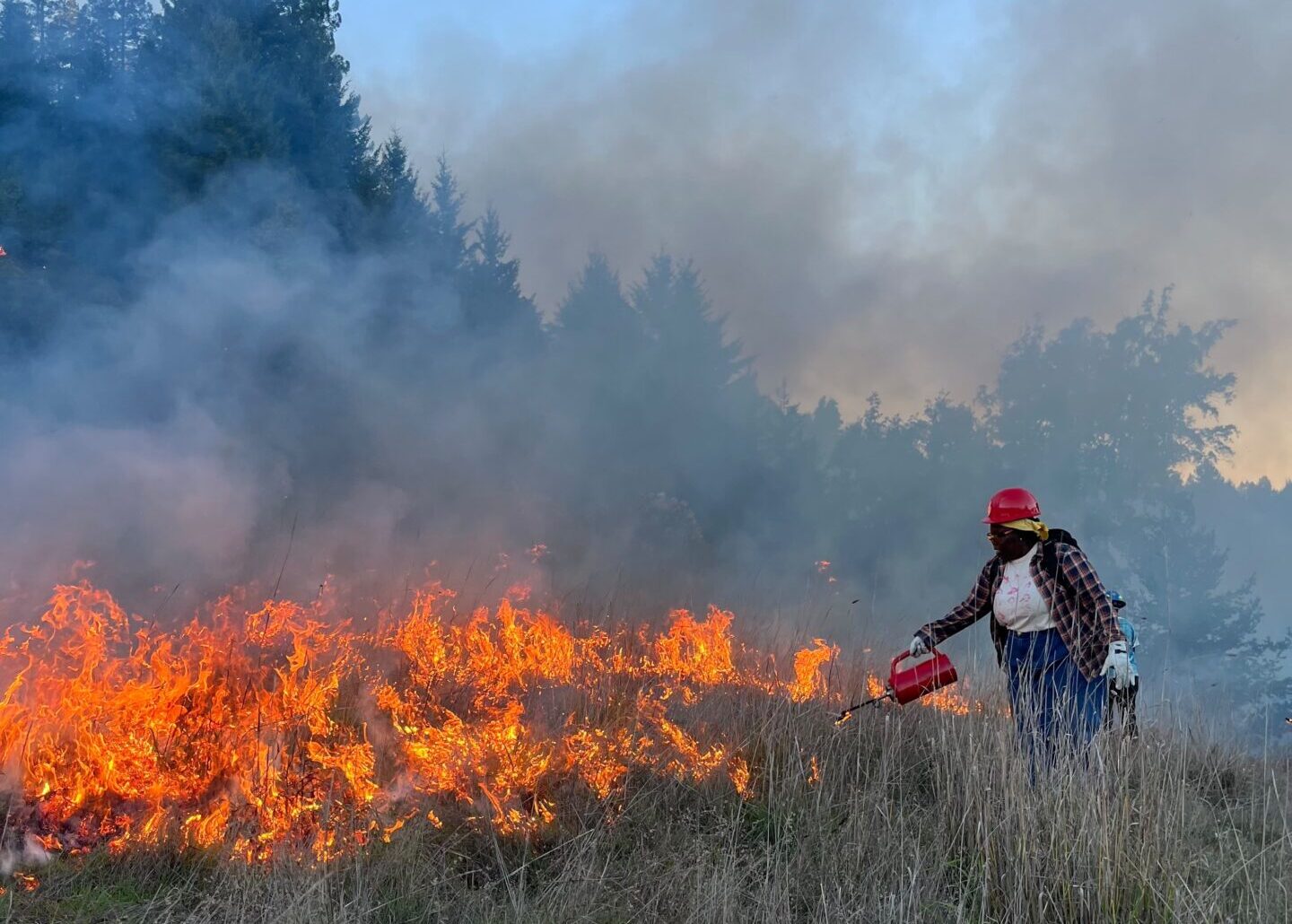
Attune participant Wangui Hymes administering a prescribed fire. Photo: Kahayag Fay
For Misty Blue, an Anishinaabe citizen of the White Earth Nation in Minnesota, Attune was instrumental in preparing her for her new role as an AD (administratively determined) firefighter with White Earth Nation Fire. It’s an on-call position compensated at a flat hourly rate. “This structure allows me to work my normal 9-5 but support the tribe on weekends or when I’m able to,” she says. So far, Blue has supported three prescribed burns over the course of this calendar year.
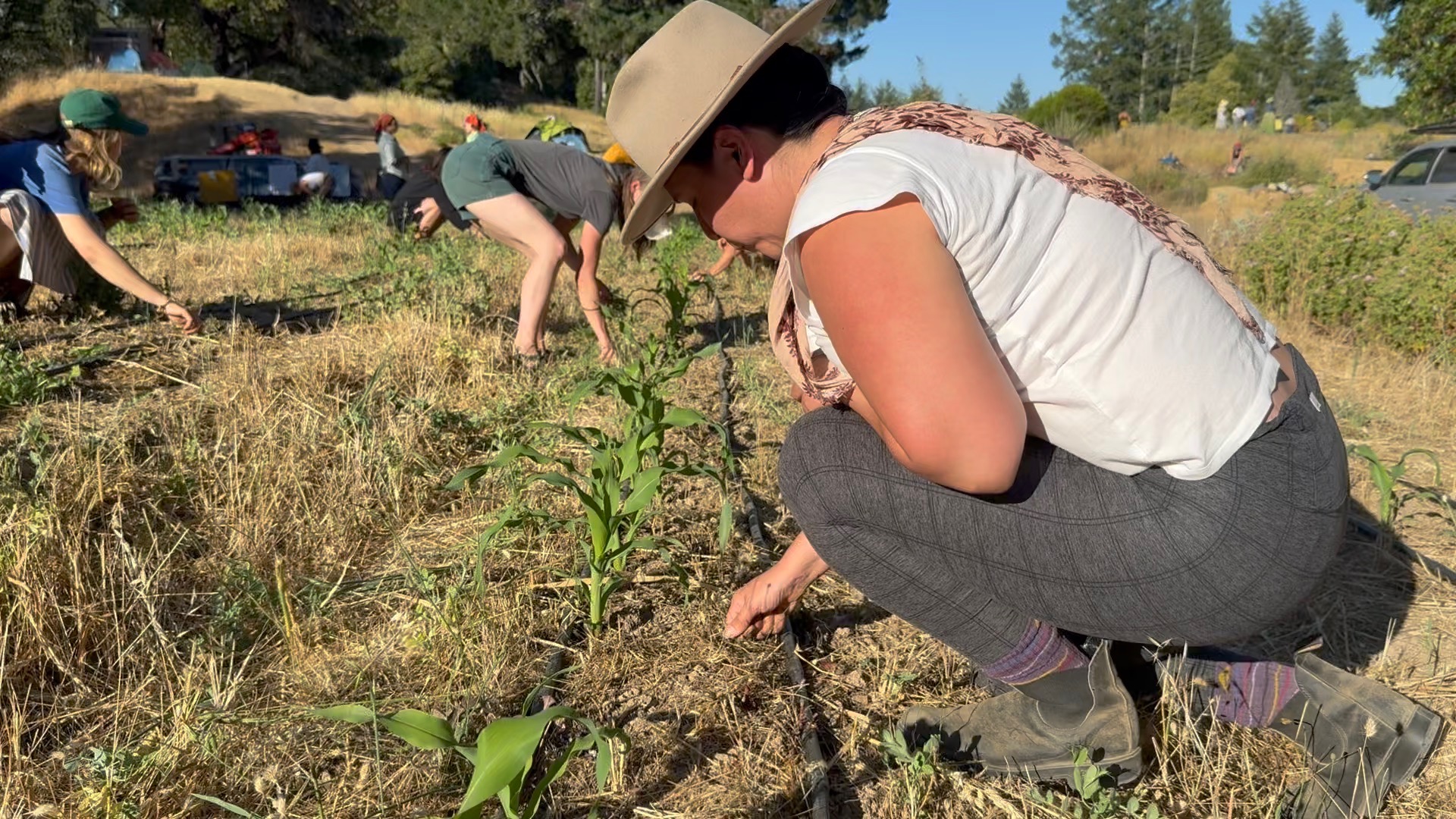
As a graduate of both seasons one and two of Attune, Aja Lenae’s experience in the program has influenced both their artistic practice and their work as an arts educator. Their forthcoming work of fiction was inspired in part at the School for Inclement Weather. When it comes to the classroom, Aja Lenae’s teaching style is now more focused on encouraging curiosity and practicing mindfulness with their students.
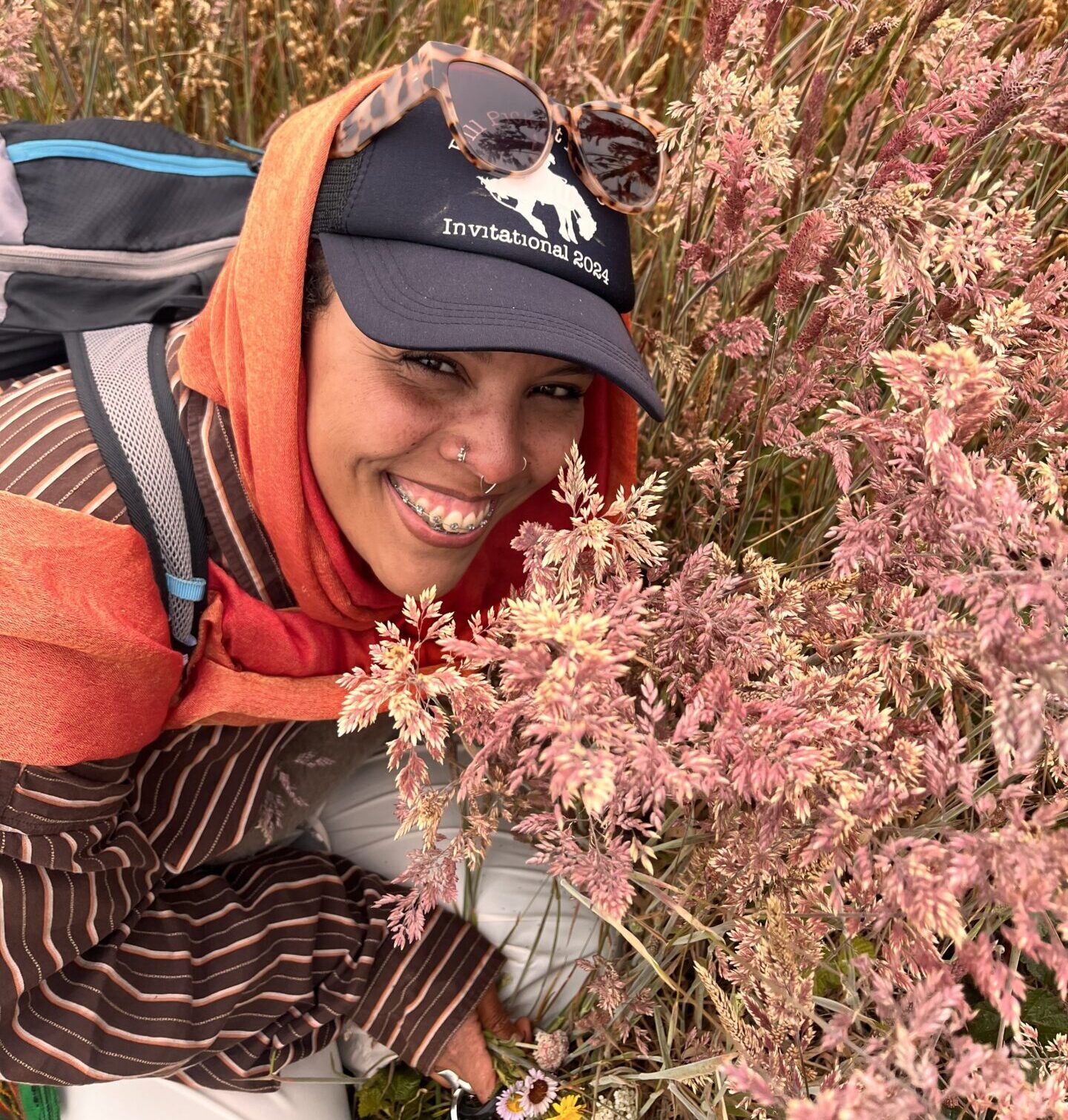
Aja Lenae Johnson during Attune. Photo: Emma Quan Dewey
Overall, graduates say the beauty of Attune is that it creates a spiritual resonance within each cohort that echoes beyond the experience itself.
“Attune is so much about world building,” says Johnson. “It’s a group of people coming together who want to build different worlds. In order to world-build, you have to be able to be creative.”