




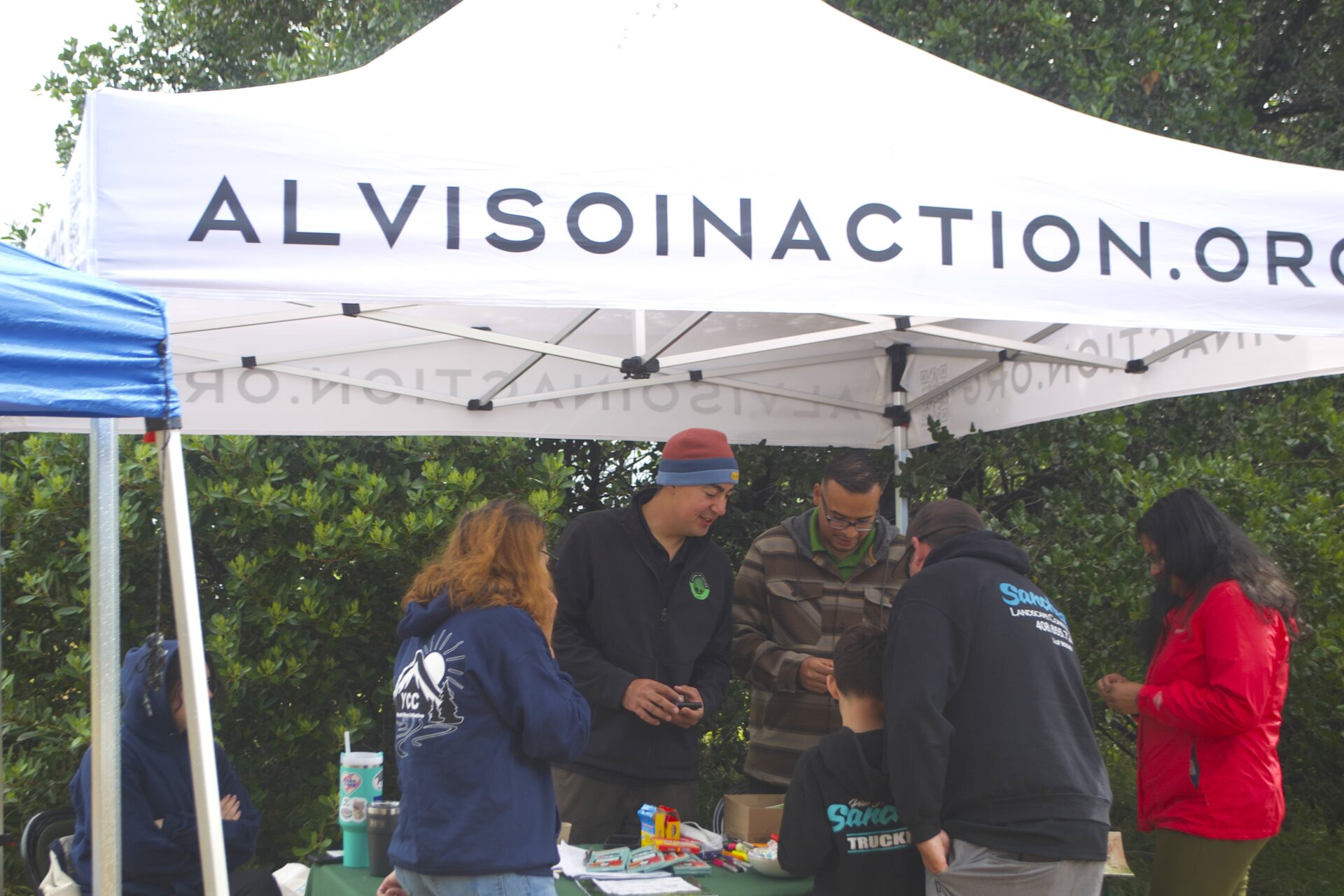
Photo: Alviso in Action
On a still Wednesday evening in North San José, the South Bay Yacht Club in Alviso buzzes with excitement. Every month, environmental justice organization Climate Resilient Communities and local organization Alviso in Action partner to host United Alviso for Change — a meeting that feels more like a family reunion than a discussion on climate change.
As the sun sets along the San Francisco Bay shoreline, residents slowly trickle into the yacht club for the meeting, grabbing a plate of Mediterranean food and cracking jokes with each other. Kamille Lang, director of outreach and education at CRC, facilitates the meetings — where CRC works with residents to build local climate resilience — with a certain warmth that you later realize is just innate to Alviso.
“Just the energy in the room — that’s enough to make you fall in love with this community and this place,” Lang says.
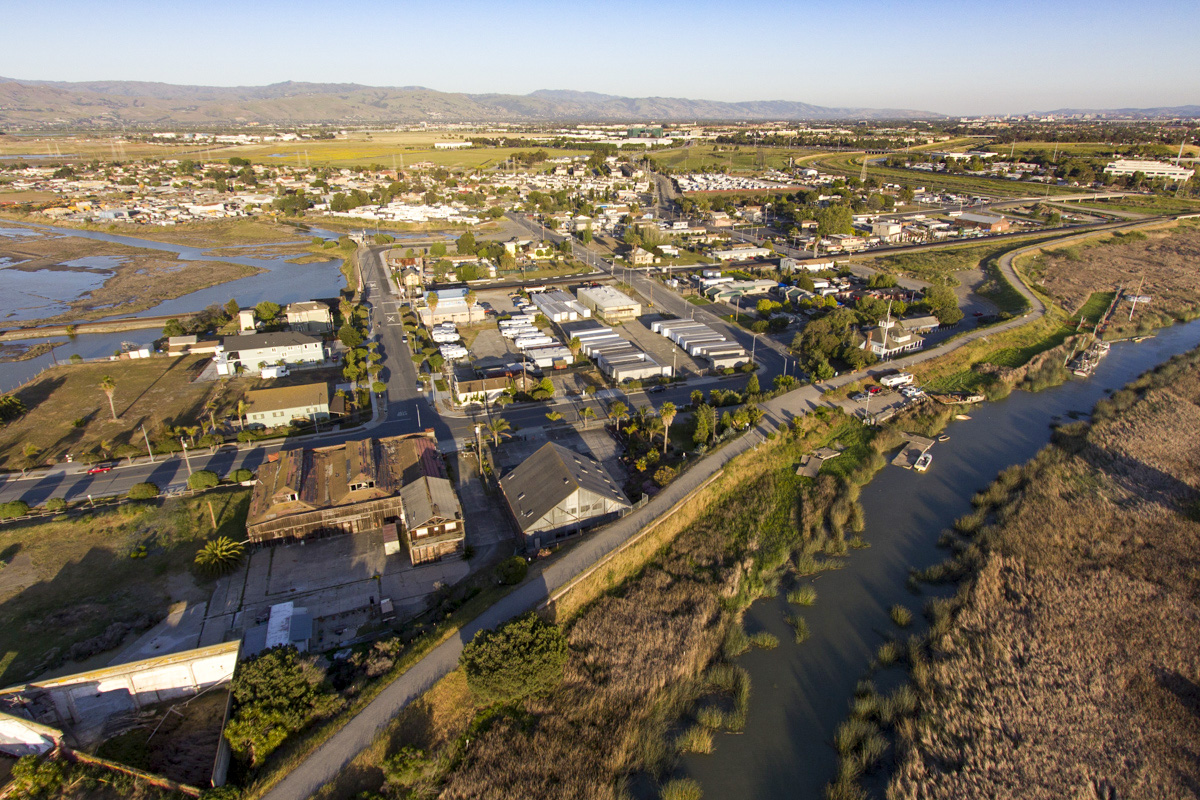
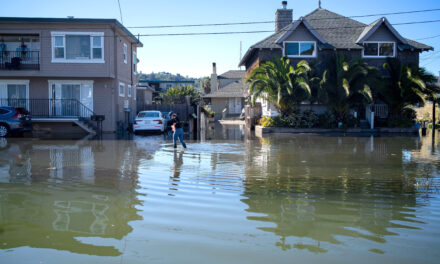
The Alviso district of San José. Photo: Cris Benton, Kite Aerial Photography
Alviso is a tiny community of just over 2,000 residents on the northern edge of San José. Nestled right by the Bay, the community was once a thriving port town, but is now on the frontlines of sea level rise and environmental negligence.
Picture of Perfection
In 1968, San José annexed Alviso. Since then, it “has had to compete with the rest of the City of San José for resources,” Lang says. But for more than a century before that, Alviso was a prosperous, independent town, once described as “the picture of perfection” by the Daily Alta California in 1849.
Located conveniently along the water, Alviso became home to a booming port town known for its successful canneries and fisheries. In fact, it was the only port in Santa Clara County, making it the heart of the region’s trade and travel. It was widely regarded as having “extraordinary potential as a regional center for industry and commerce,” according to San José’s Historic Context and Survey Project.
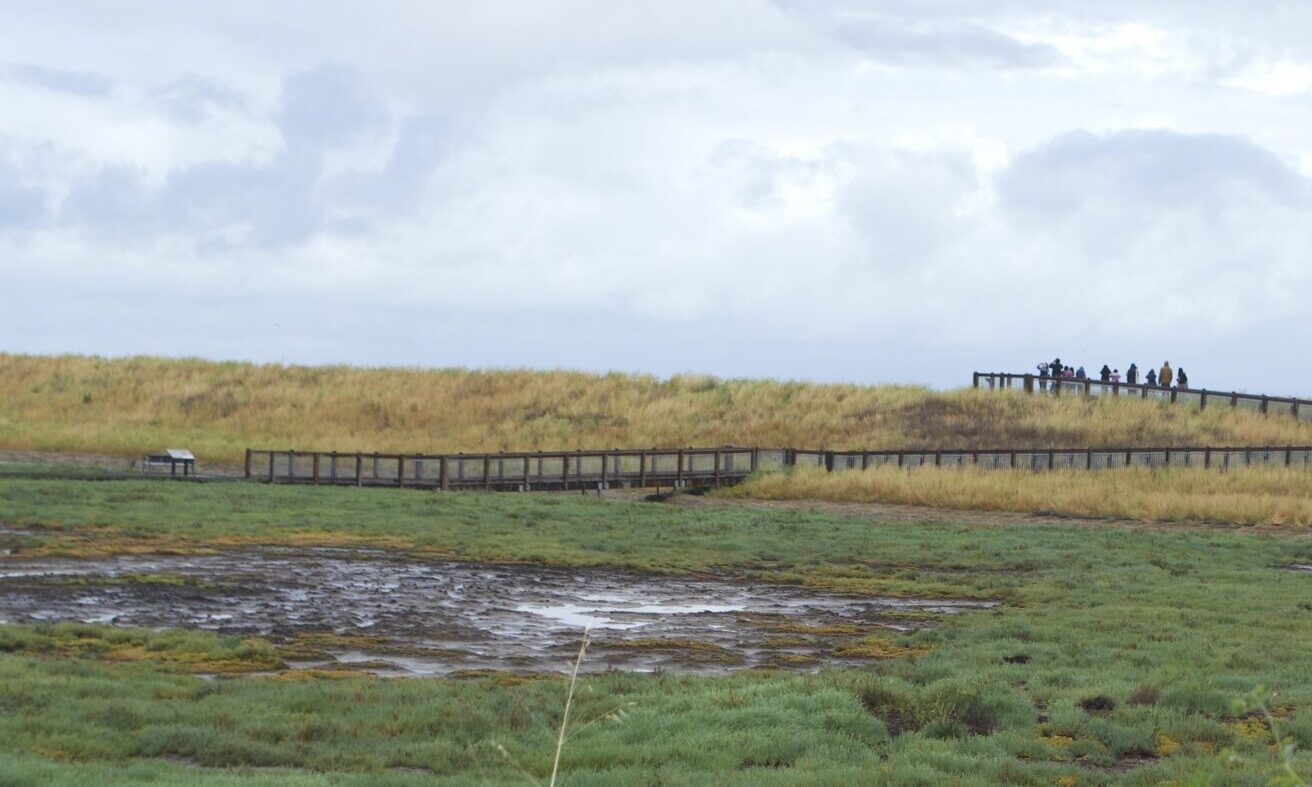
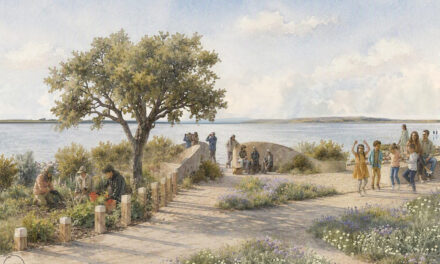
Exploring Alviso’s marshes during a recent Alviso in Action event. Photo: Padma Balaji
Like many small towns, Alviso struggled to stay afloat with a small tax base and frequent flood damage it couldn’t pay for. Throughout the 1960s, the City of San José campaigned to annex Alviso, offering more funding and stronger infrastructure.
Alviso residents voted against the annexation twice before it passed — and then only by a marginal difference of just nine votes.
San José promised new roads, a community center, and flood control measures — and although the city did build some of these, the majority Latino Alviso neighborhood argued the services it received were inequitable, and won a federal appeal. The city was required to improve its services or risk losing federal funding. But despite fighting for it, generations of residents have seen little progress.
“A lot of people felt disenfranchised. They voted for this, thinking it was going to benefit them, and then, in reality, it never did,” says Marcos Espinoza, the founder of environmental organization Alviso in Action. His family, like many others in the community, has deep roots in the bayside neighborhood dating back to the 1960s.
The Origins of Distrust
Even before the annexation, Alviso was already at the center of an environmental crisis, particularly because of its susceptibility to flooding. The low-lying area sits by the bayshore, is sandwiched between two rivers, and has a long history of groundwater pumping that has caused it to sink even further — all of which makes Alviso unusually flood prone.
During the 20th century, the town experienced almost 10 major floods, along with countless minor ones. Parts of Alviso sank by as much as 13 feet between 1915 and 1969, according to Valley Water, Santa Clara County’s water district.
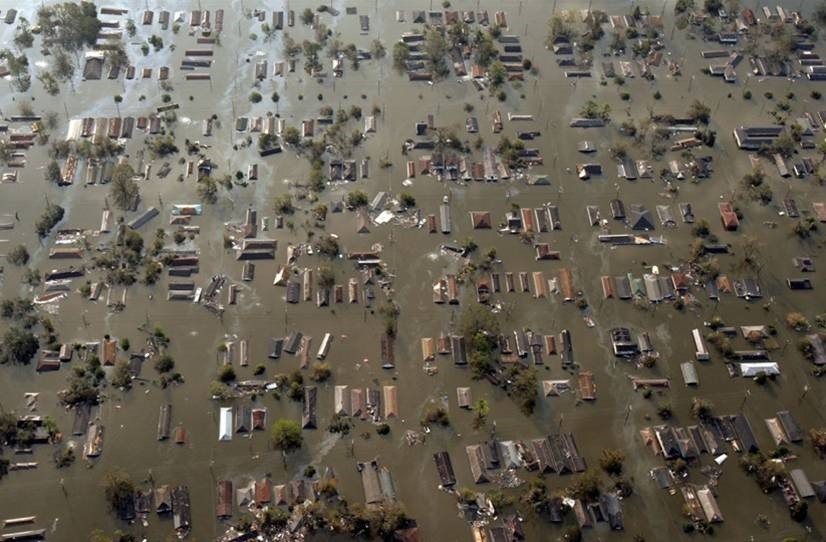
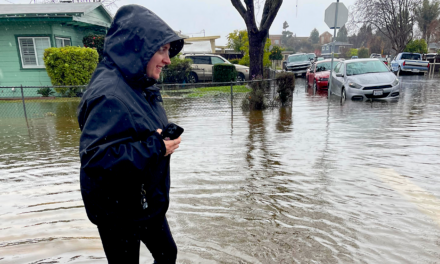
A flood in 1983 swamped the community. Photo: U.S. Fish and Wildlife Service
And in 1983, Alviso was hit by its most catastrophic flood — a 100-year event, meaning it only had a 1% chance of occurring in any given year. After three months of heavy storms, the Guadalupe River and Coyote Creek, which border Alviso on either side, both overflowed, leaving Alviso underwater for more than a week.
Residents had alerted the city manager several months in advance, flagging an imminent flood risk, but San José failed to do anything. More than 350 residents were displaced.
“The flood of 1983 was a really big turning point for the community, and a lot of residents see that event as the source of their distrust in the City of San José,” says Gigi Jones, a Santa Clara University student who helped conduct oral interviews for a climate vulnerability assessment in Alviso.
The community, which was evacuated after the flood, was told after just 10 days that their homes would be taken by the city because they were considered “abandoned,” according to oral history interviews conducted by SCU. More than 100 people came together to break past a police barricade blocking off their homes, chanting “Viva Alviso” as they surged through.
“It was a really powerful image of … just how tight knit and strong the community can be,” Jones says.
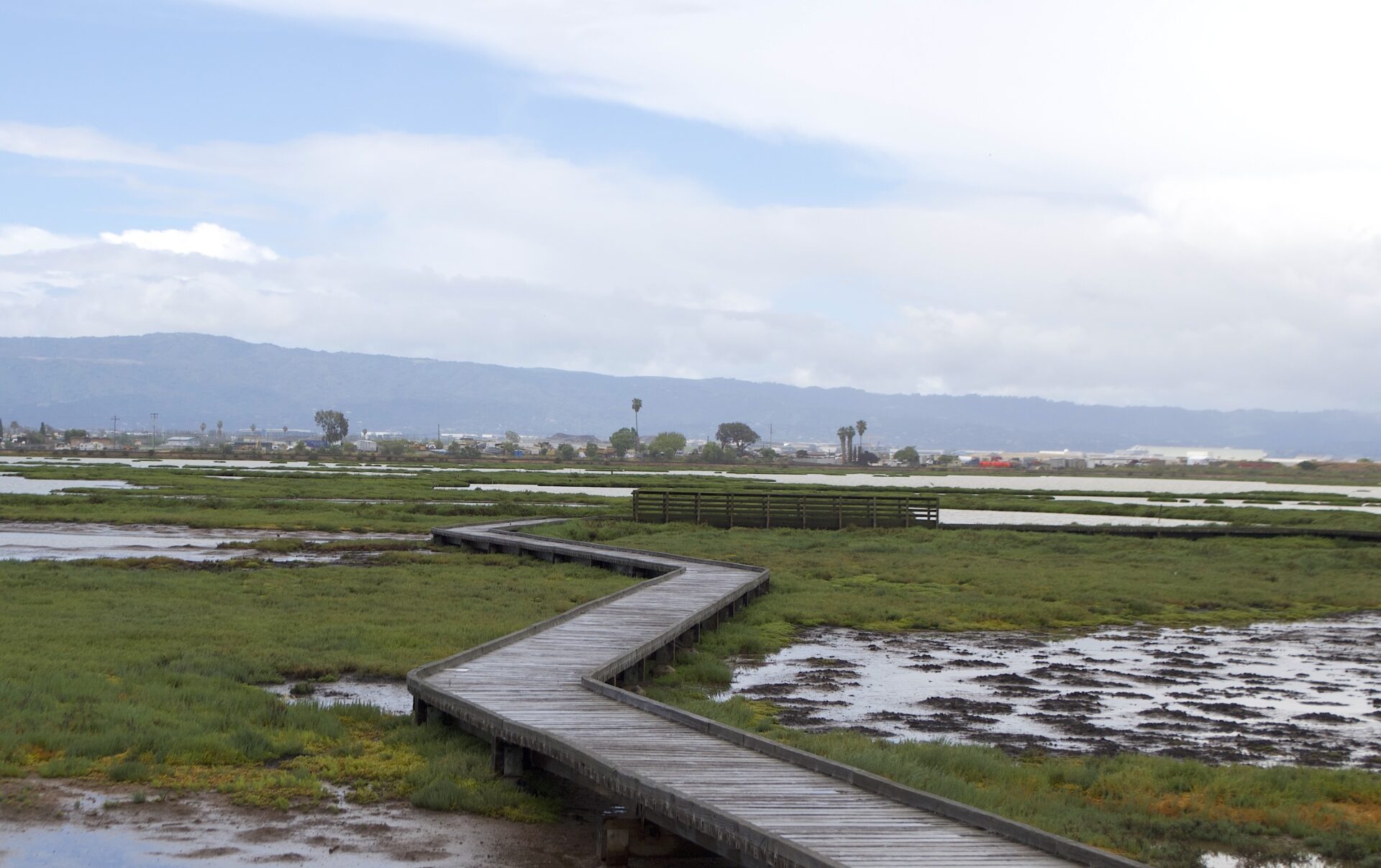
Boardwalk over restored marshes, which provide natural buffers and sponges to soak up flood waters in Alviso. Photo: Padma Balaji]
It wasn’t until six years later, in 1989, that San José and the water district paid any damages to Alviso families. And just a few years after that, in 1995, Alviso experienced another 100-year-flood event, when the Guadalupe River surged yet again.
SCU student Grace Falci, who also worked on the community vulnerability assessment, says residents “don’t really trust the city to give advance notice of flooding events or provide resources in the event that a flood does happen — because it’s happened before, and the city hasn’t upheld their promises.”
Shifting Power Dynamics with San José
As development started to roll into Alviso during his childhood, Espinoza wanted to channel Alviso’s legacy of activism and, with his friend and fellow Alvisan José Villa, started Alviso in Action to “bring back that community voice.”
“We won’t be able to stop [environmental problems] necessarily, but we can figure out ways to mitigate these impacts,” he says.
In 2024, CRC approached Alviso in Action with the goal of starting a Climate Change Community Team, one of a number of local climate groups that CRC runs in frontline communities across the Bay Area.
“These conversations are meant to center around climate change, but ultimately are really prioritizing the concerns that the residents want to see solved in their community,” says Lang, who runs Alviso’s CCCT, also known as United Alviso for Change.
CRC helps provide a warm meal at every meeting and a stipend for each resident who participates, along with $15,000 of seed funding to help launch community resilience projects.
“There’s a lot of knowledge and lived experience that residents of these communities [have],” Lang says.
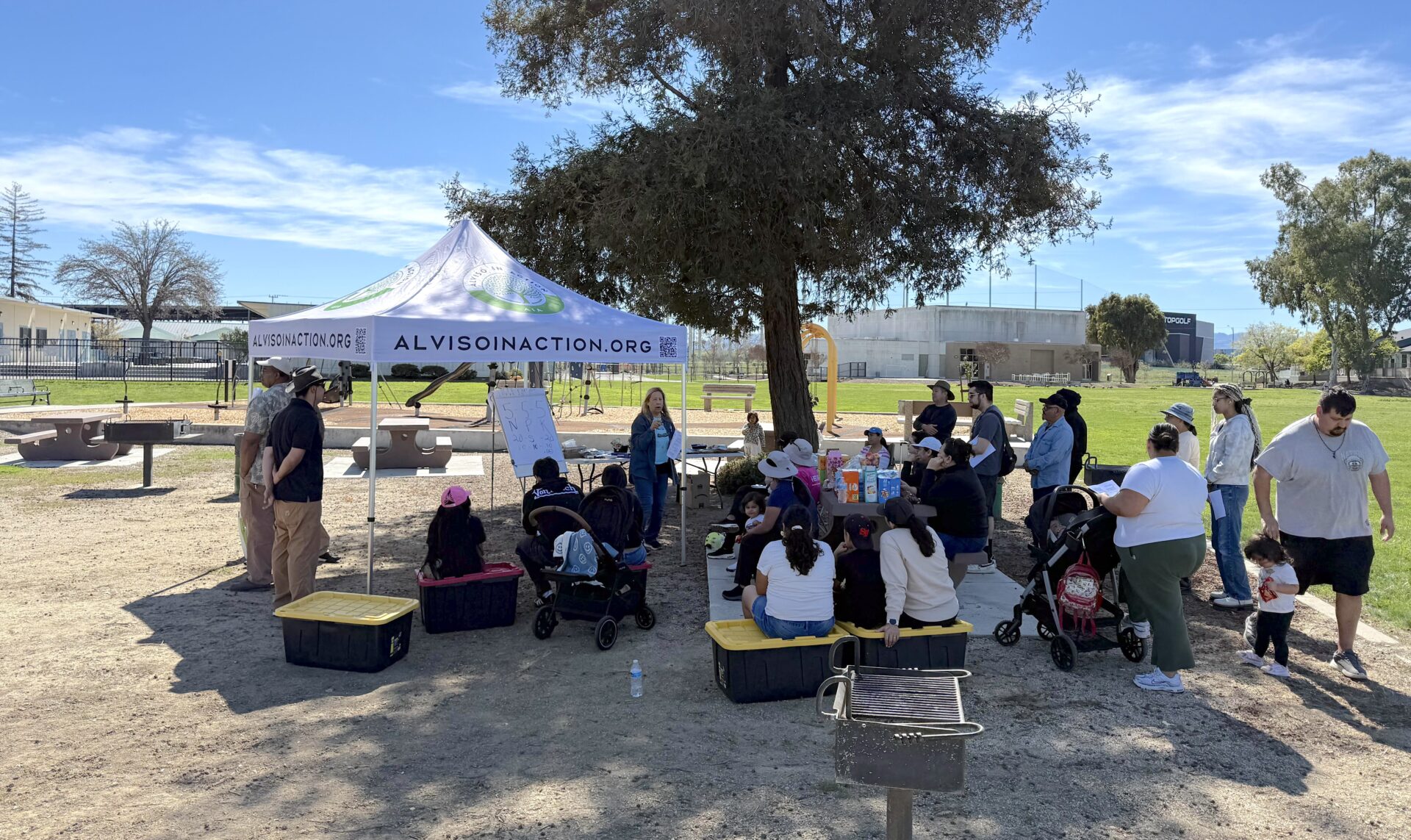
Habitat restoration workshop for residents run by Grassroots Ecology. Photo: Alviso in Action
The team’s priorities, fueled entirely by community input, are mitigating future flood emergencies and ensuring residents don’t have to leave the community to find safe access to food.
In 2025, United Alviso for Change co-designed and hosted a disaster preparedness workshop, distributing more than 80 disaster preparedness kits and guiding residents as they drew their own evacuation routes from their homes to a high-ground location that CRC helped identify.
The workshop was a unique opportunity to bridge the historic gap between the City of San José and Alviso residents by offering residents the chance to tell the city what they need and for the city to really listen them, according to Lang.
“We don’t have to keep doing it the wrong way,” she says. “That is unfair, unjust, financially irresponsible, and harmful. There’s a new opportunity where we just all sit in the same room once a month and listen to each other and start planning better, together.”
Shoreline Restoration
Today, Valley Water says Alviso is “very well protected” from flooding — partly because of adaptation projects that the water district has helped implement.
“In 1982 and 1983, Alviso flooded from Coyote Creek, but in 2017, we had a much higher flow on the creek, and nothing happened because the flood protection project was in place,” says Valley Water Senior Engineer Emily Zedler.
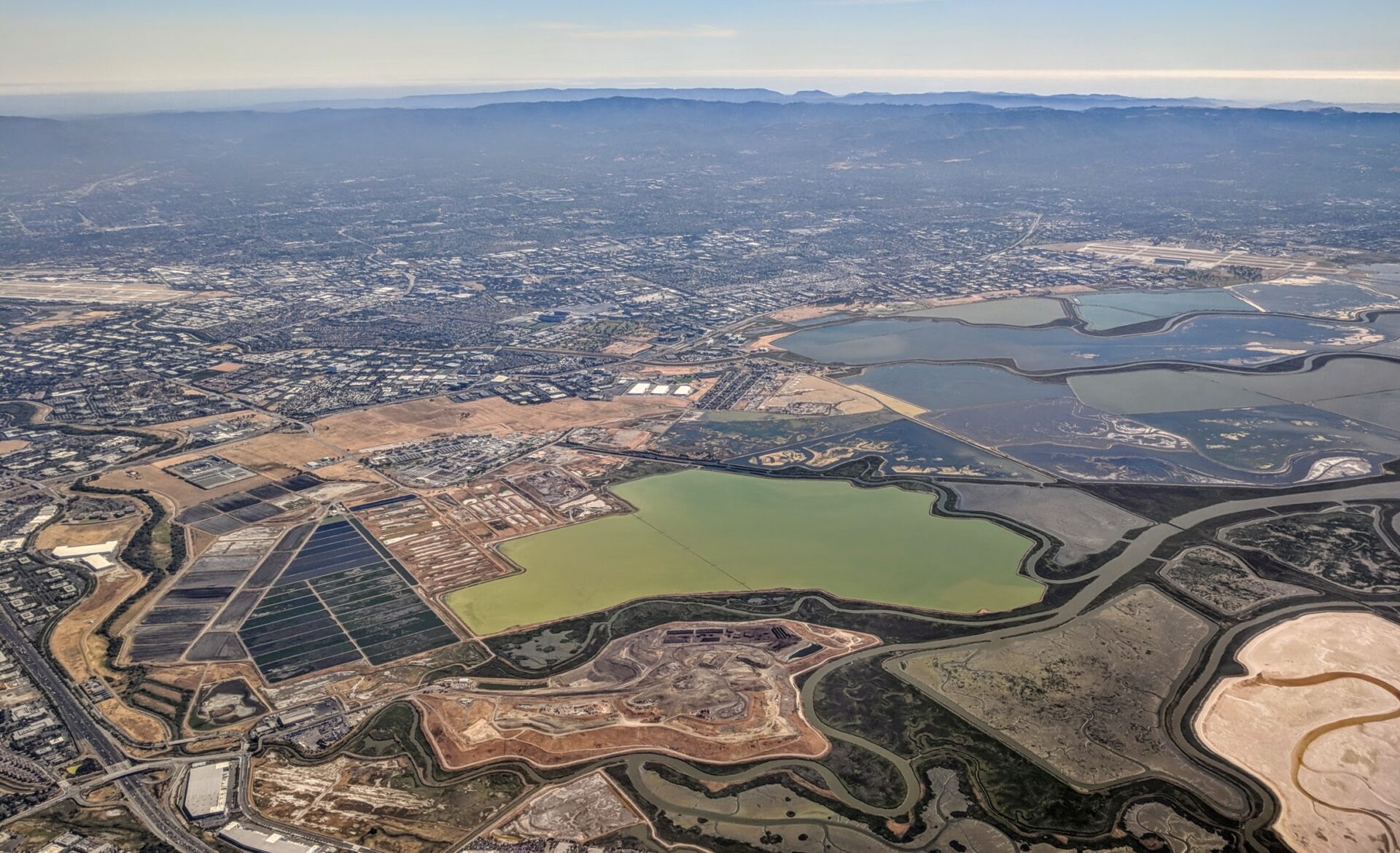
Salt ponds and levees surround the community. Photo: Wikimedia Commons
In 2019, local and federal agencies, including Valley Water, also launched the South San Francisco Bay Shoreline Project, a $545 million effort to build levees and restore tidal marshes around the Alviso shoreline, with the goal of creating flood resilience. Two miles of 15-foot-tall levee near Alviso were completed through 2025.
A Community Under Pressure
More recently, Alviso has been at the center of Silicon Valley’s expansion. A new wave of development has poured in since the 2010s, when Espinoza was just a kid, including a Topgolf and entertainment center that arrived in 2017. In 2025, San José approved plans for a 65-acre Microsoft data center in Alviso, which would be the largest of its kind in the city.
“A lot of community members are pretty much against it,” Espinoza says.
His sister, Isabel Espinoza, published a letter against the data center in The Santa Clara, SCU’s student newspaper, lamenting how Alviso is still being stripped of its land and treated inequitably. “When is enough, enough?” she writes.
The pressure is creating “a kind of divide in Alviso,” SCU student Jones adds. “So many new people have moved into Silicon Valley, and into Alviso, and the new development is a big factor to what’s creating that divide between the old and the new.”
“Residents felt that new people were moving in without any concern for those who already lived there,” Falci says, citing her survey.
A New Generation of Alviso Leaders
From the back of the room at a recent United Alviso for Change meeting, a bright-eyed 8-year-old girl with glasses pipes up: “Can I join even if I’m not 18?”
“I think the first time Alexa came to a meeting, her mom couldn’t get a babysitter,” Lang says. But Alexa has now grown into a beloved — and hardworking — member of the team. “Now Alexa’s responsible for all of the outreach that happens at her elementary school.”
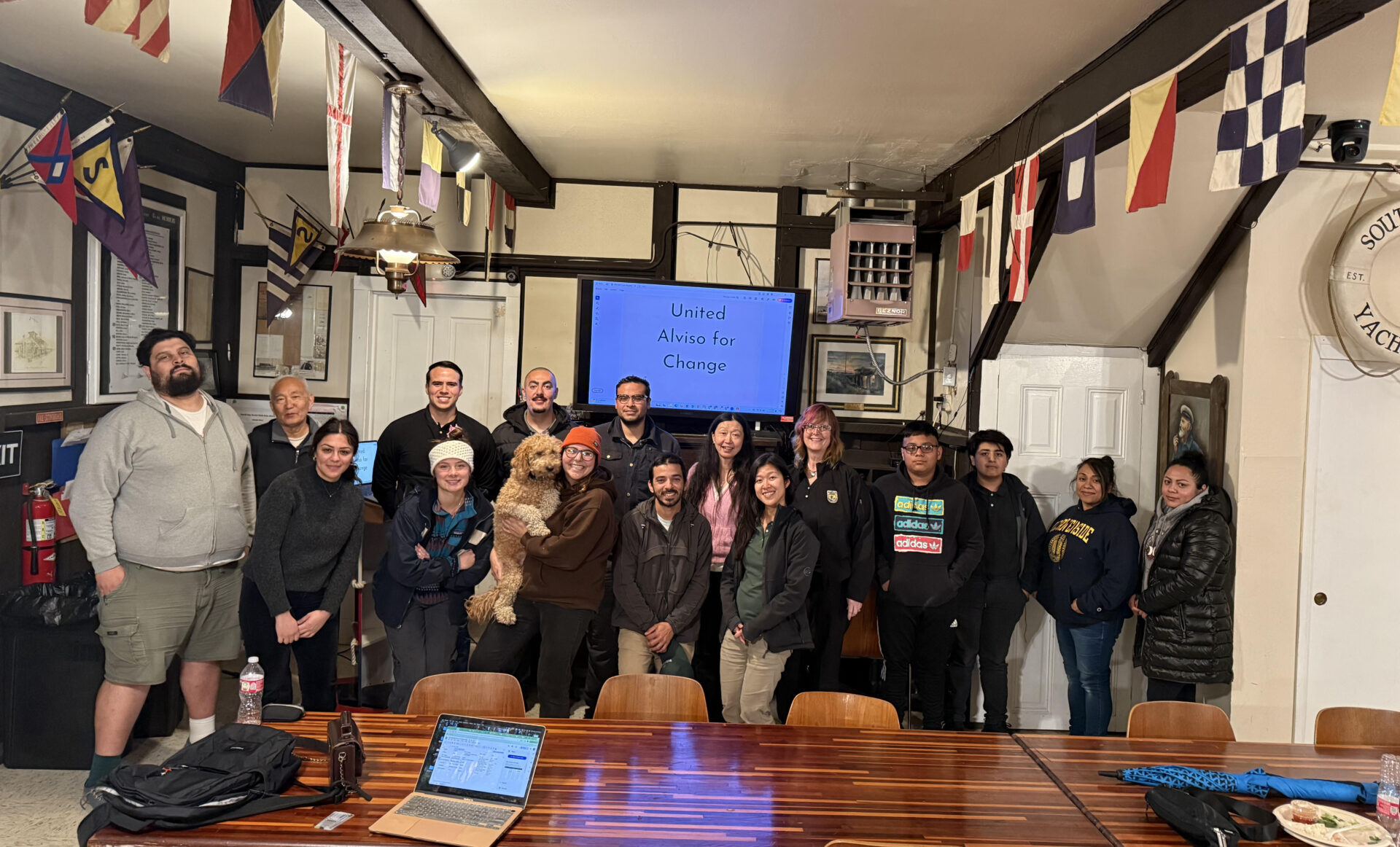
United Alviso for Change team meeting. Photo: Alviso in Action
Alexa and her family now attend almost all of the team’s events.
“I constantly feel lucky and special that I get to be facilitating conversations that are multi-generational in this community and represent that the way we create future resilience is from actual multigenerational conversations,” Lang says. “Alexa blows me away, and I’m really grateful.”