


Eco-Anxiety Got You Down? There’s a Group for That
It was 2020, and Katie Flint, a documentary filmmaker living in Sonoma County, was struggling with the twin crises of the COVID-19 pandemic and smoke from hundreds of Northern California fires sparked by rare and destructive lightning storms.
“I had hit my limit of feeling overwhelmed by the state of the world,” Flint says. “So I actually Googled ‘eco-anxiety support group’ and found Good Grief Network.”
Founded in 2016 by LaUra Schmidt and her wife Aimee Lewis Reau, Good Grief Network offers 10-week climate grief groups led by trained peer facilitators. Inspired by 12-step programs like Alcoholics Anonymous, participants work through steps like “Accept the Severity of the Predicament” and “Honor My Mortality and the Mortality of All.”
Flint found herself on Zoom with strangers from different communities who were experiencing similar feelings.
“We’re all there just saying how sad we were about the state of the world,” she says. “And as much as that sounds like, oh god, that’s so horrible, doomy and gloomy, it actually just provided a huge amount of relief.” Since that first group in 2021, Flint became a facilitator, made a documentary about GGN, and currently serves as board president for the nonprofit.
Eco-distress or eco-anxiety is a looming mental challenge around the world. In a 2023 U.S. survey, 58% of young people reported they were “extremely worried about climate change.” Over 5,500 people around the world have participated in a GGN 10-step group, and the organization is working on new 5-week programs targeted to teens and those who consider themselves to be elders.
The nonprofit offers scholarships and sliding scale payment options, and is currently fundraising to be able to offer its programs to more people who might otherwise not be able to afford them.
Other Recent Posts
Regional Housing Agency Invests in Affordability
The Bay Area Housing Finance Authority is launching a loan program to support the construction of mixed-income rental properties.
The End is Coming for California’s Untouchable Grass
The law, which applies to grass that isn’t used for recreational purposes, could cut urban water use across California by more than 20% says Oakland thinktank.
Sonoma Vineyard Workers Burn toward a Better Future
A group of immigrant farmworkers are forming a worker-owned cooperative to bring back Indigenous burning practices that used to revitalize the soil.
Los trabajadores de los viñedos de Sonoma queman por un futuro mejor
Un grupo de trabajadores agrícolas inmigrantes está formando una cooperativa de propiedad de los trabajadores para recuperar las prácticas indígenas de quema que solían revitalizar el suelo año tras año.
New Voices Shape Design of Berkeley’s North Basin Strip
Twenty acres of parkland between the highway and the Berkeley shore are slated for a coast-resilient makeover, with input from locals and stakeholders.
The Need for Collective Spaces to Grieve
LaUra Schmidt was in a 12-step meeting for Adult Children of Alcoholics when she first had the idea for the Good Grief Network. A grad student at the University of Utah with a background in biology and environmental studies, her research focused on how to build resiliency in the face of climate change.
“I remember sitting there thinking, we need spaces like this for the polycrisis or for the climate crisis,” she says. “We need collective spaces to come and get real about the situation and be able to emotionally process together, and then figure out what we’re going to do and how we’re going to act.”
The project that emerged is not a 12-step program, nor is it therapy, as Schmidt is quick to point out.
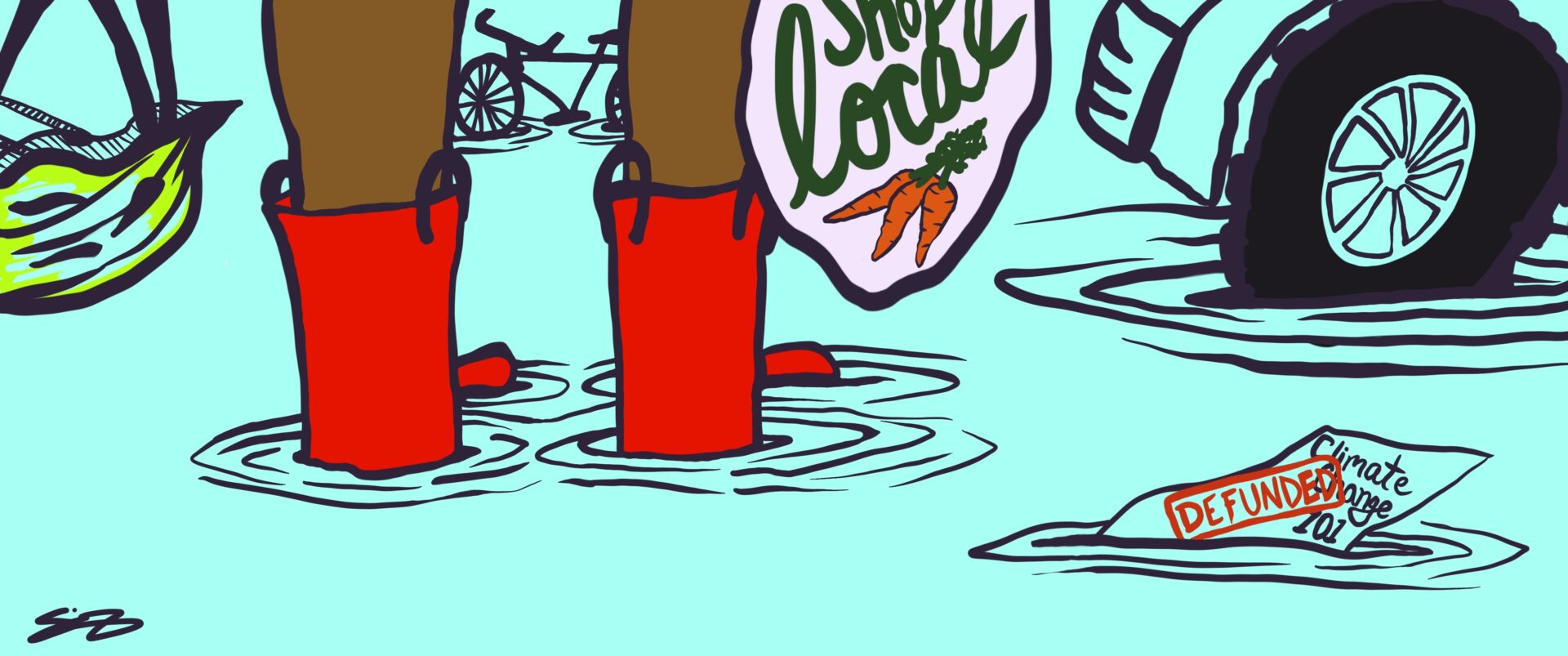
“You don’t come into the program thinking ‘I’m going to heal in these ways,’” she explains. “You come into the program thinking, ‘I am so isolated, I’m so overwhelmed, and feel really alone. And look, here are like five to 10 to 12 other people who feel the same way as me.’” In an age of loneliness, simply sharing your climate feelings with other people can be cathartic.
Art: SZ
I talked to Rhysea Agrawal, a climate journalist and communicator at the University of Southern California, as she was in the middle of facilitating her very first 10-step group.
“I just see a lot of people showing up really burnt out or really distressed,” she says. She hears different versions of the same thing: “‘I worked so hard, taking climate action, fighting climate change, but nothing happens.’”
When people share their difficult feelings, something magical happens, according to Agrawal. Hearing other people’s thoughts and feelings made her feel less alone. “I just felt so seen in that moment. I felt accepted. I felt that my emotions and my thoughts were not something strange.”
“I See You; I Hear You.”
I attended a free collective grieving space hosted by GGN on Zoom last month with the theme “grieving elders.” The title was a stroke of semantic brilliance: I and one other person attending interpreted “grieving” as a verb, while the majority of attendees interpreted it as an adjective.
Were we grieving the elders we have lost, or were we elders who were grieving? Why not both?
The format is precise. This is not a free-for-all. GGN sessions have specific values and guidelines, including not giving advice or talking about what someone else shares, reminiscent of the “no cross-talk” rule in 12-step groups.
I’ve been in peer-led support groups before. But in the session I attended, we did something I’d never seen. After each person shared, everyone else offered words of validation and support:
“Thank you, Maylin.”
“I see you, Maylin.”
“I hear you, Maylin.”
It’s called “simple acknowledgement.” “When you hear several other people say, ‘I hear you’ and your name, you’re like, ‘Oh, I’m not crazy. This is happening,’” Schmidt says. “I have a right to be concerned about the climate. I have a right to be concerned about ecocide. I’m not alone.”
Schmidt came up with the practice after recognizing that bravery can look different for each person. For someone who has never attended a processing group before, simply showing up and saying, “I’m happy to be here” might be a profound act of vulnerability.
The benefits of group work can feel fuzzy — how do you quantify catharsis, that feeling that you are not alone? But thinking about the chorus of “I hear you” and “I see you” moves me even now. It feels like walking from a dark building into the sunlight: ineffable, hard to nail down, except to say, we desperately need other people to witness us in our most vulnerable feelings.
Sharing “bad” feelings feels good — and can have surprising side effects. After completing the third step, “Honor My Mortality and the Mortality of All,” Agrawal found herself embracing life.
“We’re all scared of death. We’re all scared of grief,” she says. But she points out that hiding from that grief means missing out on all the beautiful things about life. The only way out of that fear is to go through it.
“The fear of death also means that you really appreciate life, you really love life,” she says. ”Honoring that makes you less scared of death.”