



Tools Tweak Beaver Dams
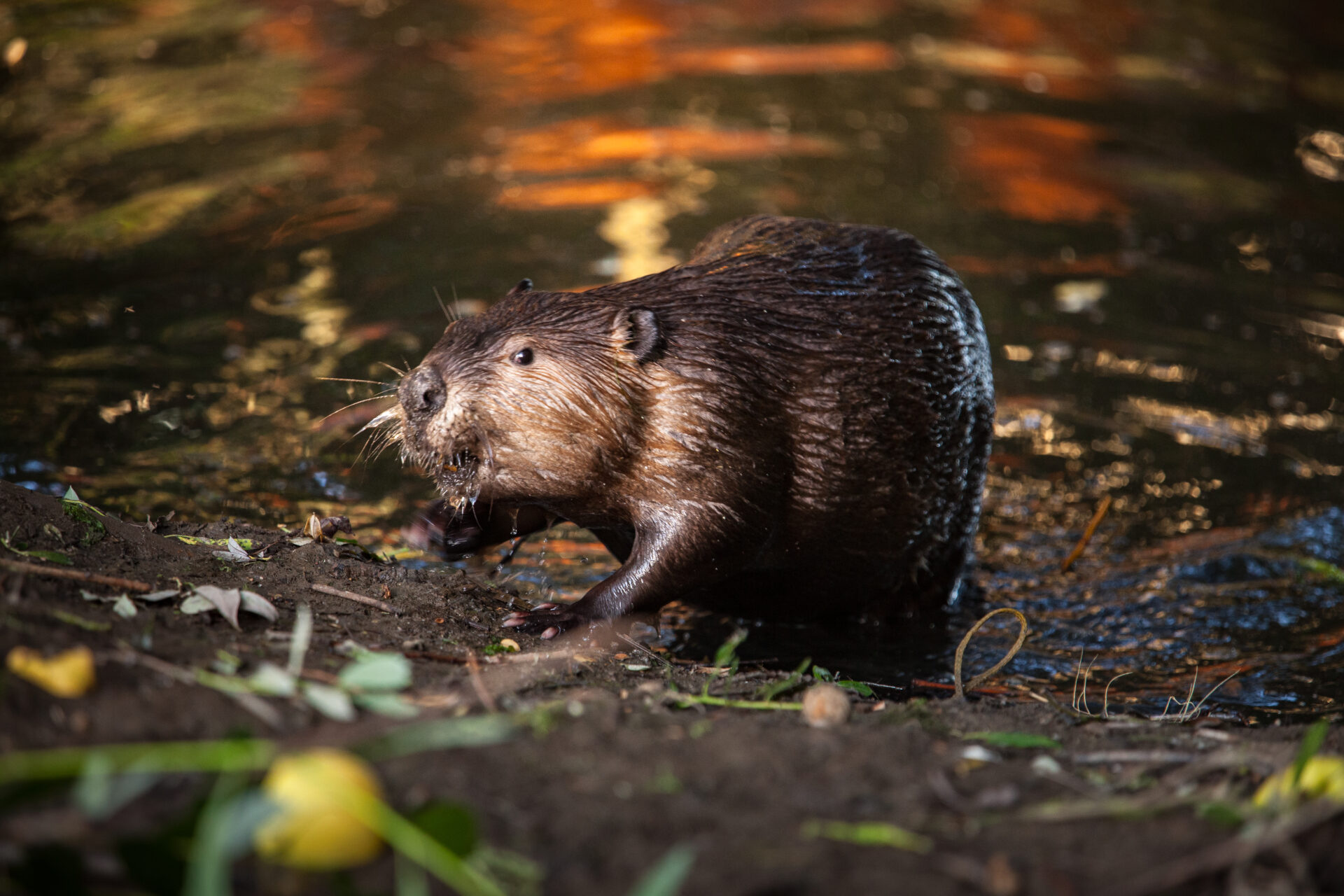
Beavers build climate resilience with their dams by slowing down water, providing ponds for salmon, and creating wet meadows that serve as firebreaks.
The town of El Dorado Hills, California was facing a problem. A beaver dam had inundated a popular walking trail. The community wanted to reverse the flooding without harming their buck-toothed neighbors.
Beaver experts visited the area and proposed a simple solution: a flood-control pipe threaded through the mass of sticks and mud that formed the dam. Once installed, the pipe quickly lowered the water level. Today, the trail remains dry, and beavers still call El Dorado Hills home.
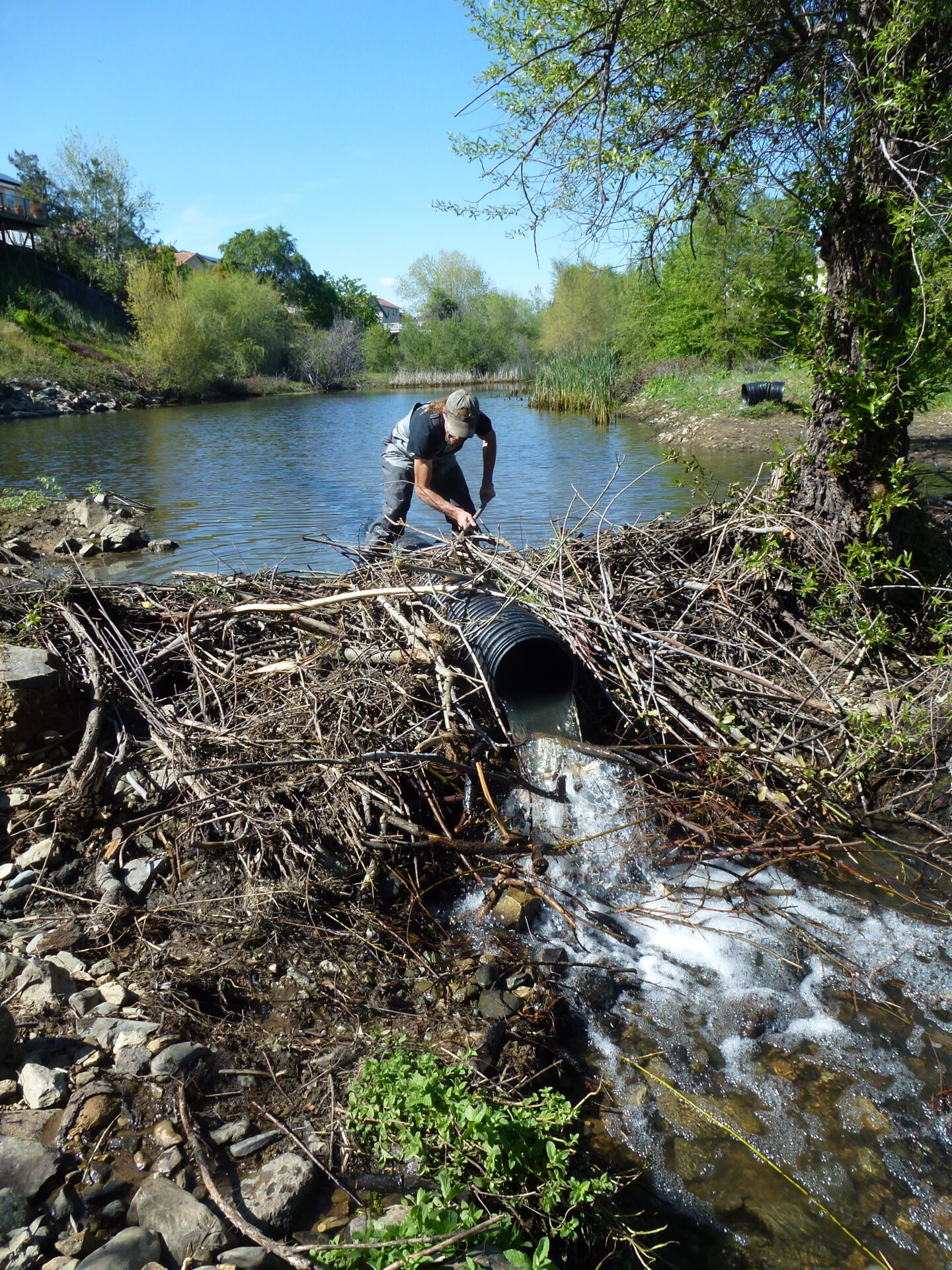
Installing a pond leveler device in the Sierra foothills. Photo: Kate Lundquist, Occidental Arts & Ecology Center
Projects that help beavers and humans coexist have only grown easier since 2018, when El Dorado Hills began its beaver friendly project. Last October, Occidental Arts & Ecology Center launched the Beaver Help Desk, a state-funded resource that matches beaver-beleaguered landowners like the ones in El Dorado Hills with certified beaver coexistence professionals. It’s just one of a flood of new efforts to restore the water-storing rodent to its former habitats across California.
Beaver habitat restoration has become a priority among landowners, legislators, and environmentalists alike as climate change threatens the state’s ecosystems and water supply. A growing body of evidence has found that beavers were once abundant throughout California, and bringing them back will foster climate resilience. They build ponds where salmon can weather dry summers and create wet meadows that serve as firebreaks. One study calculated that repopulating the Sierra Nevada with beavers would create enough dams to store 32 billion gallons of water, making an area three-quarters as large as Yosemite wet enough to resist wildfires.
“Beavers slow down water,” says Grey Hayes, manager of Occidental Arts & Ecology Center’s Beaver Coexistence Program. “They’ll dam up every stream of flowing water they can find until they’ve got a pond behind it.”
Centuries ago, beaver dams filled California waterways. But the animals nearly disappeared from the state in the early 1800s, when American, English, and Russian fur trappers killed tens of thousands of beavers, sea otters, and other mammals in a trapping frenzy known today as the California Fur Rush.
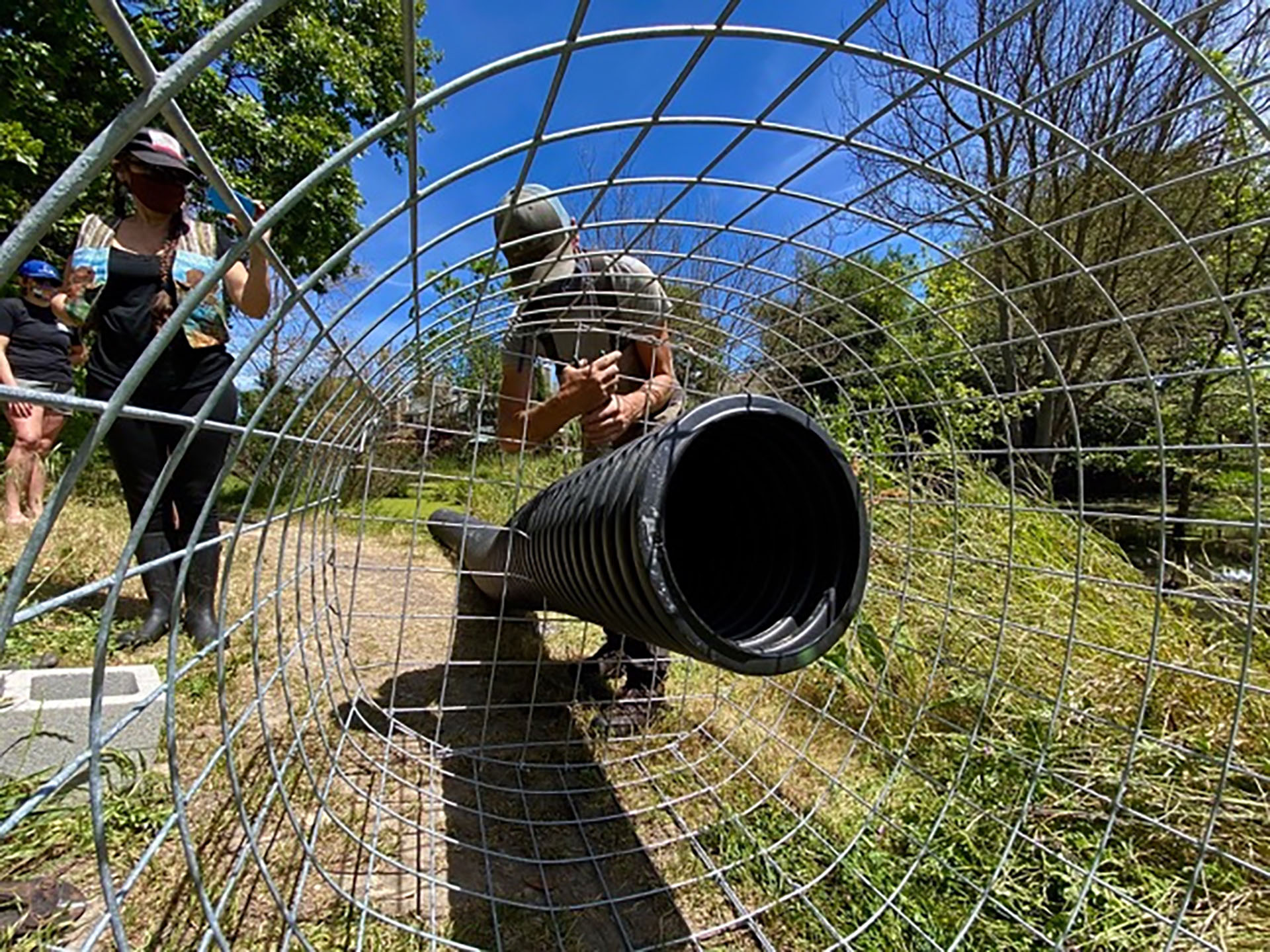
Placing a pond leveler in Fryer Creek for Sonoma Water in 2020. Photo: Brock Dolman, Occidental Arts & Ecology Center
Trapping devastated beavers so thoroughly that, for decades, wildlife biologists in California thought that beavers had only ever lived in the Central Valley and in a few rivers in the far north of the state. But after erosion unearthed several ancient beaver dams in Plumas County in 1988, scientists began to uncover evidence that the animals were formerly widespread throughout the Sierra Nevada, and potentially all of California.
“Our hypothesis is that all of the river systems in California and the adjoining floodplains were shaped by beavers,” Hayes says, mentioning the freshwater marshes of Elkhorn Slough and the wet meadows of the Sierra Nevada as possible relics of past beaver activity.
As scientists have learned more about the past and present impacts of beavers, the California Department of Fish and Wildlife has begun taking steps to help restore the rodents to their former glory. In 2022, CDFW launched a Beaver Restoration Program that seeks to use the mammals to revitalize aquatic habitats. The following year, it released beavers from the Central Valley onto Mountain Maidu tribal lands in the Sierra Nevada.
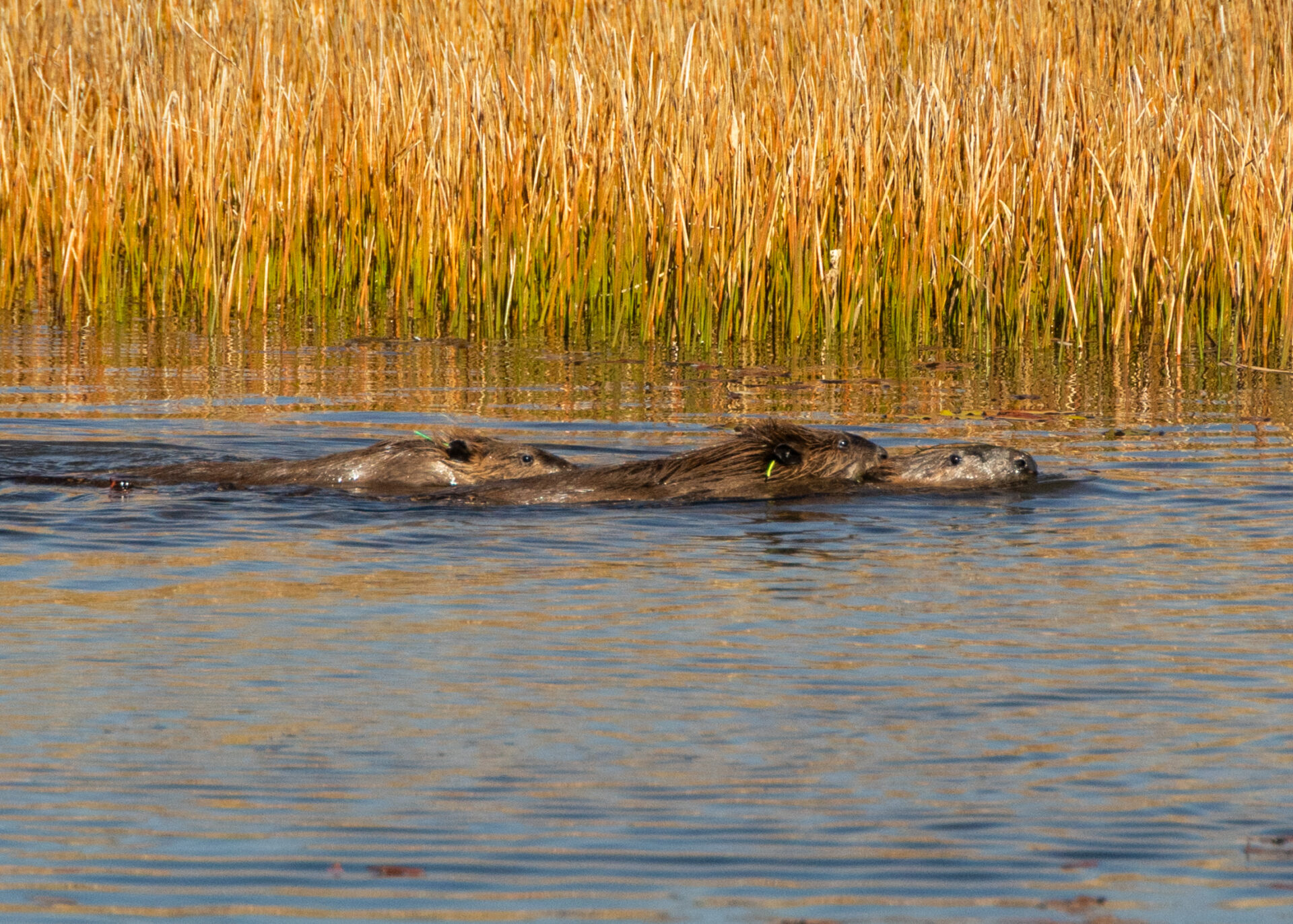
Photo: CDFW
At the same time, local organizations dedicated to protecting the mammal have sprung up. One example is the SLO Beaver Brigade in San Luis Obispo, which helps landowners install flood-control pipes and wrap their favorite trees with metal fencing to protect them from hungry beavers.
The beaver brigade also offers guided tours of beaver ponds, which Executive Director Audrey Taub says is one of the best parts of the job.
“Once you set foot in a beaver pond, especially in these arid areas where the only green you see is around the beaver pond, where the temperature drops around the pond on a sweltering hot summer day, you really experience firsthand the benefits of beavers to our waterways,” Taub told KneeDeep in an email. “Visiting a beaver pond in California can turn a skeptic into a beaver believer in no time.”
Editor’s note: Beavers are one of the engineering plants, animals, and materials being featured in KneeDeep’s mini-series on the building blocks of climate adaptation. You can also read our features on sea-blite, mass timber, baycrete, and pervious concrete, or send us ideas for other materials to cover.