



Santa Clara Helps Homeless Out of Harm’s Way
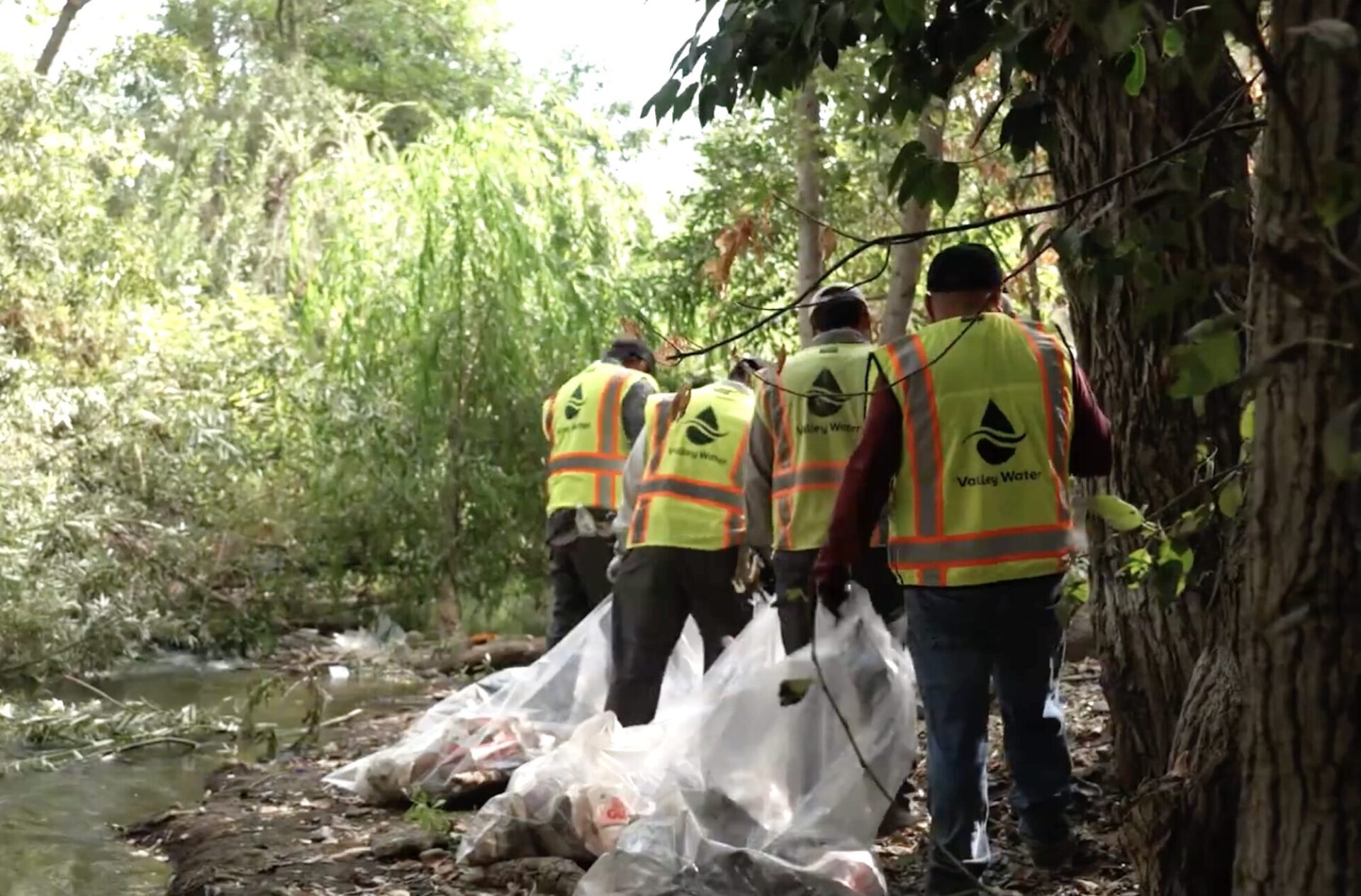
Water district clears out trash along local creek beds. Photo: Valley Water
Last month, Santa Clara County agencies ramped up efforts to prepare the unhoused community for flooding season. Their efforts began as powerful atmospheric storms pounded the Bay Area in November, overflowing waterways and dropping temperatures across the nine-county region.
Valley Water, the local water district, actively provides notice about flood warnings and risks to people living along local creeks, according to Colin Kortman, the district’s Watersheds Field Operations Unit Manager. Staff also work with homeless advocacy groups to encourage residents to pack their most critical items and move into shelters or to higher ground.
“We’re doing our best to keep folks out of the channel as much as possible and decrease the risk and exposure,” Kortman says.
The water district operates a Good Neighbor Program, which addresses homelessness along district-owned creeks and the impacts that encampments have on creeks, waterways, and water supply facilities. Last year, in an effort to reduce pollution along major riverbeds, the district adopted a controversial no-camping policy on its properties.
Since then, staff have posted eviction notices on encampment sites and undergone sweeps along the district-owned areas. Since the ban’s implementation, Valley Water has removed more than 450 homeless encampments. According to the Good Neighbor Program website, the water district collaborates with social services agencies and nonprofits to connect unhoused individuals with shelter alternatives.
The district estimates that between 200 and 300 unsheltered people live on its property and easements, which encompass approximately 333 of the more than 800 miles of creeks and waterways in the county.
Some homeless advocates and organizations, however, believe the policy is too harsh. They say the water district shouldn’t force people out of encampments without a more specific plan for providing alternative housing options.
Other Recent Posts
Regional Housing Agency Invests in Affordability
The Bay Area Housing Finance Authority is launching a loan program to support the construction of mixed-income rental properties.
The End is Coming for California’s Untouchable Grass
The law, which applies to grass that isn’t used for recreational purposes, could cut urban water use across California by more than 20% says Oakland thinktank.
Sonoma Vineyard Workers Burn toward a Better Future
A group of immigrant farmworkers are forming a worker-owned cooperative to bring back Indigenous burning practices that used to revitalize the soil.
Los trabajadores de los viñedos de Sonoma queman por un futuro mejor
Un grupo de trabajadores agrícolas inmigrantes está formando una cooperativa de propiedad de los trabajadores para recuperar las prácticas indígenas de quema que solían revitalizar el suelo año tras año.
New Voices Shape Design of Berkeley’s North Basin Strip
Twenty acres of parkland between the highway and the Berkeley shore are slated for a coast-resilient makeover, with input from locals and stakeholders.
It’s Always Sunny In North Fair Oaks
Residents of the unincorporated community launched their second campaign in two years to get the county to care for dying street trees.
Siempre está soleado en North Fair Oaks
Los residentes de la comunidad no incorporada lanzaron su segunda campaña en dos años para lograr que el condado se ocupe de los árboles de la calle que se están muriendo.

National Weather Service Meteorologist Brian Garcia at a November press conference on San José flood preparedness. Photo: Courtesy of Santa Clara Valley Water District
With the recent cold snap, and more storms forecast later this month, another organization is working to provide resources for people experiencing homelessness.
HomeFirst in San José is handling an influx of people coming into the organization’s warming centers and overnight shelters, according to Chief Programs Officer Beatriz Ramos. The organization supports those who are unhoused or housing insecure in Santa Clara and Sonoma counties.
“We’ve been around for 45 years,” Ramos says. “We continue to see the need grow for those who are housing insecure.”
During the winter season, HomeFirst engages in weekly meetings with the city, county, and other homeless support agencies to determine the best ways to address people’s winter-related needs, including emergency housing.
Ramos says weather patterns directly affect the well-being of those who are unhoused, especially in the winter, when the county experiences freezing temperatures, rain, fog, and wind.
“Your whole life is dependent on the weather,” she says.
HomeFirst also sets aside money to purchase winter gear like handwarmers, clothing, and blankets to distribute to people around the area. The organization encourages and accepts donations from community members.
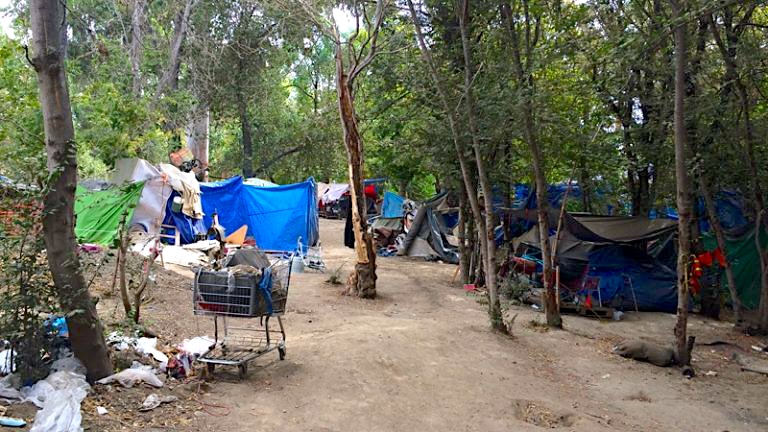
In Santa Clara County, someone is considered homeless if they lack a stable and safe place to sleep. According to a recent moment-in-time count, the county has around 10,711 people experiencing homelessness, one of the highest in the nine-county region. More than half live outdoors or in conditions not meant for human habitation, including on streets and in bus and train stations, parks, tents, and vehicles.
Large waterways like the Guadalupe River and Coyote Creek in San José are popular destinations for homeless encampments. When the rainy season hits, however, water levels can rise unexpectedly, prompting people to relocate.
The county is actively advertising cold weather safety tips and hotlines for people to use to connect callers to local emergency shelters, housing resources, and warming locations.
MORE
Santa Clara County
- HomeFirst Homeless Helpline: (408) 539-2105
- Here 4 You Call Center Hotline: (408) 385-2400
- Call 2-1-1 for non-emergency needs related to food, shelter, legal resources, and more