



Excerpts from ClimateCraft Student Reporting Contest
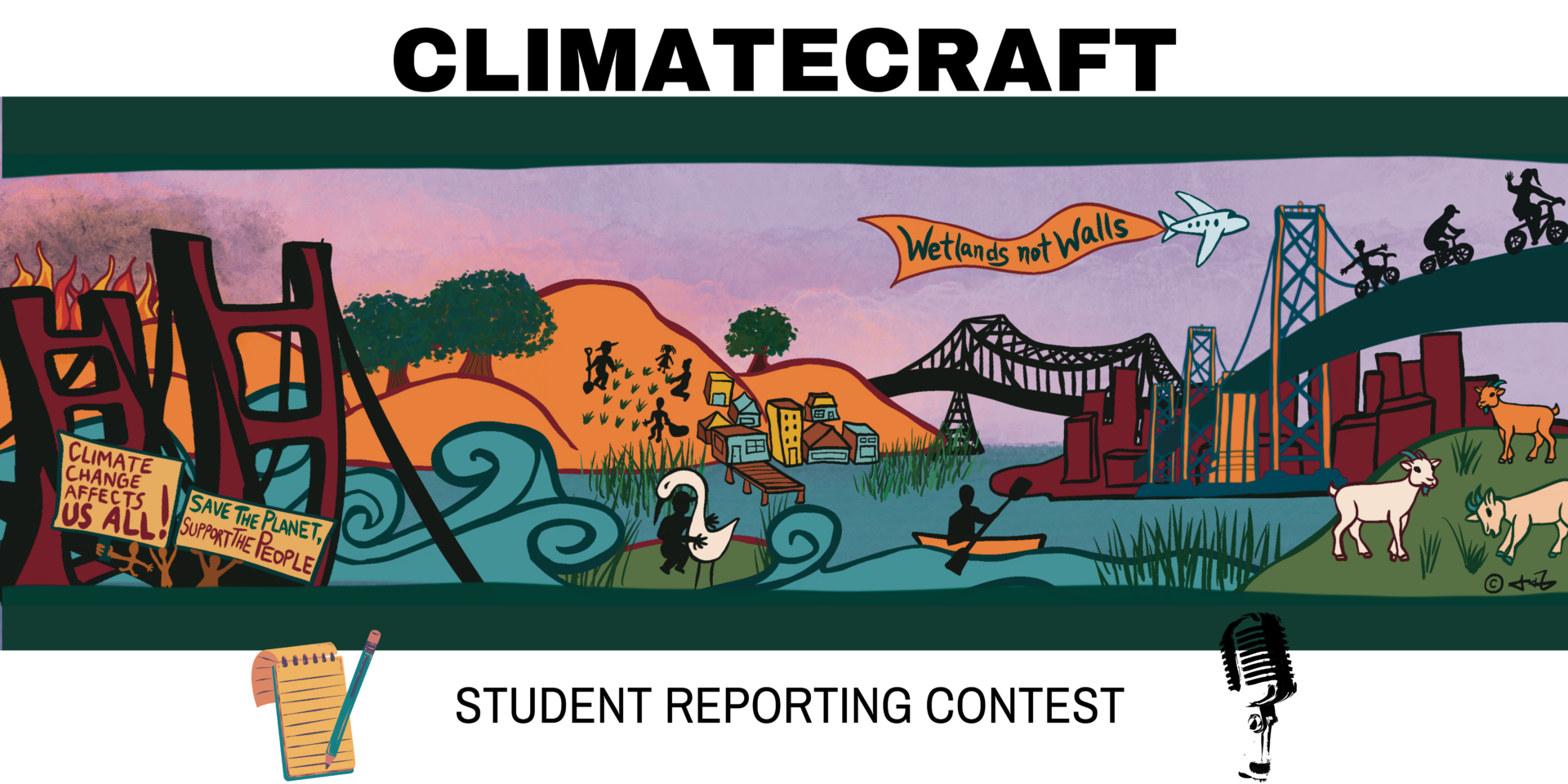
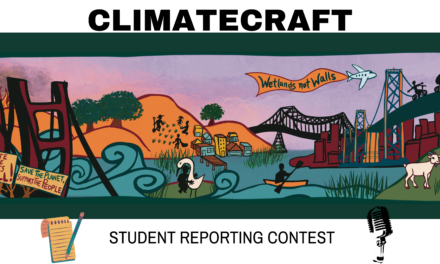
A big thanks to everyone who submitted to our 2022 ClimateCraft Student Reporting contest! None of the submissions fully addressed all four of our criteria.
However, we’re grateful to see young writers engage deeply with environmental science and community activism. We awarded $150 Honorable Mention prizes to the following three entrants:
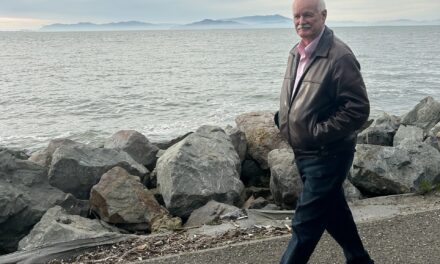
- Royvi Hernandez, San Jose State University (alum) -center
- Xion Abiodun, Laney College – left
- Carolina Raciti, City College of San Francisco – right
Read excerpts from each of their submissions below.

Honorable Mention: Best interviewing skills
SJSU Garden Transcends Barriers by Royvi Hernandez
Excerpt: The San Jose State Black Women’s Collective (BWC) and Campus Community Garden hosted an event Monday night about the importance of nature and the influence it has on the community.
The Campus Community Garden was created to provide students a space to gain access to healthy food, learn about sustainable organic garden practices and earn service learning hours, according to its webpage.
Aisha Williams, environmental studies senior and president of BWC, said the purpose of the collaboration was to create a program centered around “Black culture and connect it with nature.”
“I want to be able to cultivate that atmosphere for others and myself,” Williams said. “This is my first time doing something like this and as a Black student at SJSU we don’t get a lot of programs like this, so being able to actually do it myself is different from being able to attend it.”
Honorable Mention: Most specific
Thousands of Fish Pop Up Dead in Oakland’s Lake Merritt by Xion Abiodun
Excerpt: The algae Heterosigma akashiwo is a natural occurrence that will happen once every few years. This particular type of algae has to be in the right conditions to grow and spread. It blooms when nutrients from human feces and warm water mix with it in its beginning stages. This happens when we flush the toilet, and that water is sent to the sewage systems. It eventually ends up in the San Francisco Bay, which spreads to the lake over time. Additionally, Heterosigma akashiwo will also turn waters into a soupy brown-reddish color as it spreads, coining it the nickname “red tide.”
Honorable Mention: Most personal
POV: Wishing Climate Change Wasn’t Trendy by Carolina Raciti
Excerpt: Personally, I am trying to reduce my consumption. I think twice or more about a purchase, to see if it’s something I really need. I often skip the purchase if I have time to do this conscious reflection. I also try to repair my stuff. If something can be mended or fixed I will try to re-use it. I find the Buy Nothing groups quite useful, not only for the free stuff you can score, but because sometimes you need items for what is most likely a one time use, and you can borrow from the community, tools or equipment. Most people are nice and want to help!
Other Ways to Share Stories
If you missed your chance to submit to ClimateCraft, we’ve got some good news: the editors are interested in working with professors and teachers to shape class storytelling projects covering climate resilience, social and biological sciences, and other topics. If you are an interested educator feel free to contact editor@kneedeeptimes.org and follow our monthly story releases.
KneeDeep Times is also accepting personal stories, photo essays, video, and more for our California Climate Quilt. We want to know all the little ways you and your community adapt to climate change — and this time, we’re inviting non-students to participate as well.
Other Recent Posts
Feds Meddling With Protections For California Coast
NOAA is reviewing California’s Coastal Management Program in a renewed push for offshore oil and gas drilling.
New Study Shows Rain Gardens Filter Chemicals Out of Stormwater
Scientists found rain gardens dramatically reduce toxic chemicals in stormwater while providing biodiversity and cooling.
The Tricky Art of Growing Oysters in the Lab So They Can Survive in the Field
The Nature Conservancy, the Amah Mutsun Tribal Band, and others are growing oysters in the lab and planting them in the wild in estuaries around San Francisco Bay.
Printing Without Plastic: The Vintage Machine Winning Over Eco-Conscious Artists
This comic guide to risograph printing explains how the 1980s Japanese machine cuts energy use and avoids plastic toner.
East Bay Kids Fight Extreme Heat in their Schoolyards
Many California schools are ill-equipped to tackle heat, with many campuses lacking sufficient tree coverage. These students are fighting to change that.
How a North Bay Regional Park Helped Me Reconnect With Nature — and Myself
A young Fairfield resident reflects on how hiking during the pandemic became a refuge from digital overload and the growing realities of climate change.
Wild Pigs Rough Up Bay Area Greens
They tear up landscapes in search of food, prey on native wildlife, and damage streams, and warming could bring them closer to urban areas.
Residents Chose Different Ways to Respond to Contra Costa Flood Challenges
Graduates of a shoreline leadership program in Contra Costa County recently pitched their ideas for sea level rise education and adaptation.
Strong Leader, Light Touch: Caitlin Sweeney
Ahead of her retirement earlier this month, the Estuary Partnership director sat down with KneeDeep to discuss her achievements and the future of the Bay.
Unmasking Regionalism
Regional leaders say the Bay Area has built ambitious climate resilience plans. Now comes the harder task: funding and implementing them.