


Errands by E-Bike
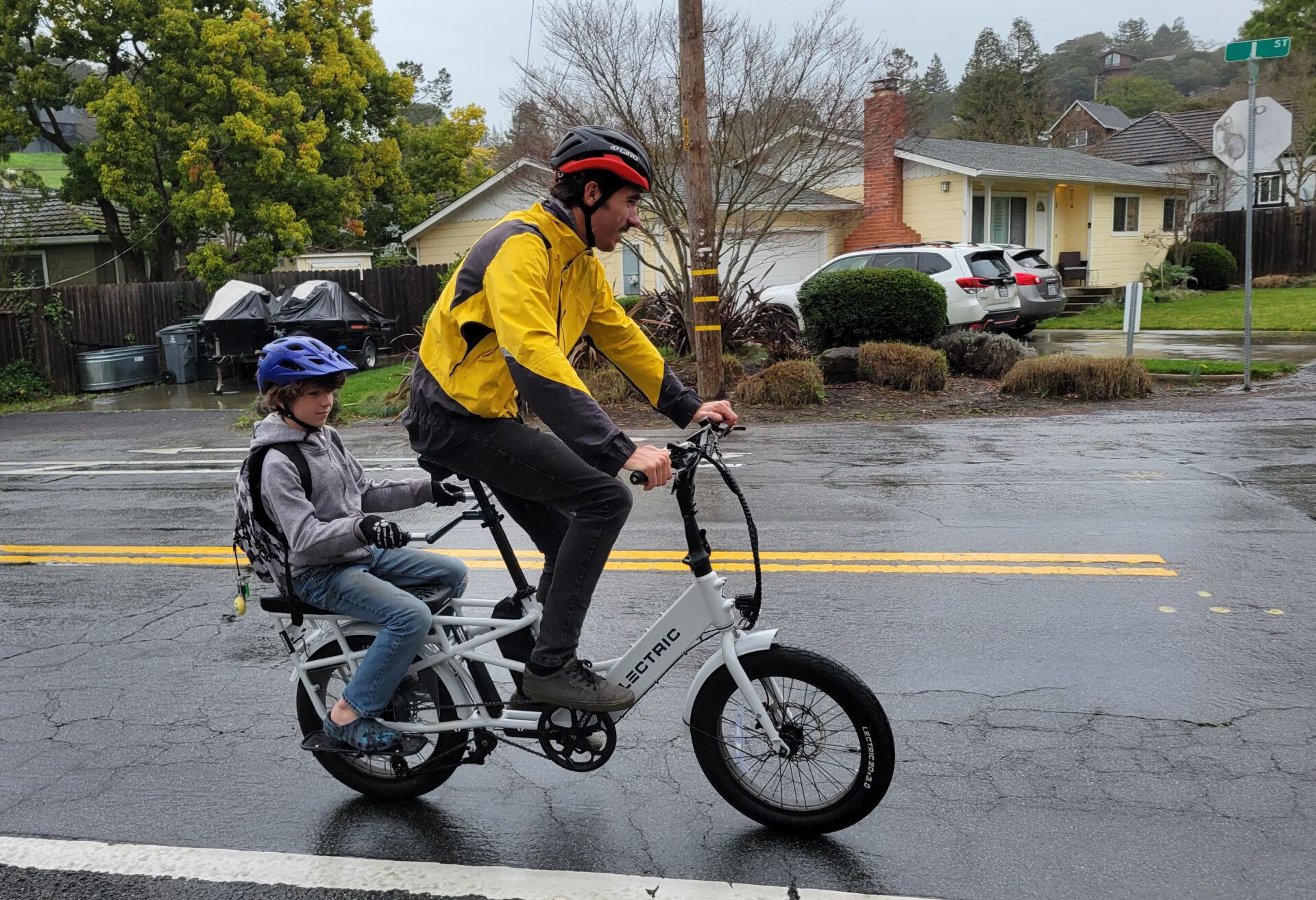
Author takes his son to school on this e-bike every morning. Photo: Jocelyn Seltenrich
Most weekday mornings, my 10-year-old son dons his helmet, climbs atop the rear seat of our electric cargo bike — sort of like an old banana seat, with dedicated footrests — and grabs the two handlebars extending from my seat post. I press the power button on the display, set the electric assist, and start pedaling. I turn right from our street onto the main thoroughfare, shift into top gear, and in no time we’re travelling at more than 20 miles per hour.
If it’s cold, we wear gloves — but the air still stings our faces. No matter, since the ride takes only a few minutes. Nearing school, I lower my speed, still in the bike lane, and slip past the idling cars in the dropoff line as I bring my son straight to the curb. He hops off, puts his gloves in his backpack and his helmet on the rear handlebars, and then I’m off again, zipping away while the same cars creep slowly forward.
It’s not just to and from school. If the trip is within two or three miles of home, it’s fair game — and almost always faster than driving: the market, the hardware store, the library. I can mount two big panniers on the back and easily carry four heavy bags of groceries. Other riders accessorize with baskets and racks.
For this lifelong cyclist who bike-commuted in the East Bay for nearly a decade before moving to the mid-size Sonoma County city of Petaluma, the electric cargo bike is a godsend. No sweat, no strain, no problem — I still get out of my car and into the fresh air, with a little exercise to boot.
I’m not alone in riding my electric cargo bike all over town, but I’d love to see more. Aaron Prentice, owner of local e-bike shop Petaluma Motor Wheel, says cargo bikes represent about a quarter of his sales, with most of those going to young families also looking for a better way to get the kids to and from school, practice, playdates, and other local activities.
Other Recent Posts
How Can I Get Clean, Green, Climate-Forward Job Training in the Bay Area?
Looking for a hands-on job working outdoors that actually pays? Here’s a list of training programs.
Santa Rosa Residents Rethink Trees
The heat-burdened Roseland neighborhood is learning how to monitor temperatures and developing an action plan focused on tree shade.
How to Make Conservation a Career
California nonprofits are developing paid apprenticeships to prepare workers for the growing ecological restoration economy.
Raft of Resilience Initiatives Keeps Tahoe Blue
Beach robots, boat inspections, forest thinning, and wetland restoration are among the projects helping the lake confront environmental threats.
Weathering the Present While Training for the Future
A stewardship immersion experience from the School for Inclement Weather and Weaving Earth combines ecological knowledge and spiritual connection.
Feds Meddling With Protections For California Coast
NOAA is reviewing California’s Coastal Management Program in a renewed push for offshore oil and gas drilling.
New Study Shows Rain Gardens Filter Chemicals Out of Stormwater
Scientists found rain gardens dramatically reduce toxic chemicals in stormwater while providing biodiversity and cooling.
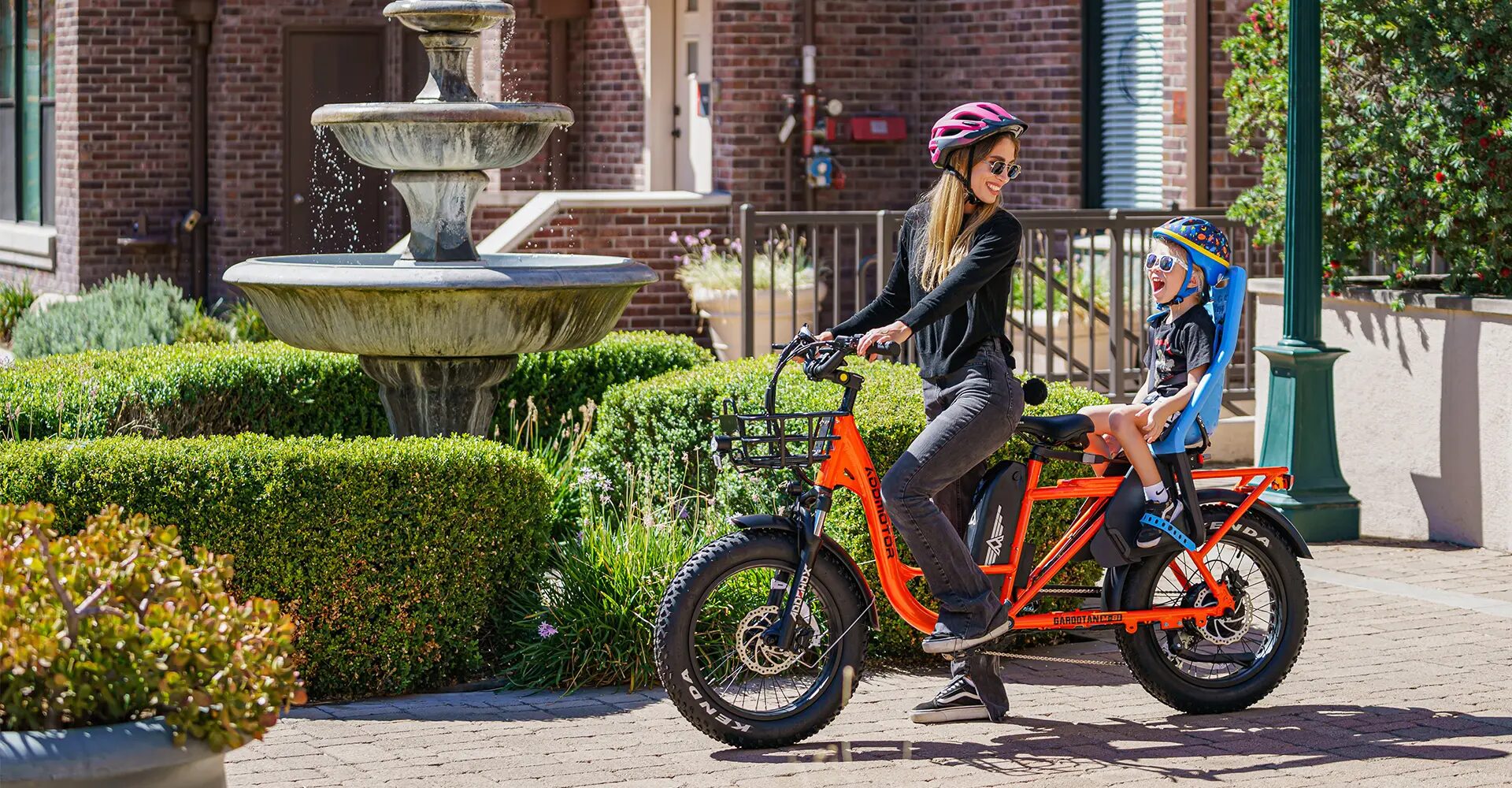
“It’s using it as a car replacement, essentially,” Prentice says. “The more you see around, the more people get interested in them.” Indeed, over the last 18 or so months since I bought mine, I’ve seen an increasing number of electric cargo bikes on the road, often with a small kid or two on the back. My boys and I used to get funny looks; we don’t any longer.
Pricing has played a part, too: a few years ago, the only decent electric cargo bikes you could find cost $3,000-5,000. Today, you can buy a solid, entry-level model for just $1,500 — I’ve put 900 miles of short trips on mine without a single issue.
“Cargo bikes have really changed the game,” says Eris Weaver, executive director of the Sonoma County Bicycle Coalition. “You can’t use the excuse of, ‘Oh, I can’t carry stuff.’ Now that you can get an e-cargo bike, it’s like, who needs a car anymore? So we’re big fans of them. … Anything that gets people out of cars and onto bikes is a good thing.”