



Reforming Rules to Speed Adaptation
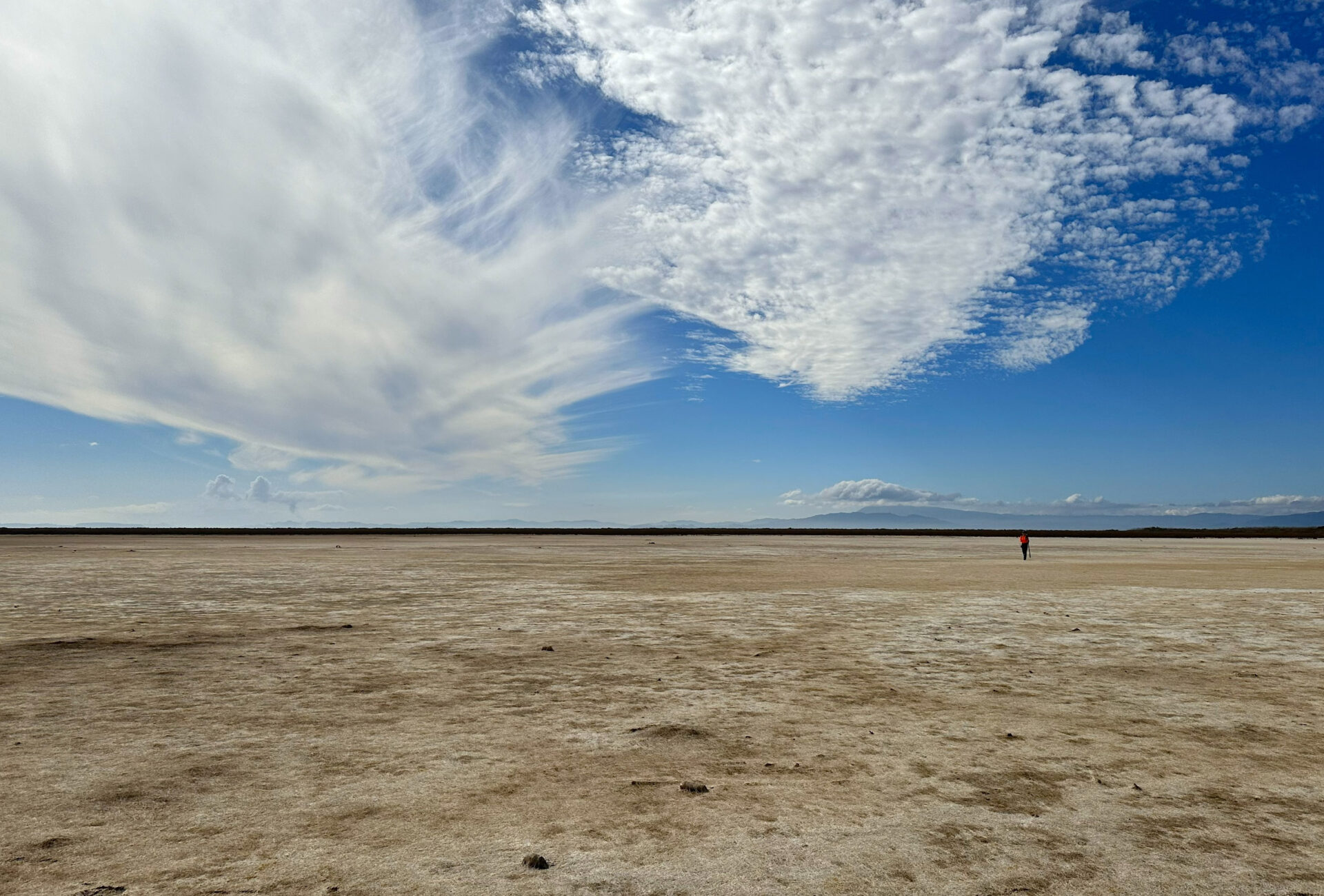
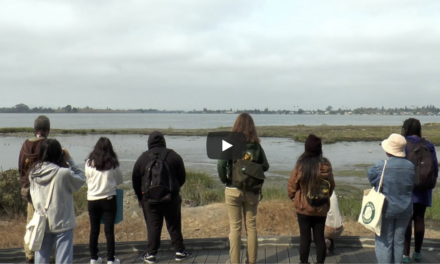
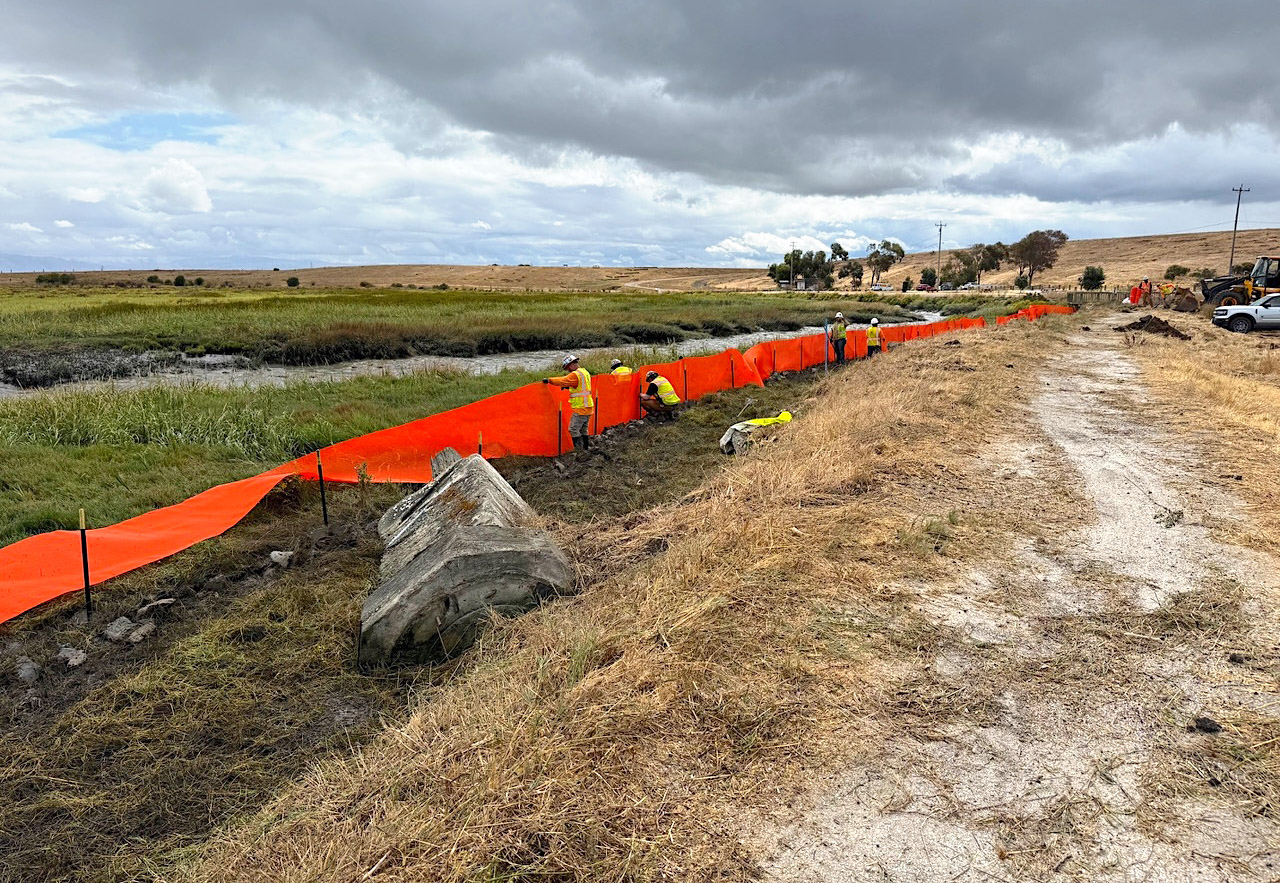
Strip Marsh project off Highway 37 in the North Bay, a restoration project in the permitting pipeline. Photo: Stuart Siegel
As the Bay Area races against time to protect itself from rising seas, the San Francisco Bay Conservation and Development Commission is poised to consider a package of amendments to its permitting regulations aimed at accelerating the development of shoreline adaptation projects. The effort is one of several regional and statewide initiatives designed to tackle rules and regulations that can impede progress on wetland restoration, levees, and other flood-buffering projects.
“We’re [working] to make things easier and faster for everyone,” says BCDC Regulatory Director Harriet Ross, noting that the proposed changes stem from a yearlong review of the agency’s permitting process. “The bottom line is that we’re trying to do permitting more quickly, with a special emphasis on getting climate adaptation projects in the ground faster.”
The initiative aligns with one of the actions called for in the Bay Adapt Joint Platform (a multi-agency plan for regional climate adaptation) which aims to smooth regulatory approvals for multi-benefit projects.
Changes are needed because the laws and regulations that protect the Bay from overdevelopment were adopted in the 1960s and 1970s, long before the impact of climate change was understood, says Environmental Program Manager Xavier Fernandez of the San Francisco Bay Regional Water Quality Control Board.
“We’re in a situation where the laws were really developed to slow down development, and now we need to develop some things faster because of climate change,” he says.
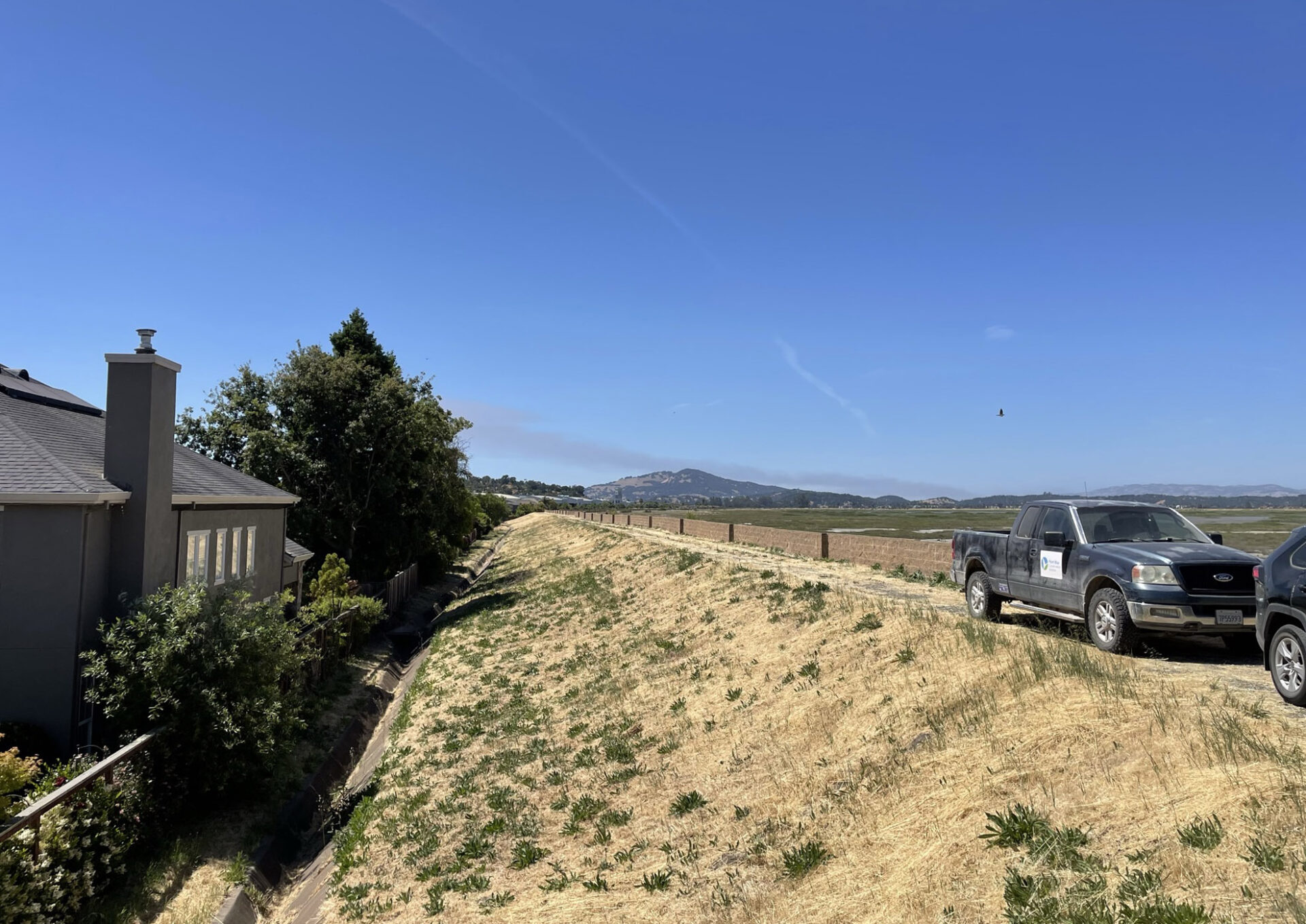
More flood protection infrastructure like this 1990s engineered setback levee buffered by restored marshes in Novato, at the former Hamilton field site, will be needed to adapt to sea level rise. Photo: Ellen Plane
BCDC’s proposed regulatory amendments include improving a program that allows certain types of projects with minimal environmental impact to receive a permit in a matter of days (under an improved region-wide permit program), and clarifying permitting rules. There are also 20 new categories of activities that would no longer require permits, including many repairs, renovations, residential improvements, utility work, and environmental testing activities. The Commission will vote on the changes in early 2026.
Beyond the regulatory changes, BCDC is also taking steps to make the permitting process more user-friendly, including updating its website and forms, and replacing legal jargon with plain English. These changes are enabling applicants to complete forms more “successfully,” says the agency’s Ethan Lavine.
BCDC has also revamped how it interacts with project proponents, emphasizing early engagement. “We call it the pre-application process,” Lavine says. “It’s an opportunity for us to work hand in hand with applicants to help them understand the process and to help us, as a staff, give them early feedback on how to improve project design at a time when it’s easier for them to make changes to the project.”
BCDC’s effort echoes the statewide Cutting Green Tape initiative, a California Department of Fish and Wildlife program launched in 2019 to boost environmental restoration projects by creating new permitting and funding tools. The project has spawned several new programmatic permits (permits that apply to projects that meet certain criteria), including a California Environmental Quality Act Statutory Exemption for Restoration Projects (SERP) that was created in 2021, and a Restoration Management Permit program created in 2024.
The Palo Alto horizontal levee project, now 95% complete, benefitted from early project consultation with the Bay Area’s existing six-agency regulatory integration team (BRRIT). Project managers worked with CDFW on Cutting Green Tape steps, USFW on the use of a Programmatic Biological Opinion for Restoration, and the regional water board on a certification for Small Habitat Restoration Projects. Photo: Dana Hissen
Although these permits were developed to speed restoration projects, many such projects include an adaptation element, says the San Mateo Resource Conservation District’s Kellyx Nelson, who helped launch the Cutting Green Tape project. She points to several RCD projects on the coast that have restored more than 100 acres of wetlands while providing flood protection for the town of Pescadero. The RCD used the new restoration management permit, as well as several other regulatory efficiencies offered by the California Coastal Commission, the State Water Board, and the National Marine Fisheries Service.
“There’s so much going on right now with regulatory efficiency. It’s kind of mind boggling,” says Nelson. “There are so many new tools and pathways.”
While most of these efficiencies have been focused on process, there have also been legislative changes to benefit adaptation projects. In October, Gov. Gavin Newsom signed SB 697, which will allow CDFW to issue incidental take permits for four endangered species (the salt marsh harvest mouse, the Ridgway’s and black rail, and the white-tailed kit) during construction of critical improvements along a 10-mile stretch of State Route 37, which is currently plagued by flooding and traffic congestion.
“This is a really important stepping stone in our resilience work along the corridor,” says the Metropolitan Transportation Commission’s State Route 37 Corridor Program Manager Jeanette Weisman. “The fish and game code for fully protected species really limits work timing and the kind of work that can be done. Without the bill, we would have an extremely restricted work window, and be working with a lot of risk, which is problematic for doing the roadway improvements and the integrated ecological improvements.”
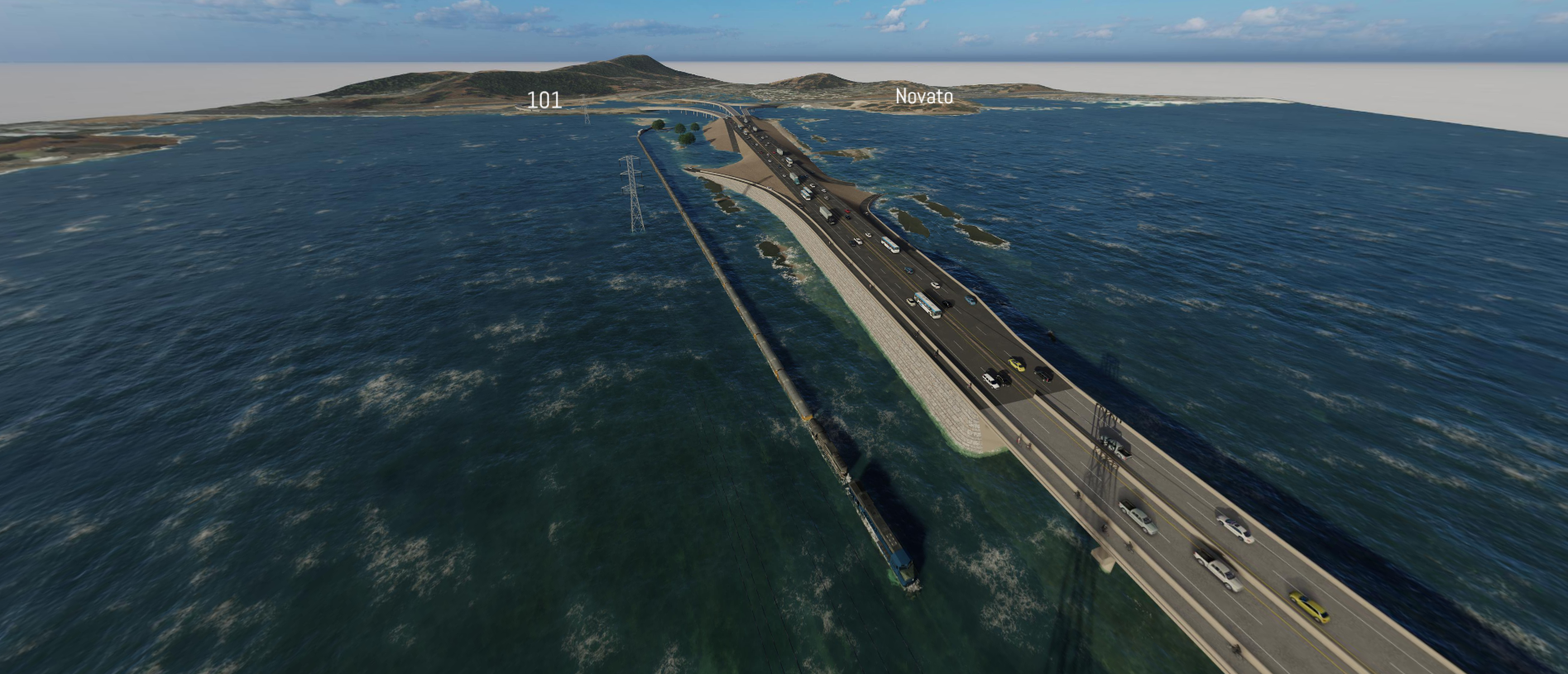
View of sea level rise effects on Highway 37 near the 101 interchange as of 2100. Image: CalTrans.
The legislation requires that ecological impacts be fully mitigated; the SR 37 project includes plans for extensive habitat restoration, including enhancing and restoring Tolay Creek all the way to its headwaters at Tolay Lake. The bill clears the way for construction to begin in 2026.
These recent legislative and regulatory changes reflect what Nelson and others say is the start of an essential shift in how agencies charged with protecting the environment think about risk in the age of climate change.
“Our entire regulatory paradigm is predicated on the idea that taking action is a risk,” says Nelson. “There were things that were harmful to the environment, and we wanted to slow down and evaluate or entirely stop those things because when we were creating those regulations, it had not occurred to us that we would enter a time when not taking action was the biggest threat.”
Fernandez adds that “there’s a tension between moving faster for climate change and continuing to protect the environment from the pressures that brought about those laws and regulations to begin with. We have to sit in the middle of that tension and find a path forward.”