


How to Make Conservation a Career
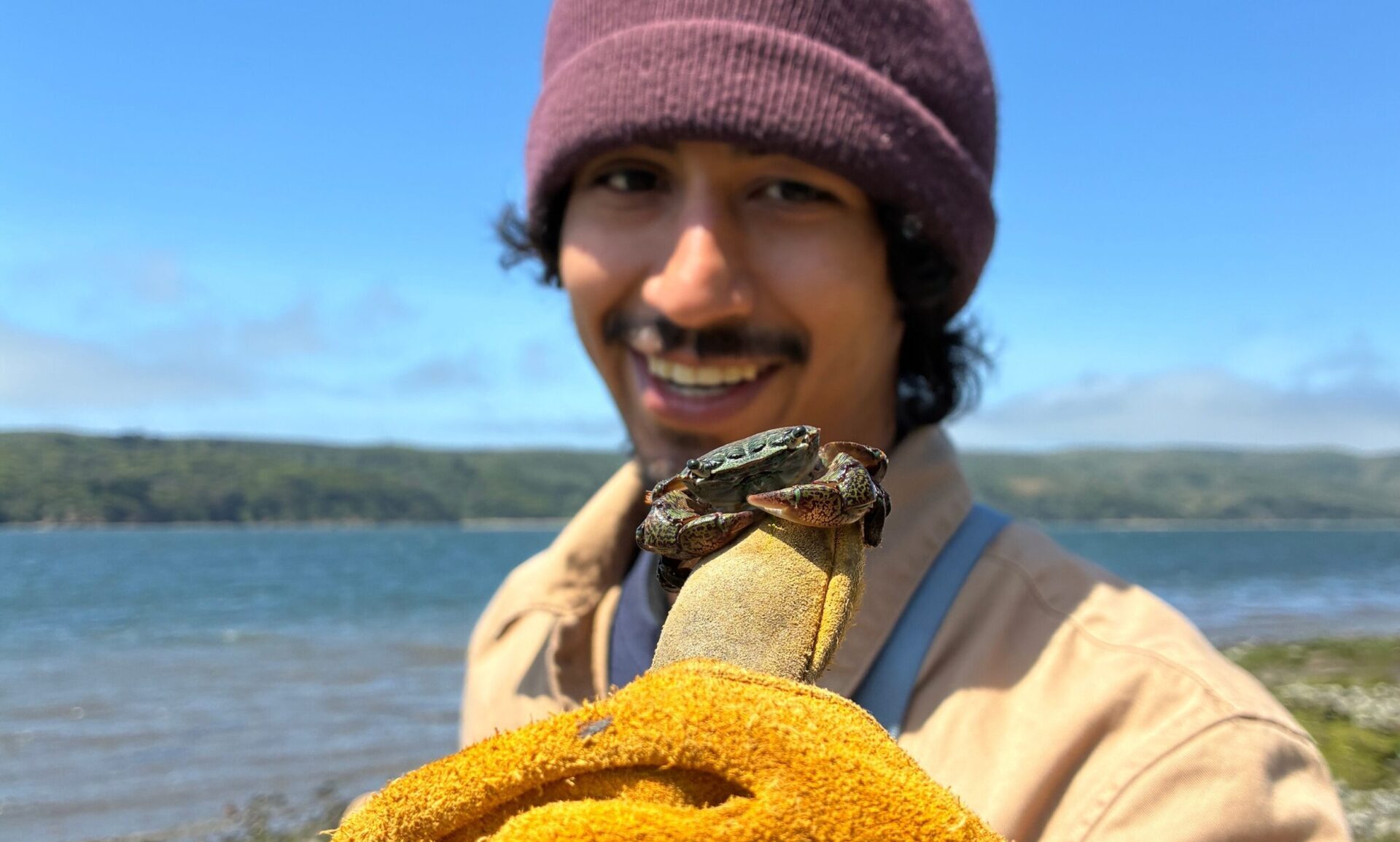
All Hands Ecology stewardship apprentice Johnathen Carmona with a crab he found during a June volunteer day at Cypress Grove Preserve. Photo: Andrea Salazar/All Hands Ecology
About $3.5 billion worth of restoration projects are planned for the next decade across California, but the workers leading them need ecological training to properly care for the land.
On a warm, sunny, and breezy Saturday morning in June, two bright-eyed young men who happen to share the same name and passion — Johnathen Carmona and Jonathan Lopez — lead a group of about a dozen volunteers through a stewardship workday at Cypress Grove Preserve on Tomales Bay.
The volunteers are learning about beach and shoreline maintenance, invasive species management, and the work that Carmona and Lopez do every day to keep the environment right for native species in and around Tomales Bay, like coho salmon, steelhead trout, herring, oysters, kelp, and too many different birds and crabs to count.
Carmona and Lopez are completing a six-month stewardship apprentice program with All Hands Ecology, a nonprofit formerly known as Audubon Canyon Ranch that manages four North Bay preserves. Hoping to build careers in forestry and land management, they represent a growing sector of California’s labor force and economy. As climate change necessitates sea level rise adaptation, wetland restoration, shoreline stabilization, wildfire mitigation, and improved stormwater systems, among many other things, cities, counties, and nonprofits across the state are investing billions of dollars into ecology projects and workers.
Organizations like All Hands are on a mission to fulfill that workforce demand, but there’s a stubborn culture they have to break down first. Historically, environmental work has been viewed as something for volunteers to do in their free time on weekends, but not for young professionals to pursue as well-paid careers.
“We just felt this sense of responsibility to have more people caring for the lands as real jobs, real careers that pay wages,” says All Hands CEO Tom Gardali, who describes prescribed burns, for example, as a “forever job” that can’t simply be done by volunteers from time to time.
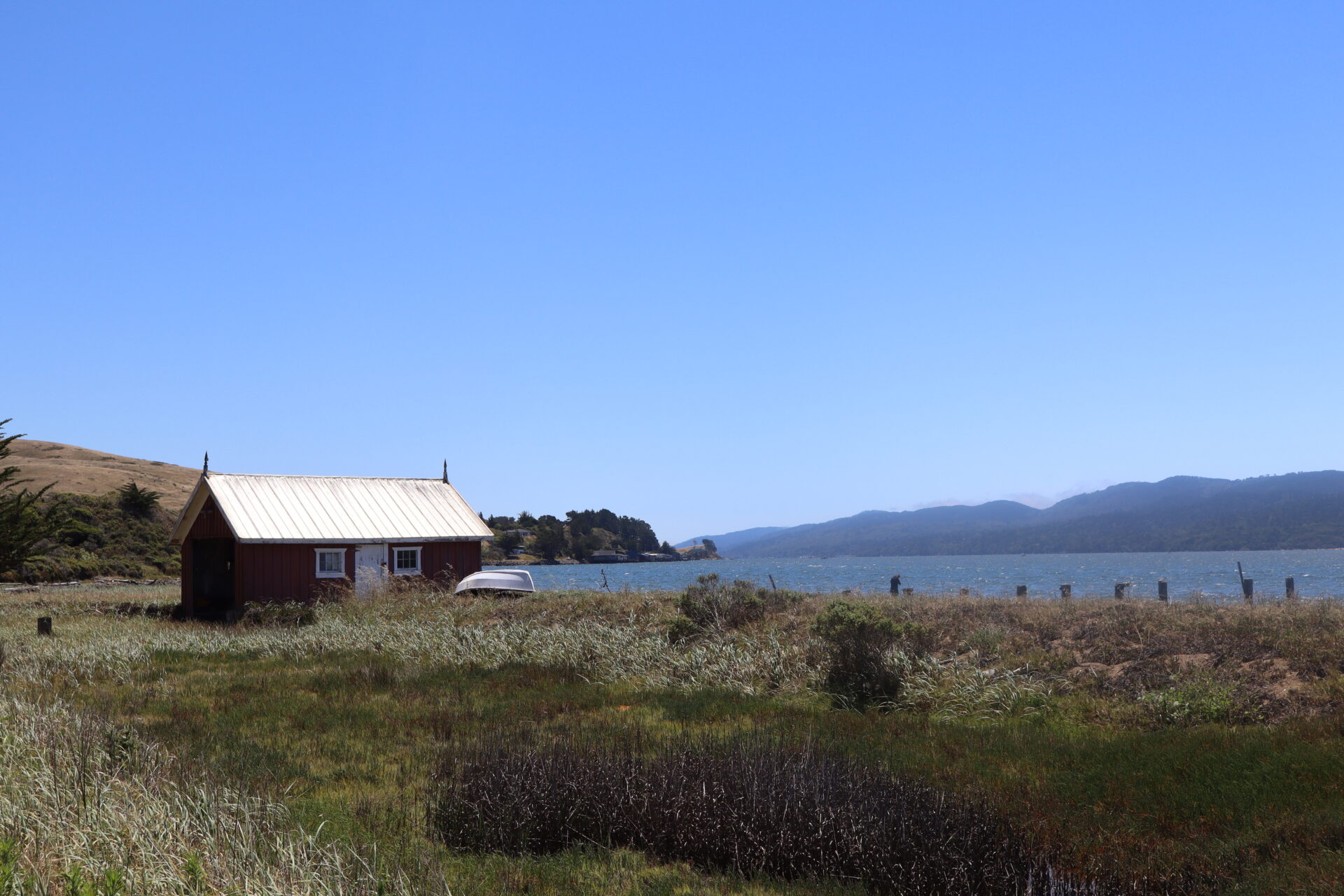
Cypress Grove Preserve along Tomales Bay, which Carmona and Lopez helped maintain during their apprenticeship. Photo: Duncan Agnew
All Hands created the new apprenticeship with a grant from Parks California. The experience is paid and provides benefits, including free housing at the Martin Griffin Preserve along the Bolinas Lagoon near Stinson Beach.
But this opportunity provides something beyond housing and a paycheck. With AI dominating headlines and new job opportunities in the Bay Area, and questions arising about its impact on the environment and the future at large, a growing number of young people are also looking for a different path — something hands-on that gives them a sense of agency amid so much uncertainty. Living at the preserve away from the hustle and bustle of the big city, Lopez says, “felt like vacation.”
“Over here, I wake up and hear the birds singing, see deer and coyotes,” he says.
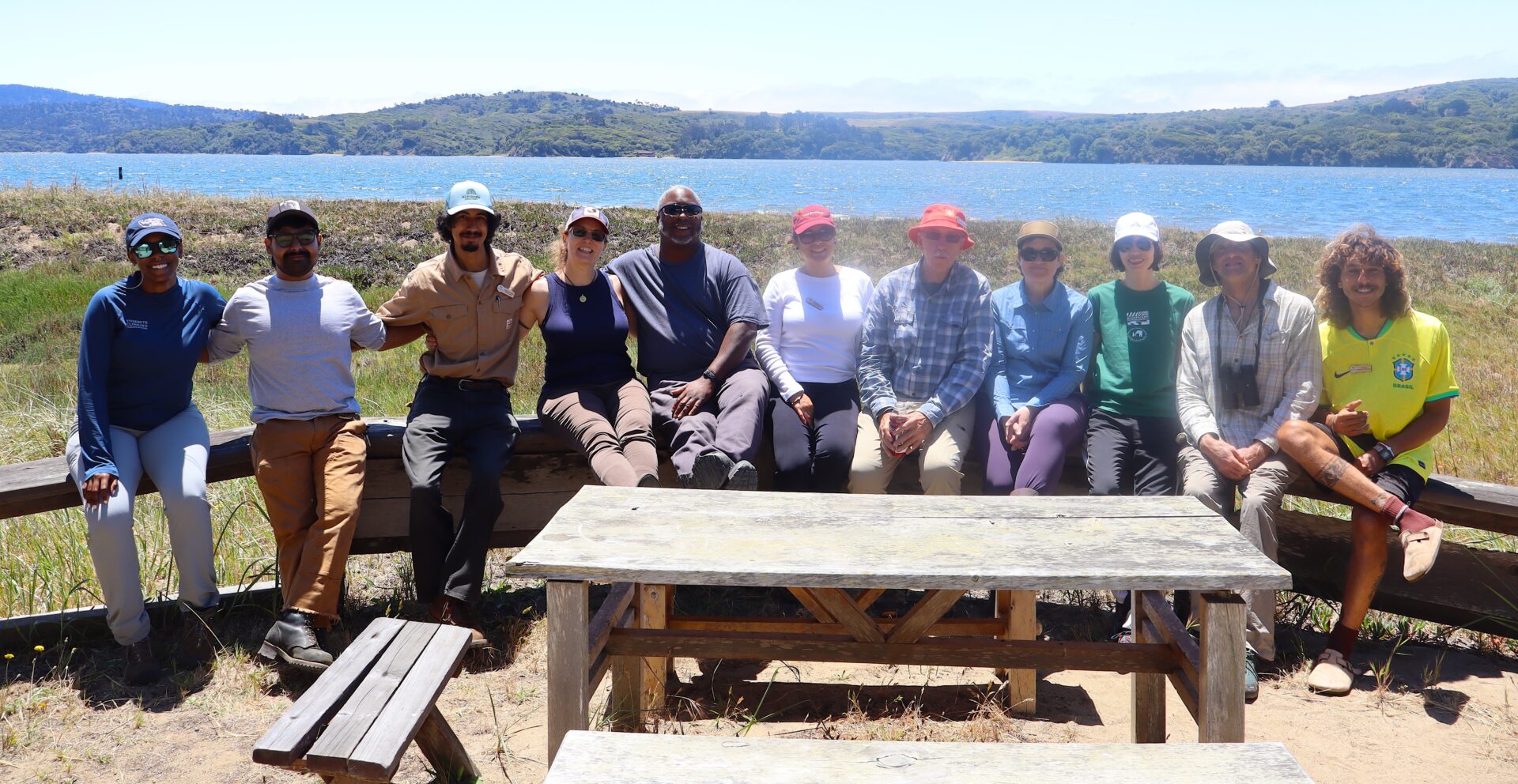
Coastal Stewardship Day volunteers with Lopez and Carmona, second and third from left, respectively. Photo: Duncan Agnew
Making Restoration Mainstream
While we’ve long known that successful conservation requires active effort — letting the land be leaves it, and the crucial habitats it provides to wildlife, vulnerable to erosion and weather extremes from climate change — power players have thus far largely failed to recognize the economic impact of this work and the demand it brings for new kinds of jobs.
That’s why leaders from All Hands and the Ecological Workforce Initiative, a Santa Rosa-based nonprofit advocating for ecological restoration training in civil construction, are trying to calculate the size of the land stewardship and restoration economies to win more money for their workforce programs.
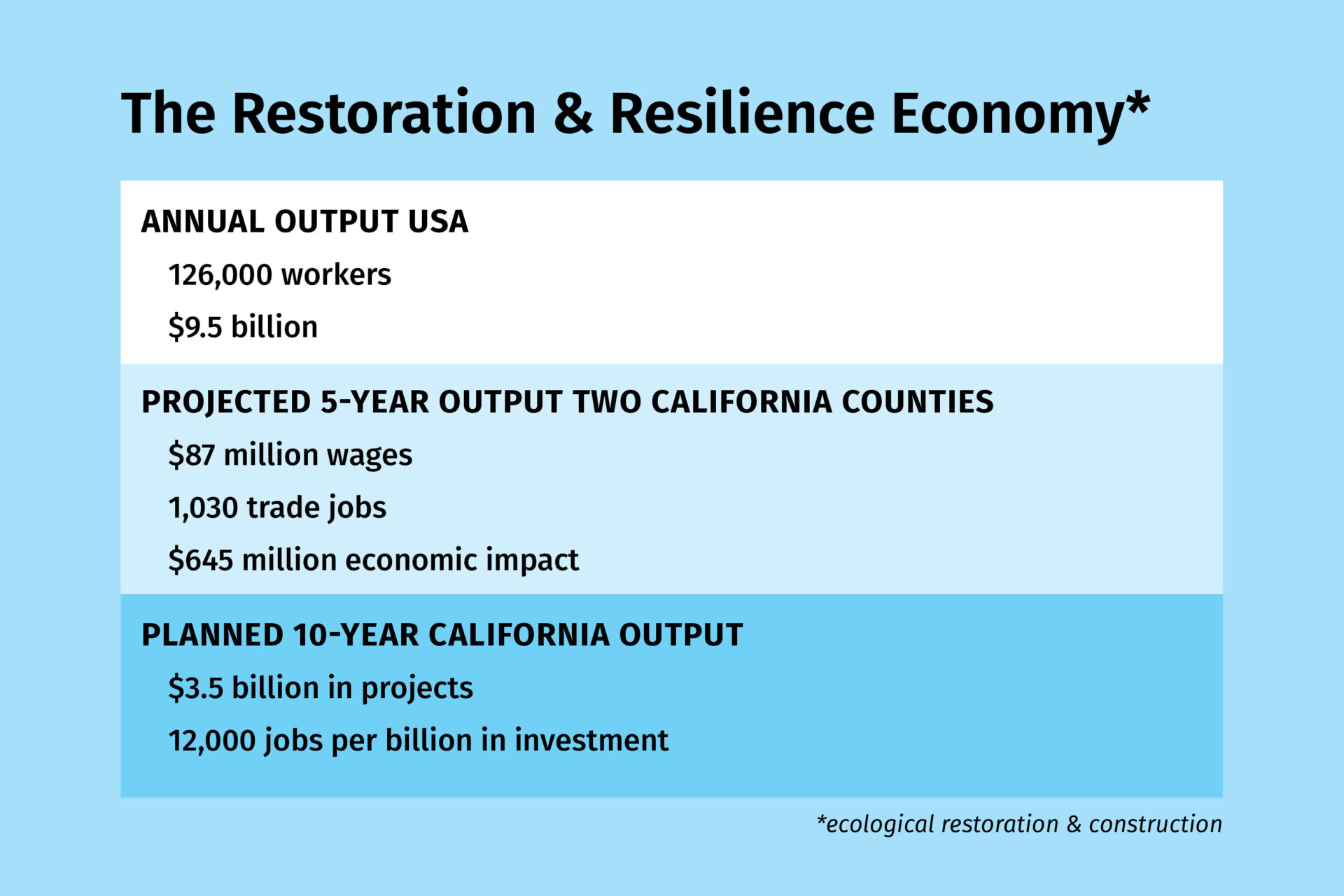
According to research done by Gardali and EWI Executive Director Sally Bolger, one of the first attempts at counting up the size of this industry came in 2015 from Todd K. BenDor, director of the Odum Institute for Research in Social Science at the University of North Carolina at Chapel Hill. BenDor and his colleagues published a study called “Estimating the Size and Impact of the Ecological Restoration Economy,” in which they conducted a national survey that found the field employed 126,000 workers and produced $9.5 billion in annual economic output across the country. They defined this sector of the economy as “any combination of activities intended to result in ecological uplift, improve ecosystem health, and result in a functioning ecosystem that provides a suite of ecosystem services.”
Now, EWI is continuing what BenDor started, evaluating the projected impact of restoration projects scheduled for the next five years in California’s Humboldt and Del Norte counties through a partnership with the Bank of Montreal, Parks California, and the North Coast Redwoods District of California State Parks. Their initial findings suggest $87 million in construction wages, 1,030 trade work positions, $235 million in direct economic impact, and $410 million in indirect economic impact across those projects alone.
But what’s still missing, according to a recent paper co-authored by Gardali and Bolger, is formal recognition of this work by the U.S. Department of Labor.
“Ecological restoration remains invisible — a blind spot, if you will — in official economic data. It is counted only in fragments: part construction, part environmental consulting, part conservation. As a result, its total value is hidden,” EWI wrote in a March 2026 report. But establishing ecological work as a distinct sector of the economy through standardized databases, particularly the North American Industry Classification System and the Occupational Information Network, “will unlock significant economic, environmental, and political benefits for California and potentially beyond.”
Construction with Ecology in Mind
When Bolger was working on a Point Reyes National Seashore wetland restoration project — at the time the largest in state history — she saw what she describes as construction workers being “invisible” in the process. They weren’t given any agency in the project or ecological training ahead of time to equip them with the knowledge they needed to best care for the land, she says. Instead, they were just treated “like commodities to be gotten at the least price.”
So she decided to team up with ecological construction expert Mark Cederborg to create EWI, where they would go on to train and advocate for construction workers on restoration projects.
They’re now hoping to bridge the gap between the building and environmental restoration industries by designing programs specifically around the consideration of ecology in civil construction. Cederborg envisions a future where, before construction workers wade into a creek to remove a fallen tree or shore up a slumping bank, they have to complete ecological training. He likens that idea to existing requirements under the Occupational Safety and Health Administration.
“Everybody knows what OSHA is. Everybody knows why you wear a hard hat,” he explains. “But with the environmental work, the ecological work, we can confidently say there is no concerted effort to train anyone in any of this work before sending them straight into a creek, and then what happens is that everyone else is responsible, and everyone is wondering why that person screwed up. Well, it’s not their fault most of the time.”
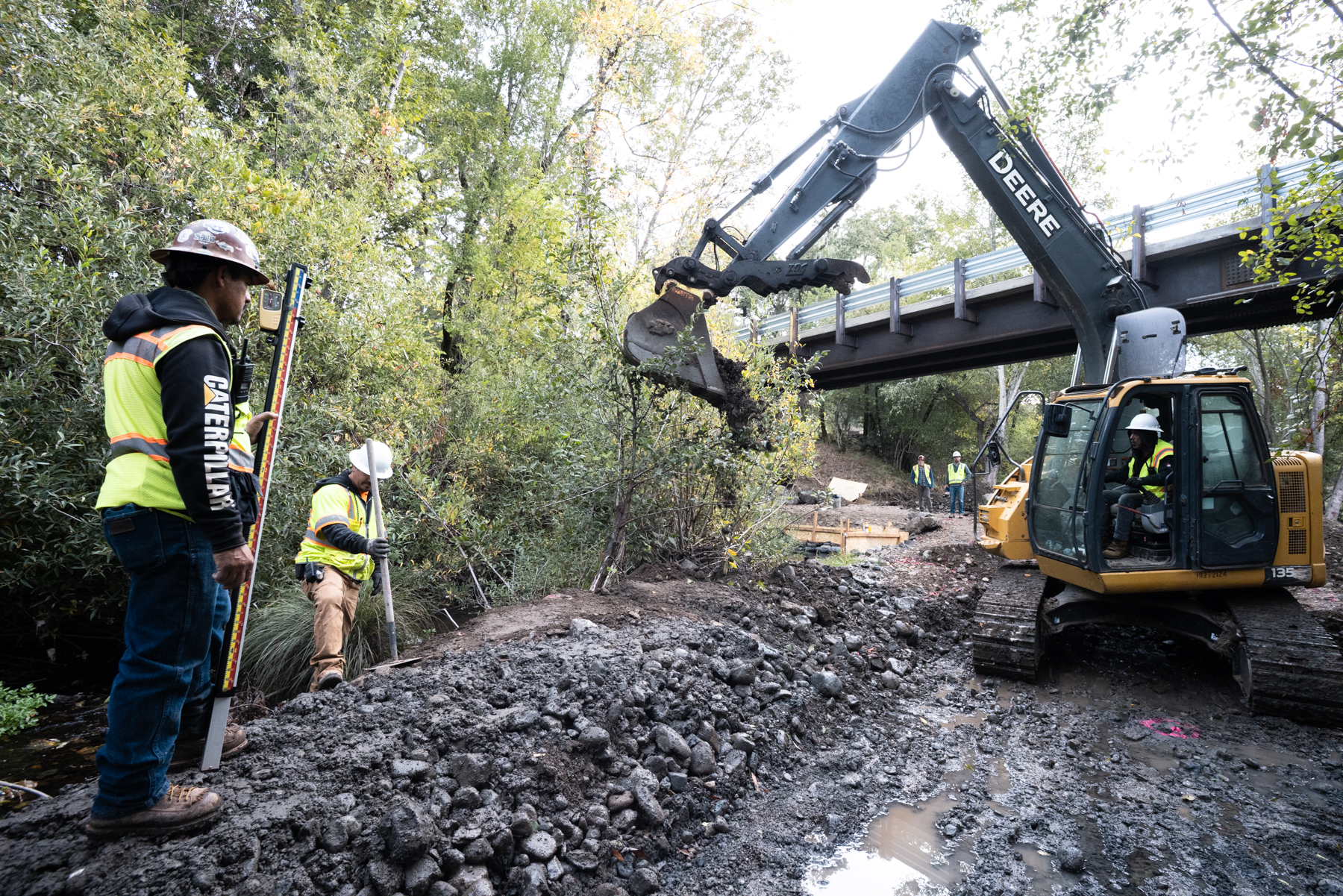
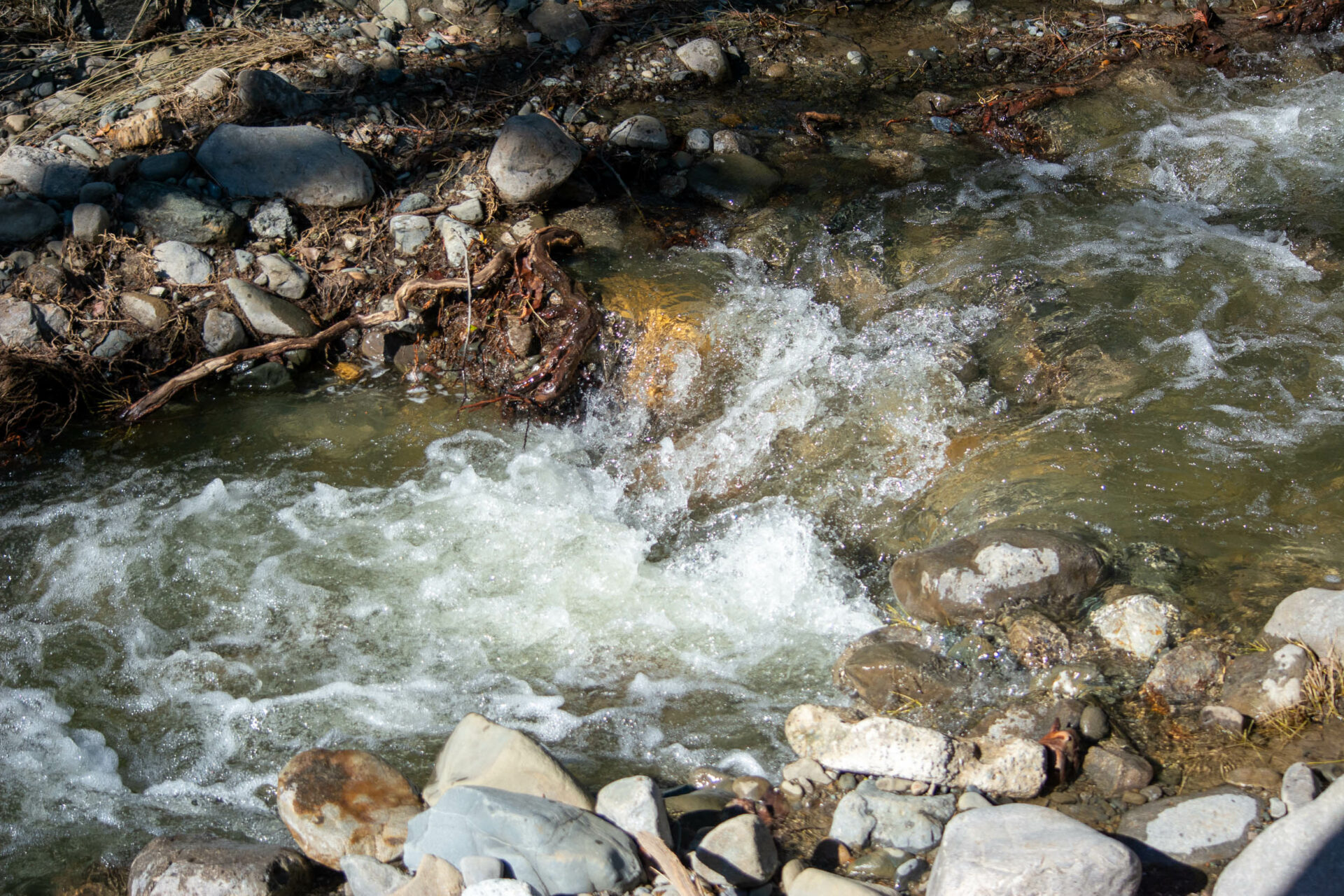
An operator and grade setter establish a finish grade on a gravel bar. Photo: Catch Creative
As California landscapes suffer frequent fires and floods, environmental restoration is making up a growing percentage of all construction. Cederborg says he’s now counted about $3.5 billion worth of restoration projects planned across the state for the next decade, and, according to federal government estimates, each billion dollars of investment creates 12,000 jobs. EWI is hoping to give workers the tools they need to treat these jobs with the care they require.
“A trade worker doesn’t need to be able to identify a red-legged frog from a bullfrog. But they need to come to the project with the right questions,” says Cederborg. “Are there protected species on the project site, and if so, what should I be looking for? Do I need to be concerned about water quality downstream? What do I need to do to protect the resources on this project site?”
‘A Little Glimmer of Sunshine’
Whatever the label, there does seem to be a groundswell of interest from youth and frontline communities in jobs that afford them both greater connections to other people and the planet, and a future paycheck. For example, the REAP Climate Center in Alameda and Greenbelt Alliance have partnered to launch the Regenerative Jobs Program, an initiative funded by the California Jobs First Program to prepare workers for careers in composting and biochar (a fine charcoal powder made from organic waste that enriches soil and acts as a carbon sink).
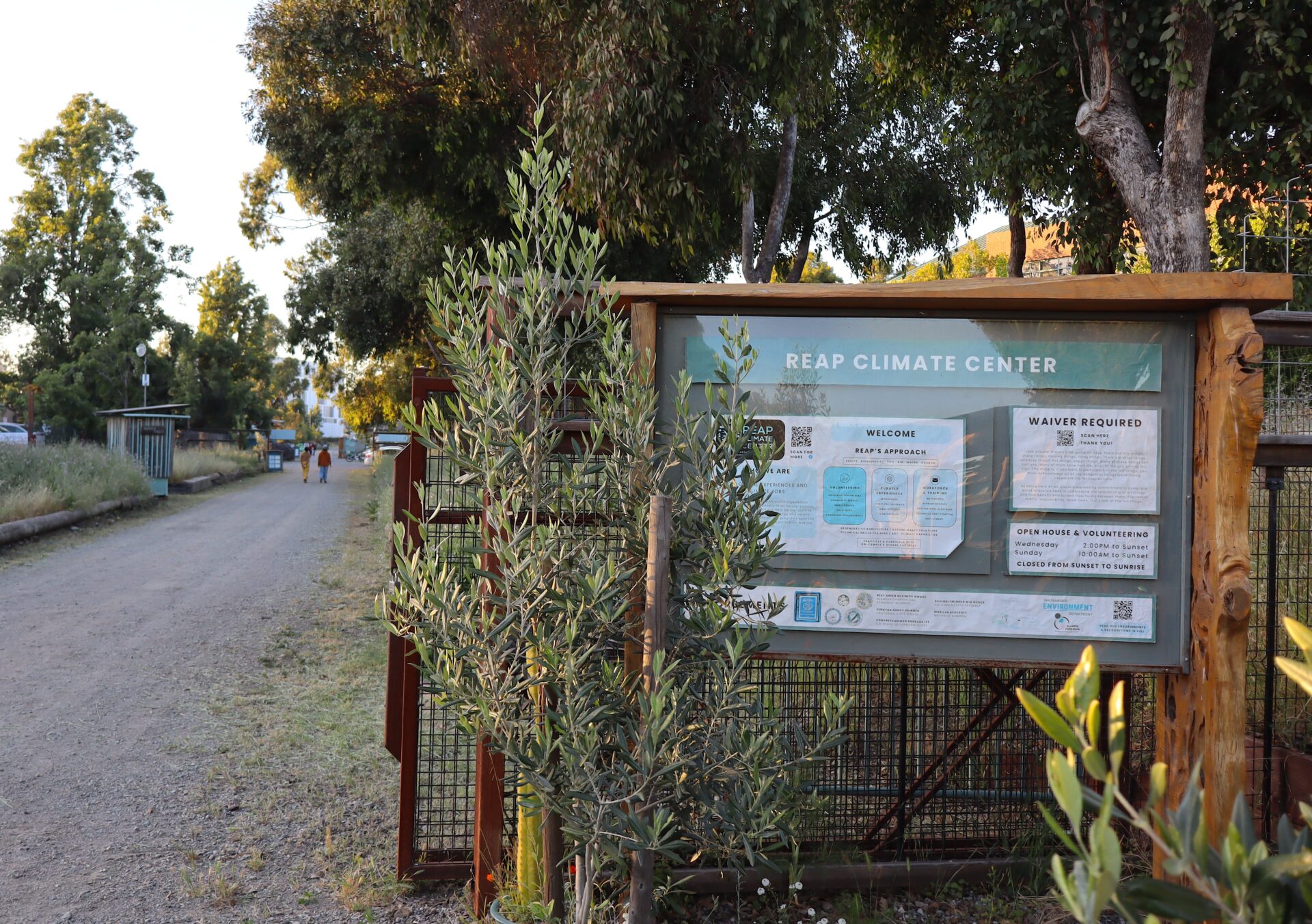
The REAP Climate Center in Alameda. Photo: Duncan Agnew
The program’s first 40 participants graduated last spring and brought a wide range of backgrounds to the experience. Most were seeking full-time jobs, and half indicated interests in regenerative agriculture (farming practices that rebuild soil health, increase biodiversity, and capture carbon). The program also sought out populations underrepresented in land management, with a majority of low-income, Black and Brown, and non-college-educated graduates.
On a Wednesday evening in May, some of them gathered for a potluck dinner at the REAP campus, a vacant lot near the bridge into Oakland that Executive Director Jonathan DeLong has spent the last five years repurposing into an upcycling, outdoor education, and workforce development center. Fully off the grid thanks to 100% on-site renewable energy, the 100-foot wide, half-mile long campus features metal and wood shops alongside biology labs.
“A lot of our development of the space was, how do we use such a unique shape? It became kind of like an art and science walk. We have a worm world, a fermentation station, a fungi hut, a biome boutique, a hydrology house, a biochar bar,” DeLong says, likening REAP’s labs and exhibits to the hands-on learning spaces in the Exploratorium. “We’re trying to take these playful, curious things that are often ancient Indigenous practices, contextualize them [within] economic development and sea level rise adaptation, and create job pathways.”
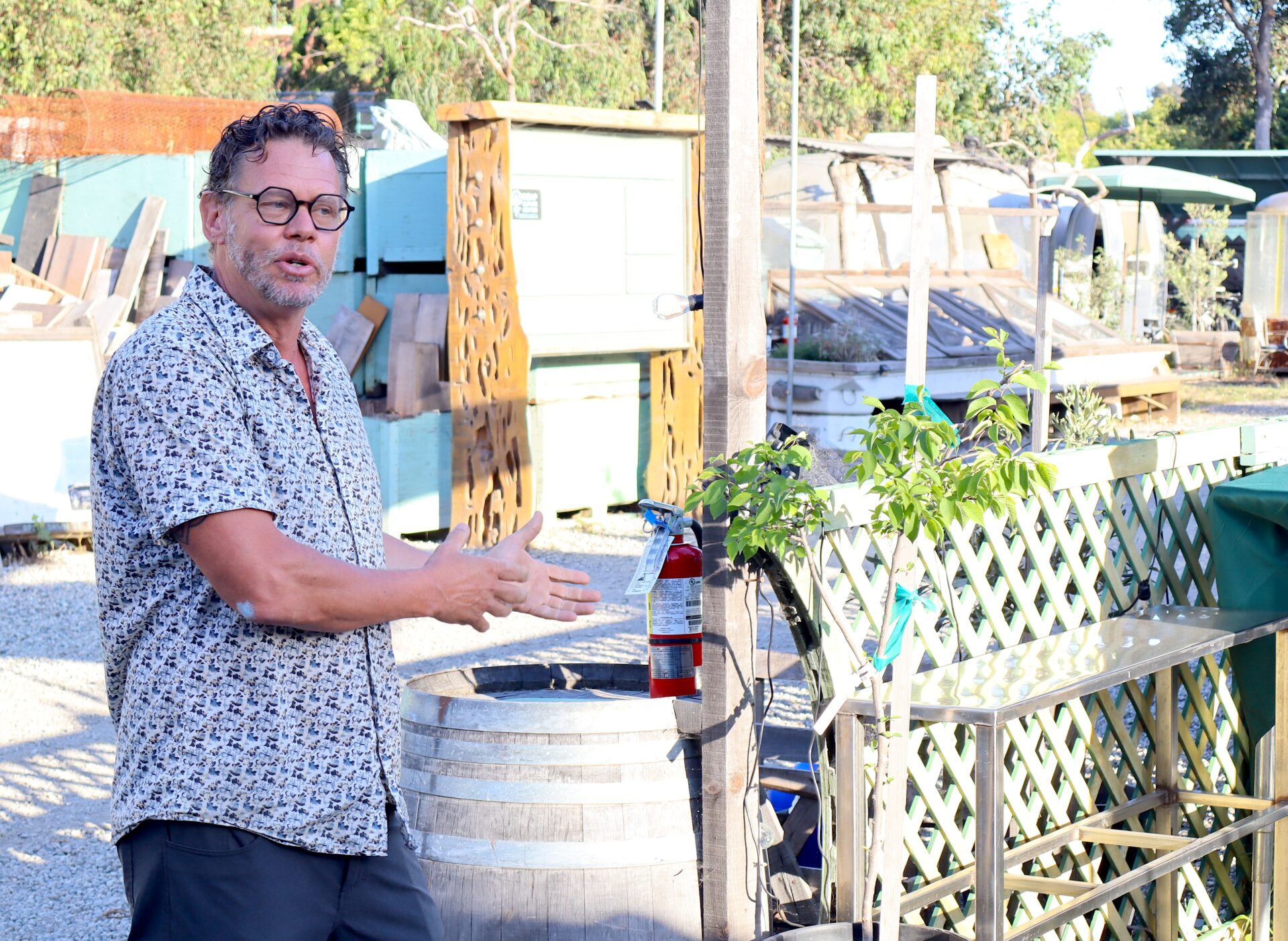
Jonathan DeLong welcomes REAP program participants to their graduation celebration. Photo: Duncan Agnew
Renata Browne, a program instructor, describes the course as science class entirely made up of lab experiments. Instead of just memorizing facts or equations, participants actually get the hands-on experience of slowly starting to understand how to make biochar on their own, combine it with compost, and plant it in the soil for maximum effect.
“It just makes you learn it really deeply and not forget it, and then be empowered to do it,” Browne says. “You don’t feel intimidated anymore.”
Biochar is made by heating organic matter from plants in a low-oxygen environment, Browne explains. The biochar made by Indigenous people thousands of years ago is still in the ground helping sequester carbon and make the soil rich, “kind of like magic,” she says. Plus, it can be a tool for wildfire mitigation by turning burn branches and sticks that would otherwise act as fuel into biochar instead.
Renia Webb, a program graduate who teaches at a middle school in Alameda, says she’s already taken biochar to her students and taught them about the practice.
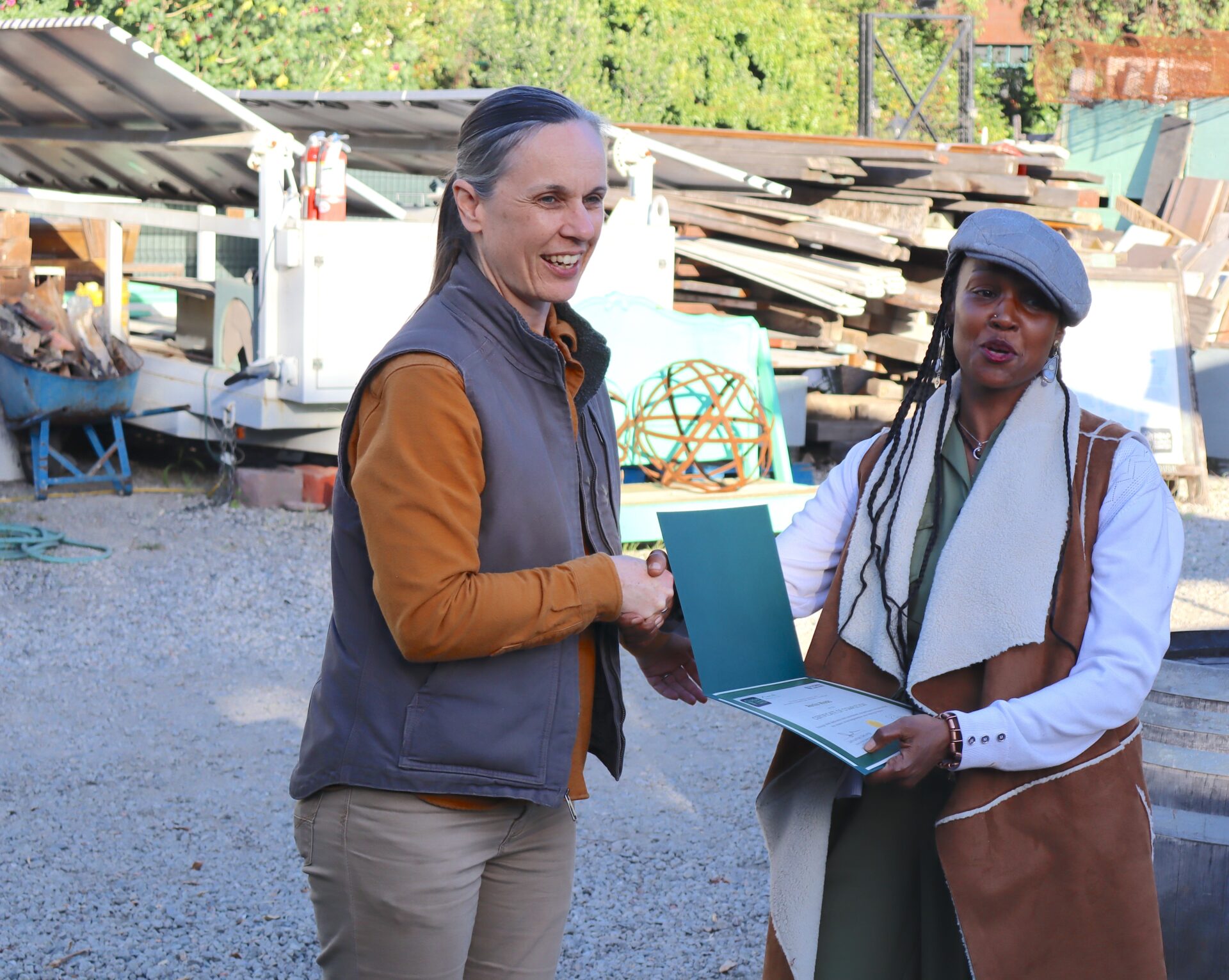
Biochar instructor Renata Browne, left, hands Renia Webb her graduation certificate. Photo: Duncan Agnew
“So much is going on in the world around us that we can’t control, this gives me something that’s a little bit more of my part that I can do,” Webb says. “This is like a little glimmer of sunshine.”
Back on the Bay
Back at Tomales Bay, volunteers are sharing cookies and sipping on seltzers as they recount their favorite parts of the day. Some talk about the wildlife they saw, or the land stewardship duties they learned about from Carmona and Lopez. But many are thinking about the small community they shared for a short time.
“It feels like we’ve built a sense of camaraderie in just a few hours,” one person says.
Sitting down at a picnic table as the group departs, the two apprentices reflect on their journey over the last several months. They got their California Naturalist certification, learned how to compile and analyze data through a geographic information system, tracked wildlife, and received leadership training.
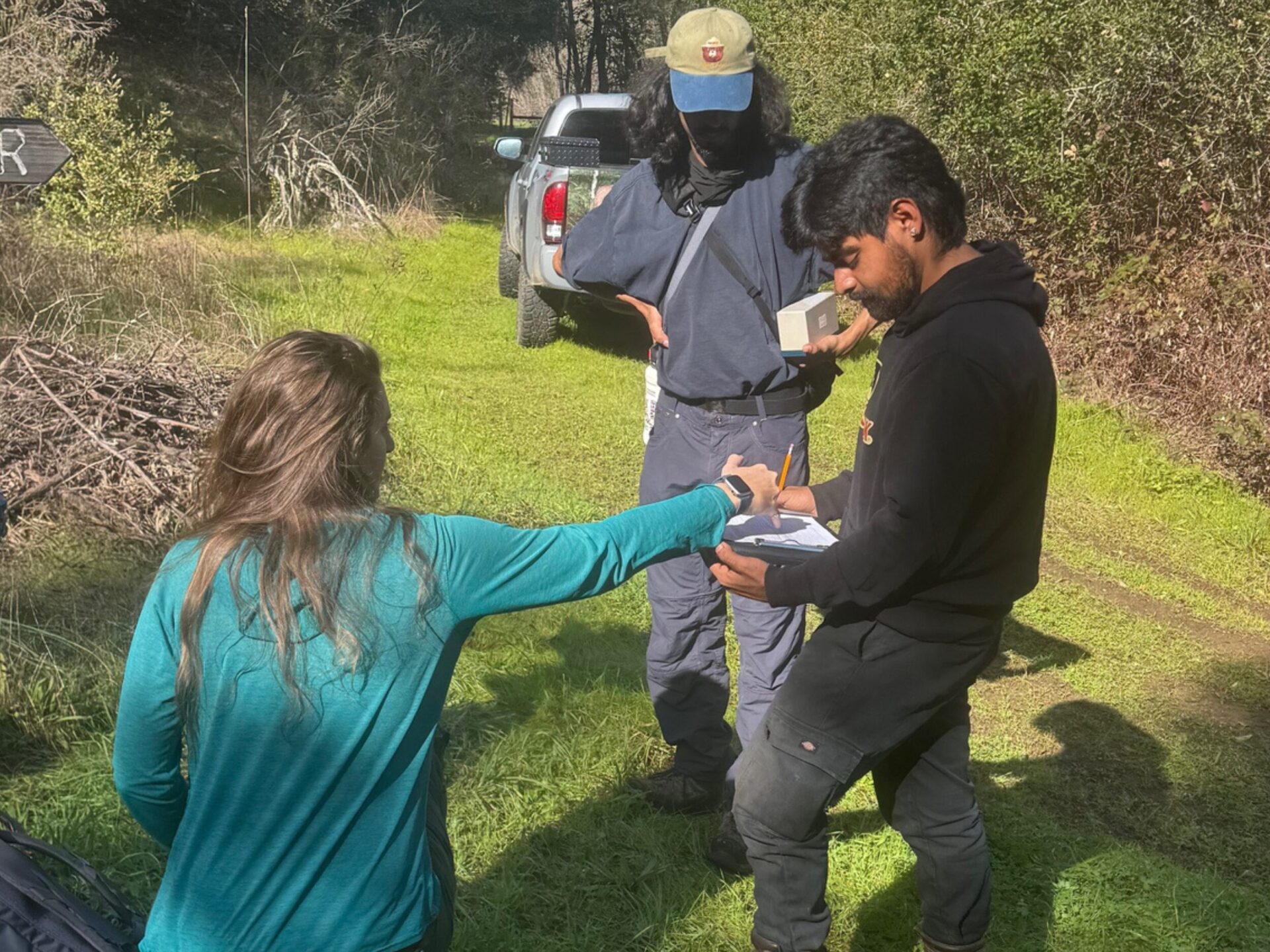
Lopez and Carmona work with Kate Remsen, trail camera project manager, on camera data collection. Photo: Vini Souza/All Hands Ecology
“A lot of people think this is just a landscaper job, or you have to be a volunteer. Some people have negative perceptions of what the work is. There’s a lot of fear of logging and fires,” Carmona says. “I think it just really takes people to go out there. If you’re not sure about this kind of work, volunteer first, and if you really like it, then you know it’s for you.”
They both describe their roles as a “jack of all trades,” working on everything from wildfire mitigation to shoreline maintenance and even carpentry and plumbing. So what does a land steward really do?
“It’s always going to be different, and that’s what makes it interesting. We’re getting a lot of things thrown at us and constantly learning,” Lopez says. “It all ties back into habitat restoration, vegetation management. I feel like it’s just someone that wants to make a difference and show they care about doing the work they do.”