



Could Avocados Be A Transformational Fruit for the Bay Region?
Illegal deforestation. Water pollution and depletion. Worker abuse and extortion — even murder. These are some of the externalized impacts of Americans’ appetite for avocados, one of the world’s most loved, valuable, and — increasingly — controversial fruits.
Demand nationally has soared over the past 20 years, yet the United States’ production has dipped. Instead, avocado farming has ramped up in southwest Mexico, where drug cartels have sought to control the industry, collect profits, and brutally punish those who resist.
Attuned to the escalating conflict, and with an eye on climate change trajectories, scattered Bay Area activists, planners, and urban farmers want Californians to rinse their hands of these atrocities and increase local resilience by growing their own avocados. They hope to drive an agri-urban infill revolution through which lush fruit-bearing canopies spread over community gardens, public parks, schoolyards, sidewalks, and, ideally, most private properties.
Alex Yasbek, a civil engineer at UC Santa Cruz, once worked for the City of Watsonville, where he says he promoted, with limited success, greening the community with public avocado trees.
“It seems like the most logical thing in the world — heck yeah, plant avocados as street trees,” he says.
In Petaluma, urban planner and food system activist Chris Congleton also hopes to help establish community avocado trees that feed people locally while detaching them from the atrocities associated with imported fruit.
“Most of the avocados that we eat and purchase at the store are grown by cartels that are subjugating people in near-slave labor, clearing land, depleting water — it’s all bad news,” Congleton says. “The market for avocados has fueled the growth of those cartels and is part of their strength.”
Congleton has a small yard filled with subtropical fruit trees, including lemon guava, babaco papaya, and white sapote — all testaments to his recognition that icy Northern California winters represent the trailing edge of a shifting climate.
Congleton also has several avocado trees — which he sees as a vehicle for helping transform Bay Area society. Collaborating with a handful of other local backyard growers, he has sketched out a preliminary framework for a community-based breeding program aimed at producing avocado varieties adapted to local microclimates. Such a project could take many years, if not generations, he says, but it would help to transform “the future bioregional economy” by providing locally-grown food, revenue, and bartering capital while building community resilience.
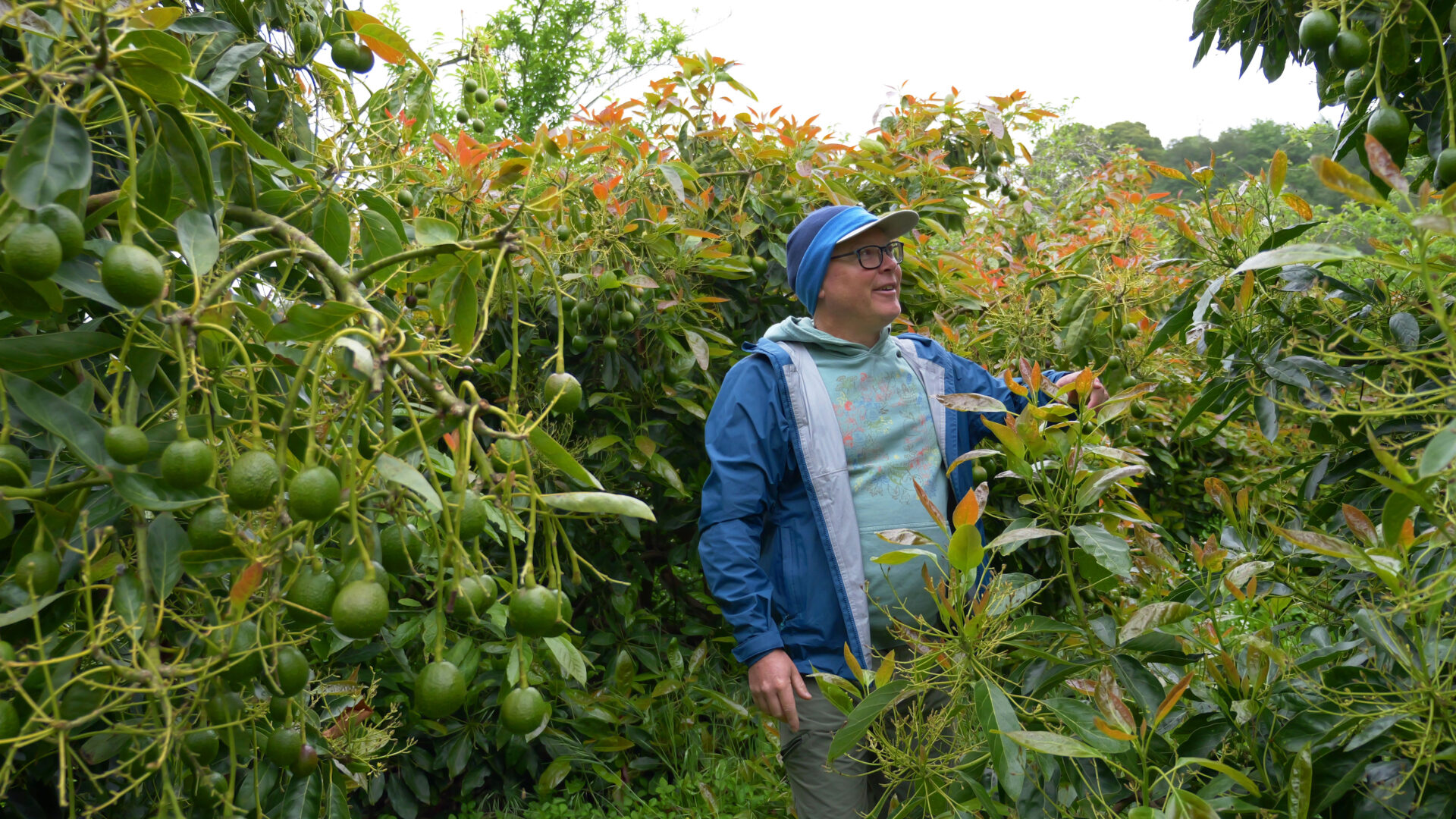
Damian Parr in his happy place. Photo: Andrew Bland
A viable project of this sort is up and running in the yards of a quiet suburban neighborhood in Santa Cruz County. Here, several property owners have offered their yard space to an avocado growing initiative that now consists of hundreds of trees, many well over 60 years old and producing thousands of pounds of fruit annually. The trees’ primary caretaker, Damian Parr, a teacher and curriculum developer at the UC Santa Cruz Center for Agroecology, says he sells some of the avocados at a streetside farmstand, but gives most away to friends, neighbors, and the community.
Easy Pickings
Though avocados have a reputation as a heat-loving species, they grow with remarkable facility throughout most of the Bay Area. In the region’s cooler pockets, avocado production is marginally viable, limited to a few frost-resistant varieties. But warming trends — combined with breeding efforts and genetic selection for hardier avocados — are making growing the oily green globes easier.
“If you can grow Meyer lemons, you can grow avocados,” says Gary Gragg, an East Bay resident who sells avocado trees through his Richmond nursery Golden Gate Palms. “They absolutely love this higher-humidity, somewhat cooler, more regulated climate with a maritime influence.” Gragg says the native habitat of avocados in the highlands of Mexico is “an almost Oakland-like climate.”
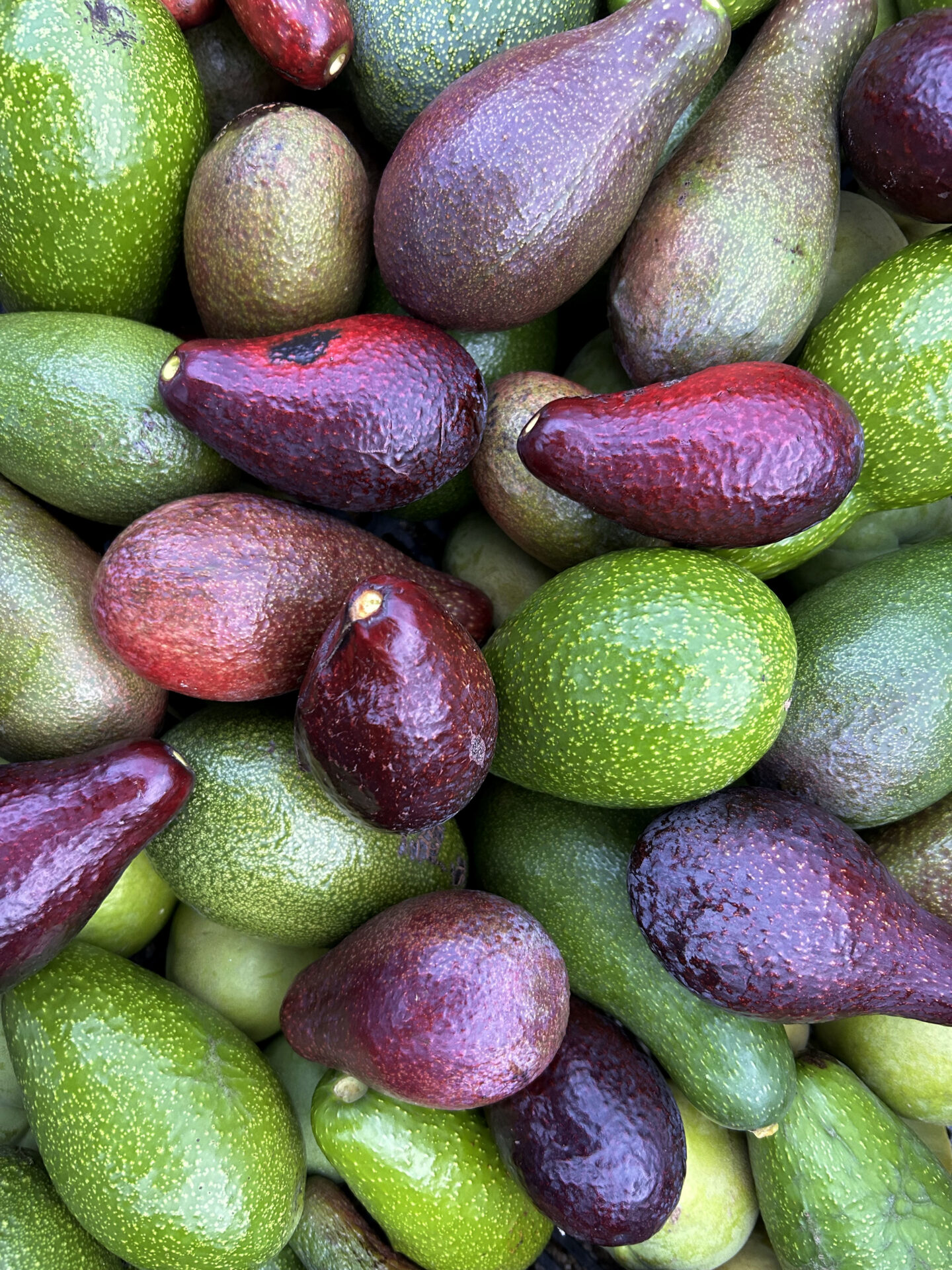
Local avocados. Photo: Gary Gragg
Persea americana, as a species, originated in southern Mexico and Central America, where domestication may have begun 11,000 years ago. But many distinct varieties of avocado can be considered natives to the Bay Area, having originated as genetically unique seedlings in backyard gardens, long a valuable gene pool for growers and collectors. Private gardens are where old varieties, abandoned by commercial producers, are preserved, and it’s where new varieties, born from seed via sexual reproduction — often from compost piles — are commonly found.
In San Leandro, resident Antonio Corpuz grew a tree from an avocado pit planted in his yard more than three decades ago. Today, it is nearly 30 feet tall and produces prodigious crops of one-to-two-pound fruits. Corpuz shares the fruit with neighbors, friends, and family. He has also distributed branch tip cuttings of his tree to other gardeners to graft onto avocado trees of their own — a basic horticultural process by which woody plants can be genetically replicated.
Gragg, with his eyes almost constantly peeled for the red leaf growth and lime-green blossoms of mature avocados in yards and parks, has found many more unique Bay Area avocados. Some he has named and now propagates and sells — like “Big Mup” from East Palo Alto. Another, dubbed “Guacacado,” makes very large fruits — three pounds, he says — with a skin so thick that it can double as a guacamole bowl.
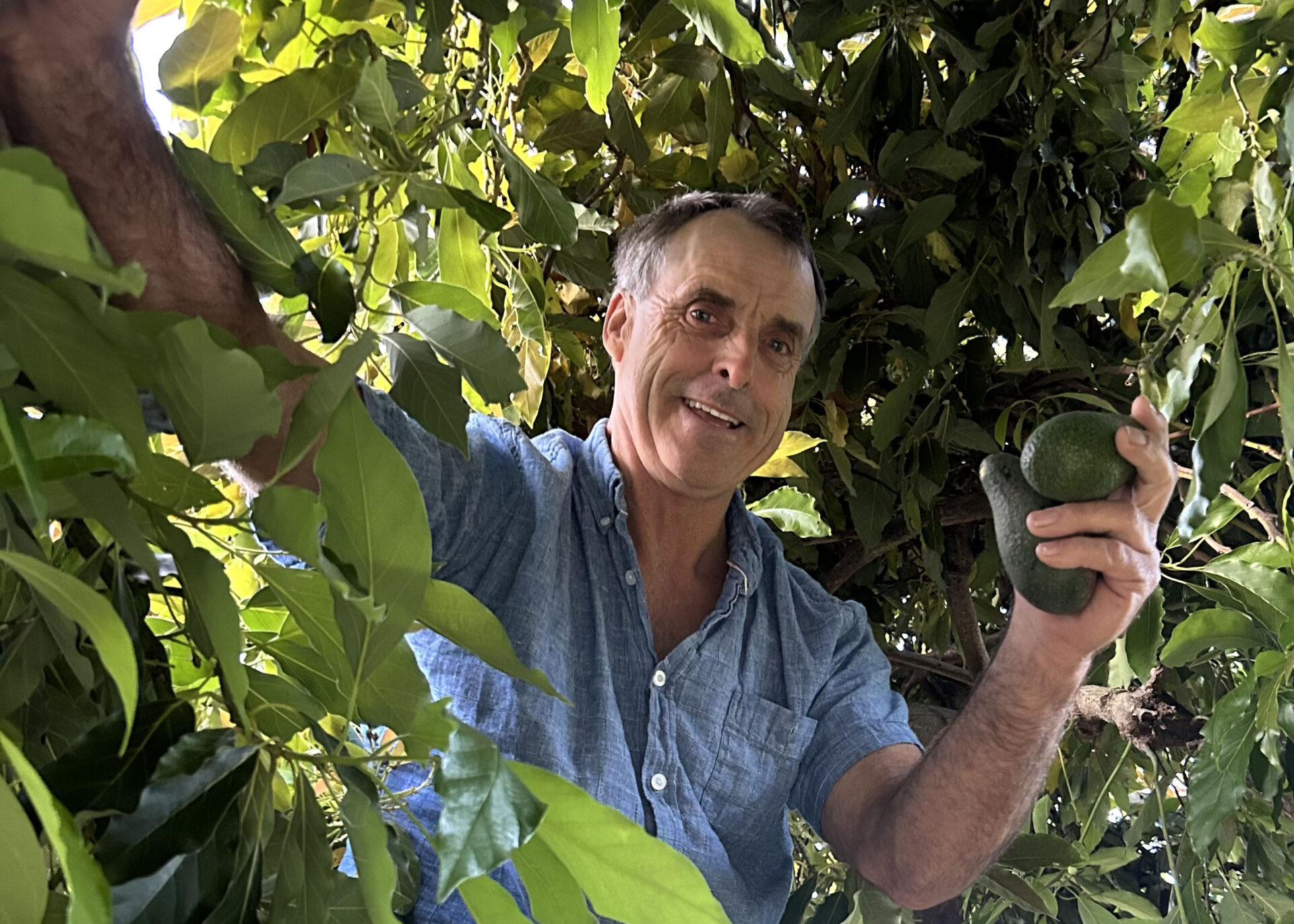
Gary Gragg up in his backyard avocado tree. Photo courtesy Gary Gragg
UPS driver Greg Negrete, of Brentwood, has also discovered new Bay Area avocado varieties while making deliveries. Some he now grows on his own grafted trees, and he has distributed cuttings to many other gardeners. In 2024, he launched the Facebook group NorCal Backyard Avocado Growers, now numbering more than 5,000 members. Negrete says many backyard growers of the region — himself included — have gravitated toward growing avocados as the climate warms.
“Conditions are improving,” Negrete says. “I haven’t seen frost damage in my neighborhood in about 15 years.”
Winter frosts — historically a significant threat to Northern California avocados — have become increasingly mild events across the Bay Area.
Three years ago, climate scientist Daniel Swain — then with UCLA — said that “this may well be the coldest winter that some places will see now for the rest of our lives” in California. More recently, a group of scientists reported that 2026 is likely to be Earth’s warmest year recorded.
Such trends and forecasts put into question the future of growing fruits requiring winter chilling hours, including pears and pistachios. They bode well, however, for growing avocados in more marginal zones, including foggy beachside towns like Bolinas and Pacifica, and winter frost basins like the southern Santa Clara Valley and Santa Rosa.
In western Sonoma County’s Sebastopol, icy winter mornings are increasingly a thing of the past, and avocados a nod to the future. One recent spring morning, Spencer Woodard, an ethnobotanist and agroforestry practitioner, reached into the foliage of a 12-foot-tall Zutano avocado tree and cradled a glut of dangling fruits. Other trees, like his Bacon, Lamb-Hass, Royal-Wright, and Fuerte, also dripped with fruit. Within a few years, Woodard says, he expects to be self-sufficient in avocados, producing more than enough for his family.
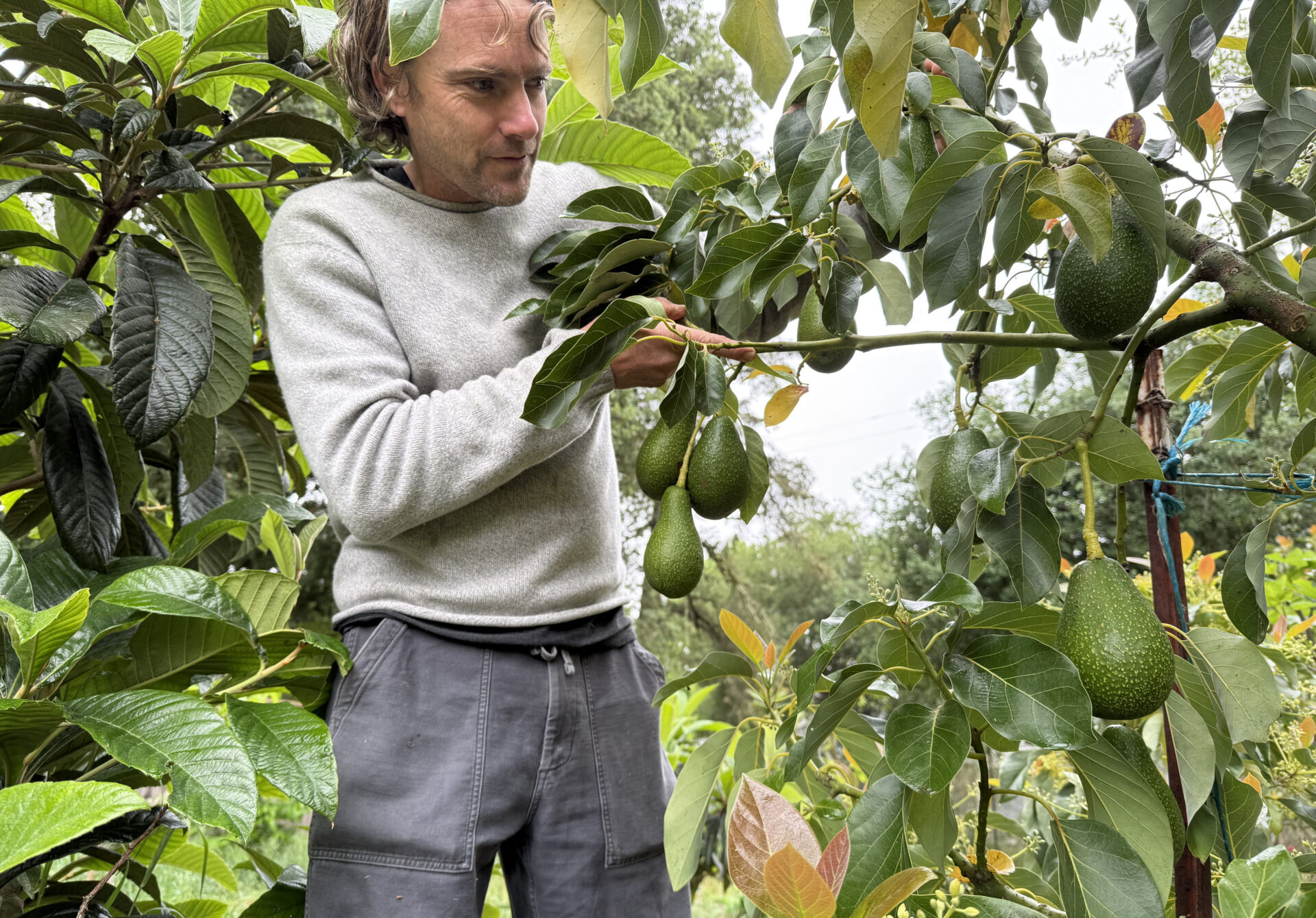
Spencer Woodard. Photo: Alastair Bland
“When I first moved here and started planting avocados, I felt like I was pushing the boundary of what’s possible,” Woodard says.
Avocados, it would turn out, were easy, untroubled, Woodard says, by the pests and plagues that increasingly attack neighbors’ grapes, stone fruits, pears, citrus, and figs.
He says many neighbors are unaware that growing avocados in the North Bay is so easy.
“I can’t tell you the number of people that have said to me, like, ‘Oh, I used to live in Hawai’i, and I wish I could grow avocados here,’ and I’m like, ‘I’ve got 17 varieties and they’re thriving,’” he says.
Famously cold-hardy avocado varieties are already available — notably the Mexicola, reported to survive temperatures below 20 degrees Fahrenheit. Such varieties make it possible to grow and fruit avocados in the iciest valleys in the Bay Area.
One problem with most of these frost-resistant avocados is that they tend to produce fruit over a short fall season — a limitation that research farmer Marta Matvienko is working to overcome. On her four-acre experimental farm near Woodland, she has been growing avocado trees from seeds in sites exposed to frost and selecting survivors as cold-tolerant candidates for commercial production. Her goal is to produce hardy avocado varieties that fruit on the other side of the calendar, allowing growers in cool climates to attain close to year-round avocado production.
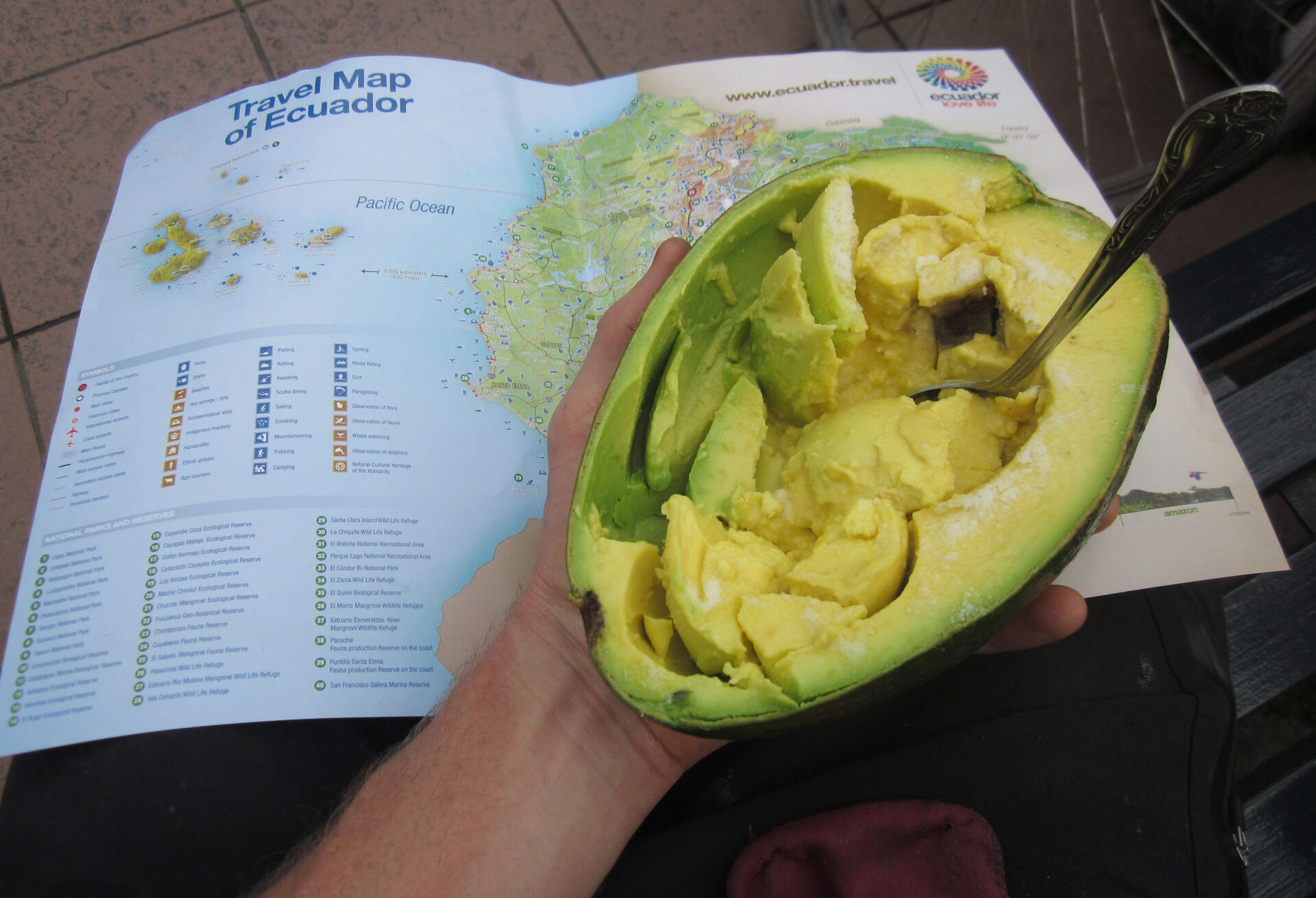
Reporter Alastair Bland samples an avocado in Ecuador. Photo: Alastair Bland
Avocados for Good
About 90% of the United States’ avocados now come from Mexico, especially Michoacán. There, thousands of acres of wild oak and pine forest are being illegally cleared annually to plant more orchards in what has been dubbed Mexico’s “green gold belt.” Communities in production areas have been plagued with intimidation and homicide. The crisis has earned the unsavory branding of “blood avocados” for a fruit that decorates our salads, guacamole bowls, and raw vegan “avo-choco” pies with a human death toll.
“If you love to eat avocados and you’re able to plant an avocado tree in your yard, you are part of the solution,” Gragg says.
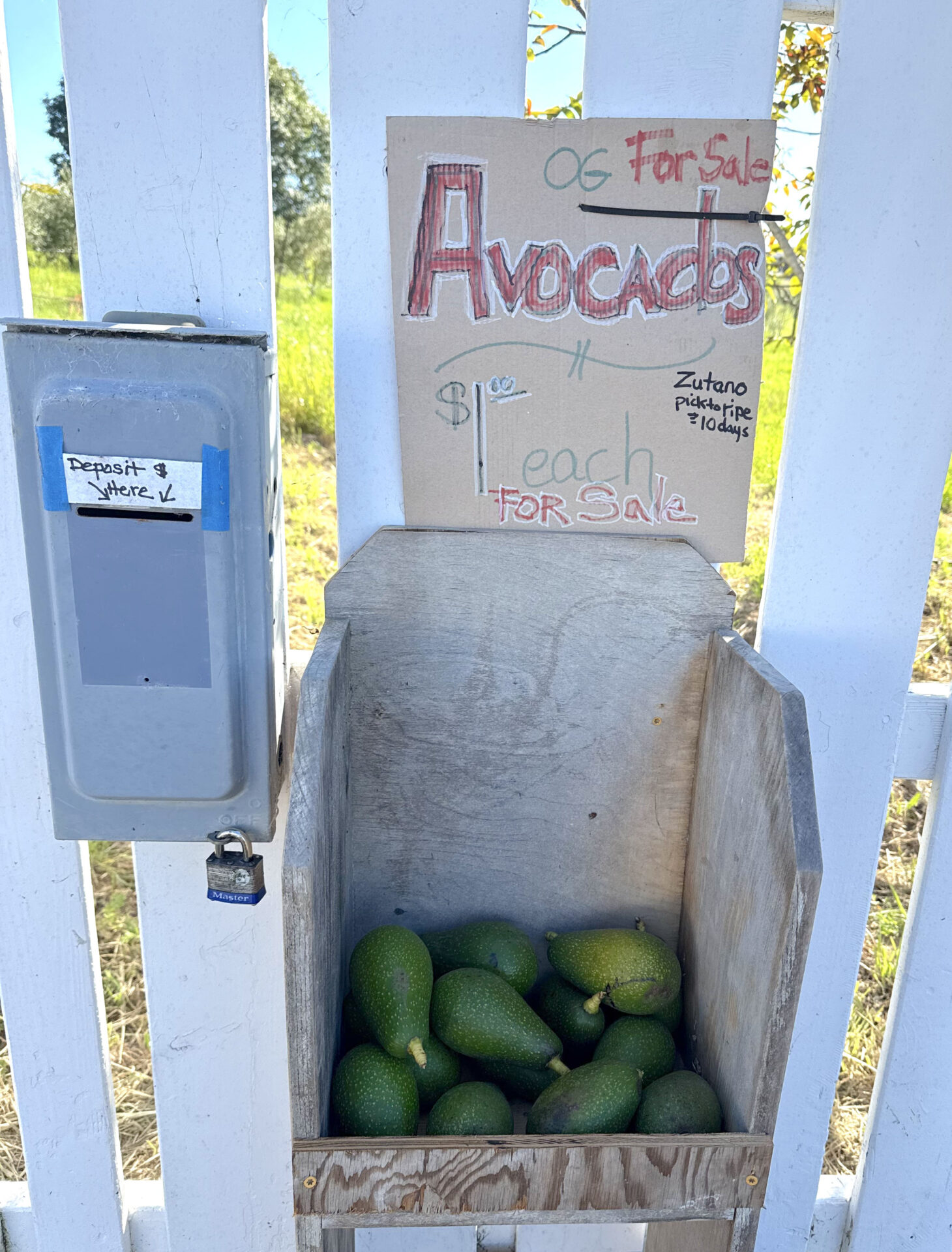
Photo: Alastair Bland
A campaign to offset demand for imported fruit with community-grown urban trees would not be the first effort of its kind in the Bay Area. San Francisco’s Just One Tree project has sought to make the city “self-sufficient in lemon trees.”
The Guerilla Grafters, loosely based in the Bay Area for more than 15 years, aim to “unravel capitalist civilization one branch at a time,” as they declare on their website, by grafting fruit-bearing varieties to public trees of the same species that do not fruit — commonly seen in ornamental pears, cherries, and mulberries. Though the Guerilla Grafters have sought food justice in urban produce deserts, they’ve been rebuked by city bureaucrats, for whom falling fruit is a nuisance.
Productive avocado trees planted on public soil would surely run up against the same institutionalized humbuggery. UC Santa Cruz’s Yasbek recalls from his time working for the City of Watsonville. In 2023, he helped draft the local climate action plan. Street tree planting was under discussion, and he proposed using avocados.
“I was saying that we should be planting avocado trees, and that every tree we plant should be a fruit tree,” he says.
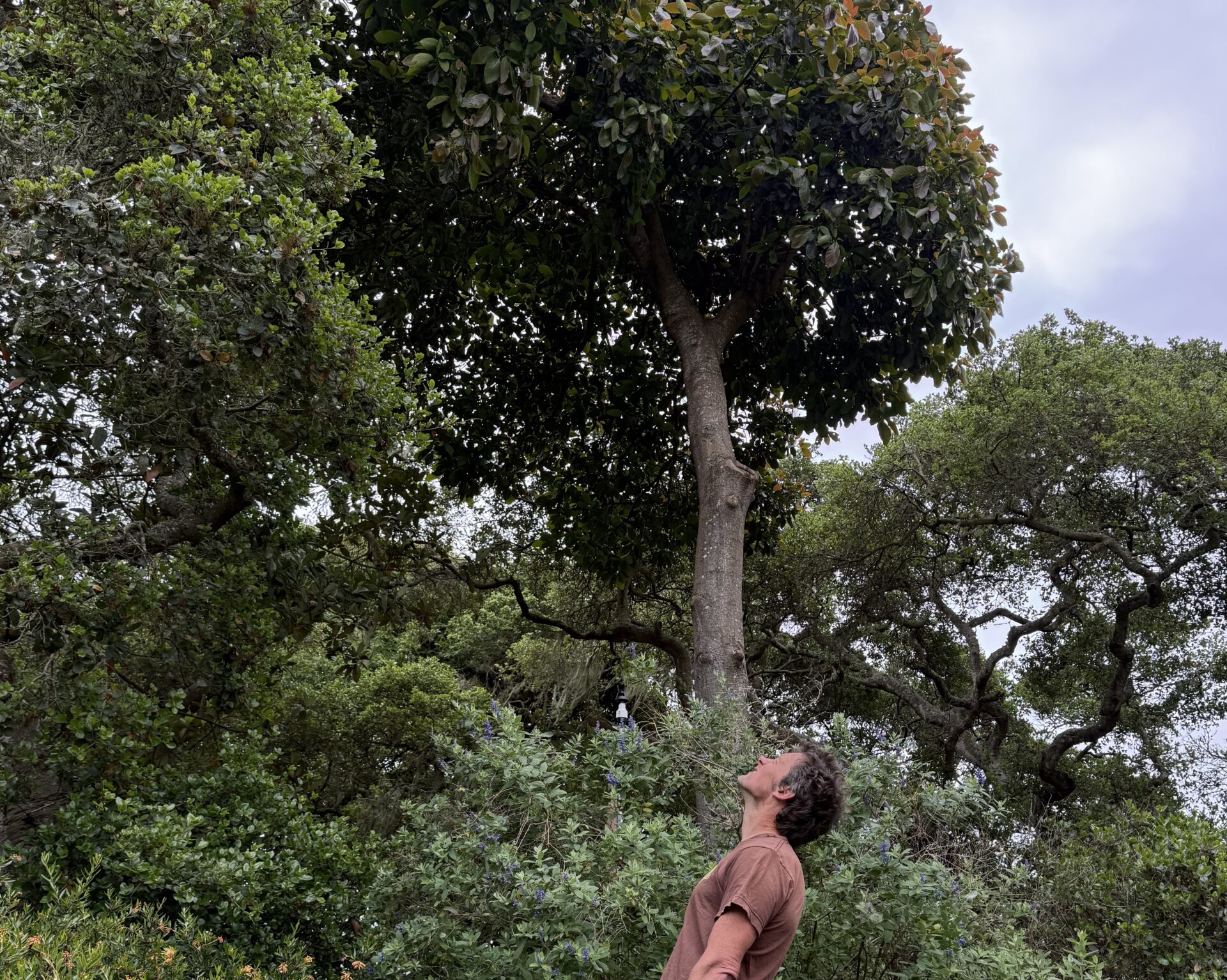
An avocado tree in a Bay Area public park holds its own among oaks. Photo: Sally Bland
His suggestions were rejected by colleagues and consultants who, Yasbek says, argued that sidewalk fruit trees would create a mess, attract pests, and potentially require more water and maintenance than conventional street tree species.
“I think the community would have loved avocado trees, but the decisionmakers were all unsure about the concept,” he says.
Gragg, by a more improvised pathway, is already planting public avocado trees. In the spirit of Johnny Appleseed, he habitually discards avocado pits while driving along public roadways. He says he does so “ethically,” to avoid disturbing private property and native habitat. He hopes they will grow into trees that in maturity produce bumper crops of fruit — perhaps of remarkable size, shape, and flavor — in the public domain.
Past generations of people have done the same — which is why productive trees already grow in public parks and on roadway medians. Gragg says he has harvested bags of avocados from at least one wild avocado tree growing unmanaged on public land beside a major Bay Area highway.
“People now get food off that tree because someone a long time ago chucked a seed out the window,” Gragg says. “And it’s not hurting anyone.”
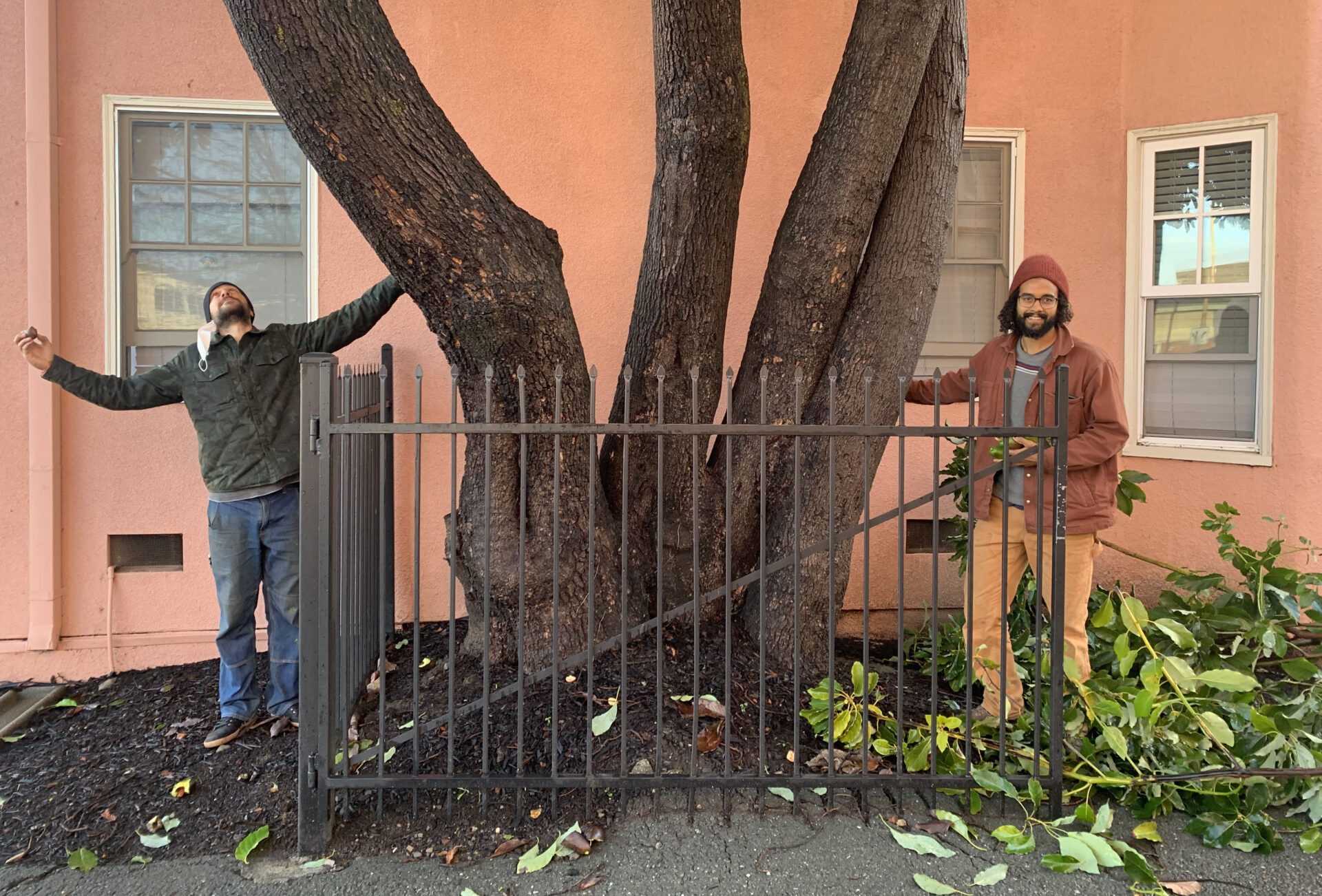
Backyard growers Nicholas Mallonee (left) and Jamal Edwards beneath a very large sidewalk tree in Santa Rosa, where they are collecting fruit, seeds, and grafting wood, called scions. Photo: Alastair Bland
The unique benefits of community-based avocado trees are plain to see at Parr’s Santa Cruz orchard. Yasbek recently visited to collect fruit and meet with friends. While several visitors picked avocados, Parr outlined his plans for streamlining his project. He had recently planted several rows of new avocado trees and would soon be cutting a cluster of Bacon avocado trees down to stumps. This would allow him to convert them via grafting into a particularly productive and consistent variety called Carmen-Hass.
Parr says he launched this project more than two decades ago as a curious neighbor with an itch to both farm and transform the community, which was already shaded by numerous large and neglected avocado trees. Parr gained permission first to grow flowers, then to begin managing the trees.
The contagiousness of Parr’s avocado vision quickly spread onto adjacent lots. Today, Parr lives with his family at the epicenter of this orchard complex and manages more than 200 avocado trees.
Parr says his childhood was one of poverty and food insecurity, and that he has no interest in profiting from his venture. His mission “is to provide nutritious and delicious food for people today and in future generations,” he says.
Reflecting on his beginnings as a community avocado steward, Parr describes himself as, once, “the lucky rodent in the orchard.”
“Now, I am here to pass that forward,” he says. “I am creating an orchard for people to wander upon someday.”
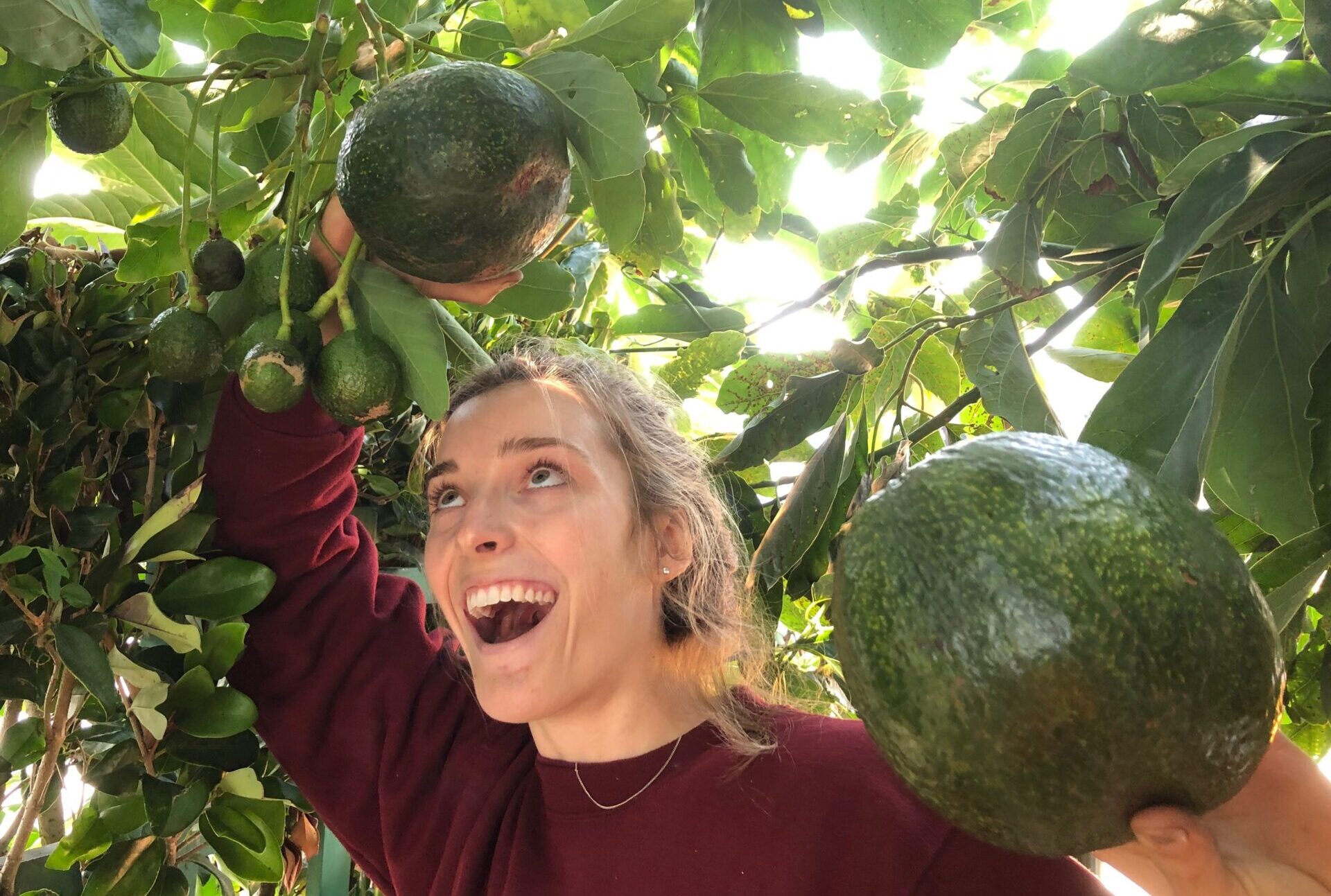
Top photo: Mup Gragg admires a crop of giant Bay Area avocados. Photo: Gary Gragg.