

What You Need to Know About Artificial Turf
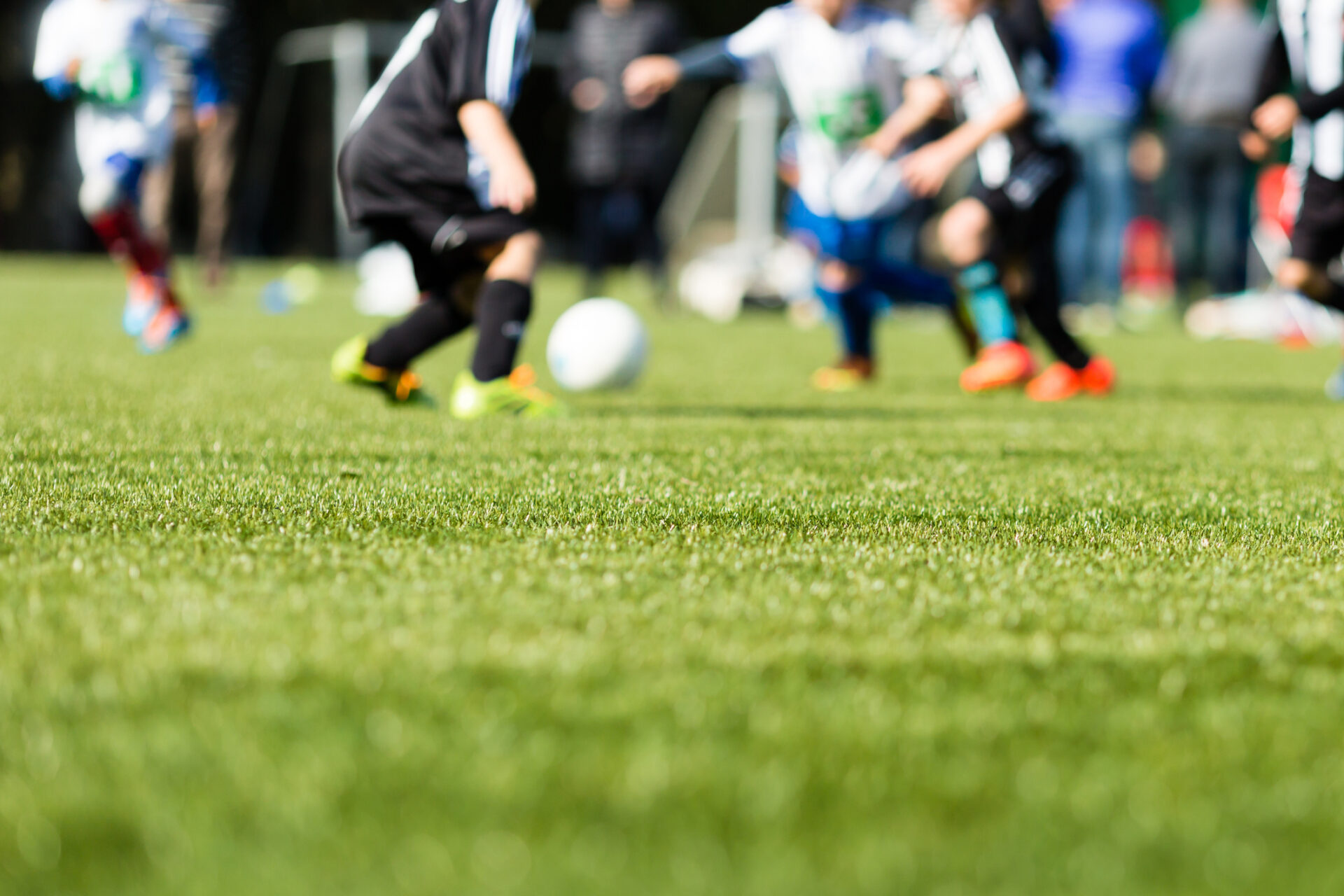
The World Cup is just around the corner, and the Bay Area will host six matches from teams coming from as far as Australia, Qatar, Switzerland, and Paraguay. If you’re the kind of fan who doesn’t just watch soccer — or fútbol — but also plays it on the nearest artificial turf field, you’ve probably found those black, rubber crumbs in your socks, shoes, car, and wherever you leave your gear. What you may not be aware of is that these fields are now at the center of a growing public debate, as local officials and scientists try to understand their real impact on human health and the environment.
In California, artificial turf is spreading, though no one can say exactly how many fields exist. Estimates point to well over a thousand; in 2021 alone, about 150 new fields were built. Each one is made from up to 200,000 pounds of old tires turned into crumbs to mimic the cushiness of natural grass, but with a major advantage: far less maintenance. While studies show that a natural field can consume up to 2.7 million gallons of water annually, an artificial one uses none. For officials constantly looking for ways to save public funds, that sounds like a promising investment, especially in a state that is coming out of a historic drought and becoming drier every year.
So why, then, are supervisors and city council members in places like Sunnyvale, Millbrae, and Santa Clara County now talking about banning artificial turf?
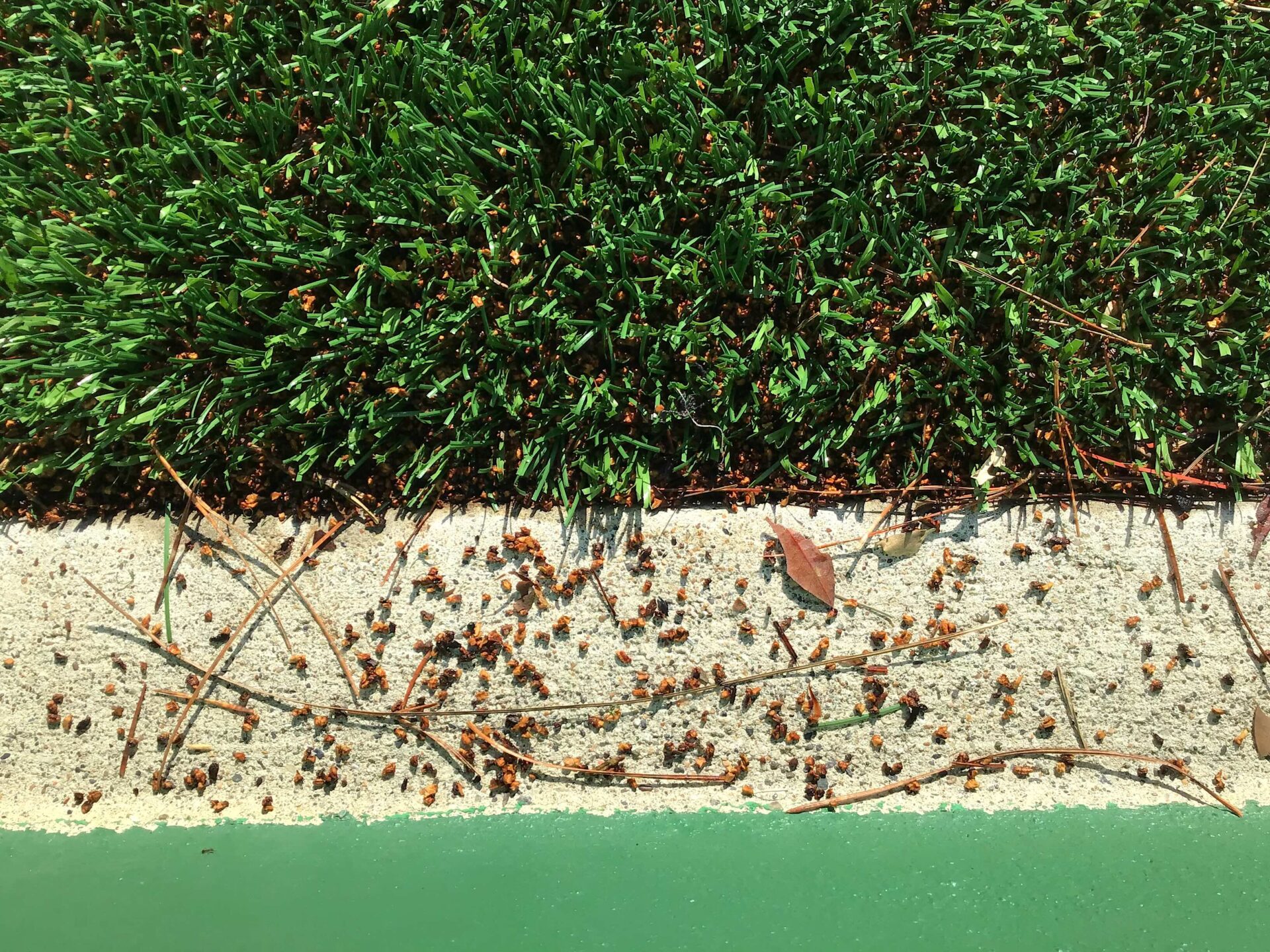
Rubber and cork infill particles migrate from Kimball Field in San Francisco into surroundings. Cork infill reduces the surface temperature of artificial turf. Photo: Ariel R Okamoto
Tires contain many chemicals. Some of them are polycyclic aromatic hydrocarbons (PAHs), which researchers have found can increase the risk of cancer at high or prolonged exposure levels. That has raised the alarm that chemicals released from crumb rubber could be harming players.
To assess those risks, California conducted a study over ten years, whose draft findings were released last March. Researchers analyzed the potential exposure through inhalation, ingestion, and skin contact to more than 100 chemicals in the air above synthetic turf fields or released from crumb rubber. They concluded that there are “no significant health risks to players, coaches, referees, and spectators from on-field or off-field exposure” to these chemicals. Some scientists, however, have questioned the study’s methodology and interpretation.
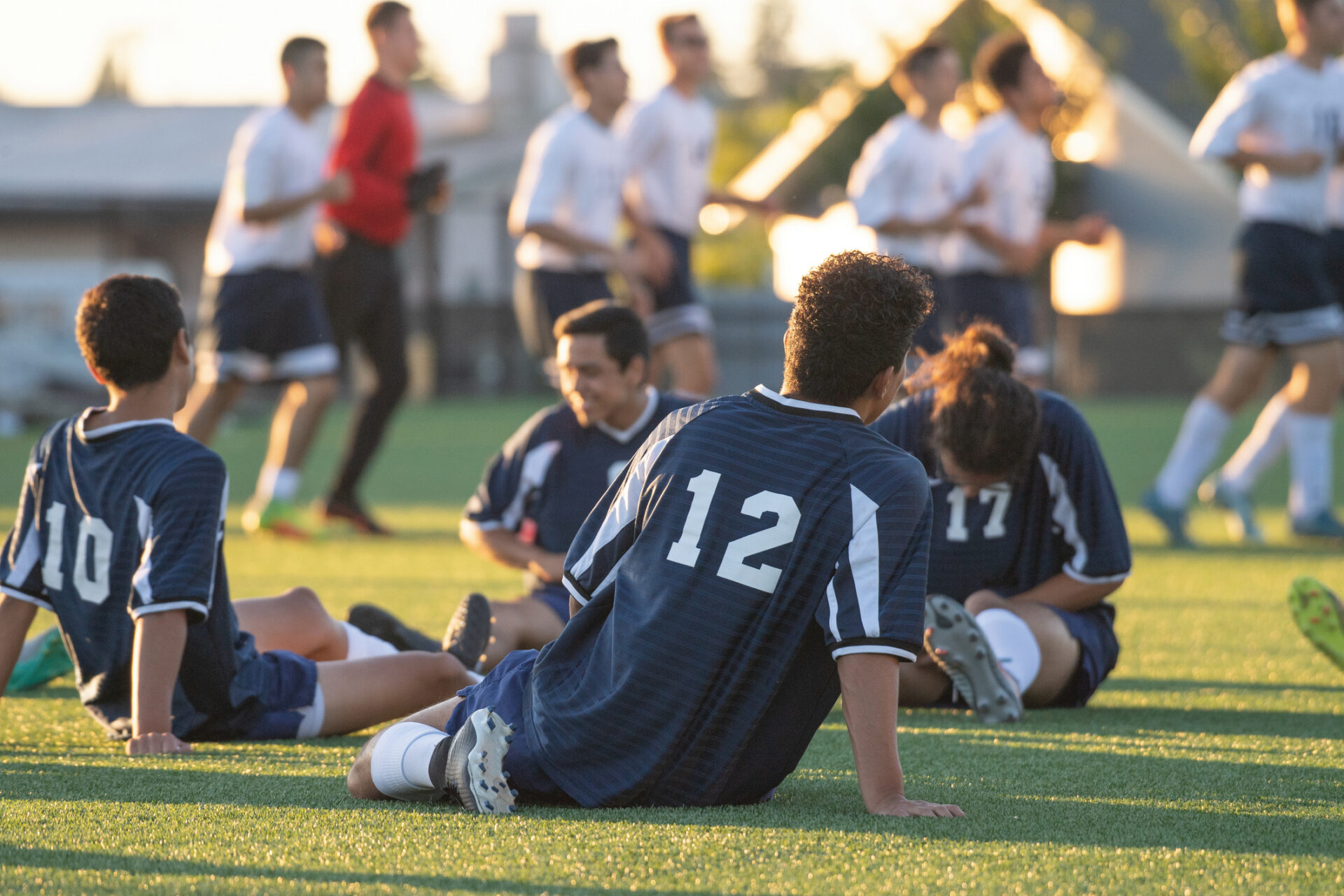
Players don’t just run and fall on fields, they sit and stretch on them, increasing contact with chemicals in artificial turf. Photo: iStock
At an April meeting, members of the scientific advisory panel pointed out that the absence of identified risks doesn’t necessarily mean synthetic turf is risk-free; they noted that data gaps and uncertainties around long-term exposure persist.
“If I were advising my friend on the school board, I would say I would try not to use this stuff because it does have known toxic chemicals,” said Dr. Amy Kyle, a professor at the University of California, Berkeley’s School of Public Health. “I agree it’s not a huge problem or a crisis, but am I sure it’s safe? No.”
Another point of contention is the alleged environmental benefits. While artificial turf advocates say they help keep more than 105 million tires out of landfills each year, researchers have raised concerns about how the fields themselves shed material into the environment. Both the crumb rubber and grass fibers wear away over time, releasing microplastics that spread into soil and waterways and can ultimately reach people, with health effects that scientists are still trying to figure out.
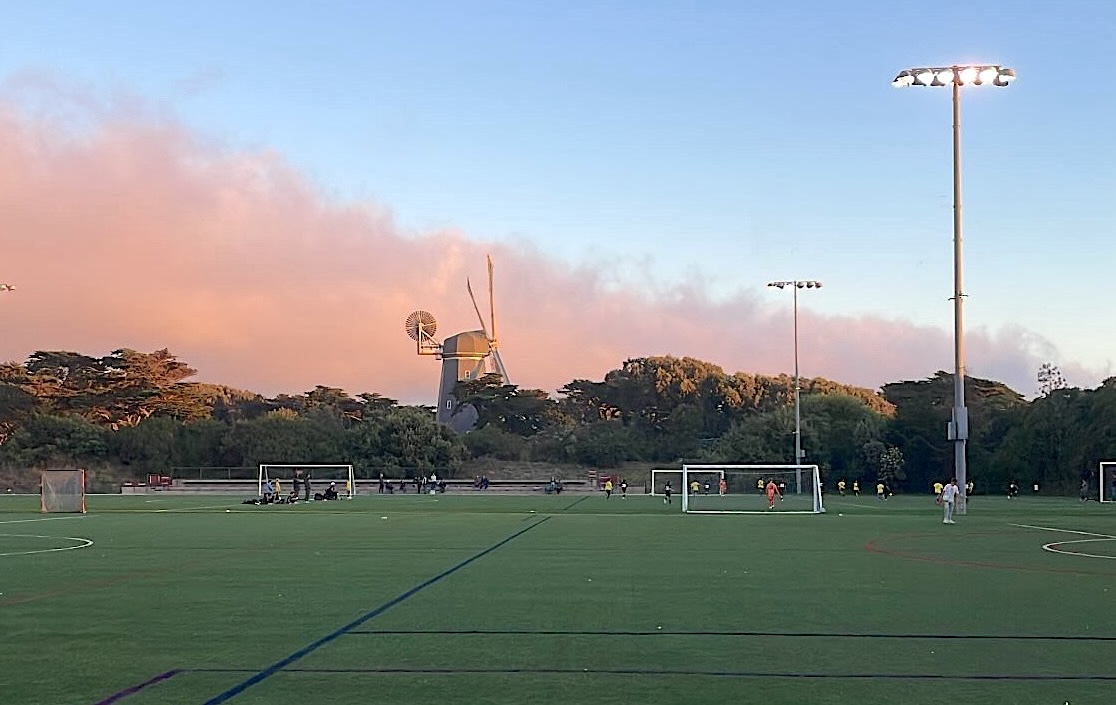
The City of San Francisco has steadily been converting its playing fields from grass to turf, most recently replacing the natural grass at Beach Chalet with this fake green shag. While gopher holes and poor maintanence can result in injuries, more infjuries are associated with astroturf than natural grass. Photo: Mikki Okamoto
Heat is another major worry. Artificial turf can reach extreme temperatures, especially during the sweltering summers of the Central Valley and Southern California. Some studies have recorded surface temperatures as high as 170 degrees — hot enough to cause burns, worsen dehydration, and increase the risk of injury.
Brian Feeley, an orthopedic surgeon and professor at the University of California, San Francisco, has also found that injuries, such as Achilles tendon tears and ACL ruptures — which have nearly ended the careers of worldwide soccer stars — are more common on artificial fields.
“Artificial turf does not absorb as much force for the player’s knee and ankle, which increases the risk of injury,” Feeley said. “Artificial turf also does not release cleats as easily and puts more strain on a player’s extremities through greater force and increased torque.”
So the next time you step on artificial turf, keep in mind that nothing has been settled yet, and this is a changing field that scientists, communities, and players are still trying to understand.