




El Cerrito Bets on Car-Free Living
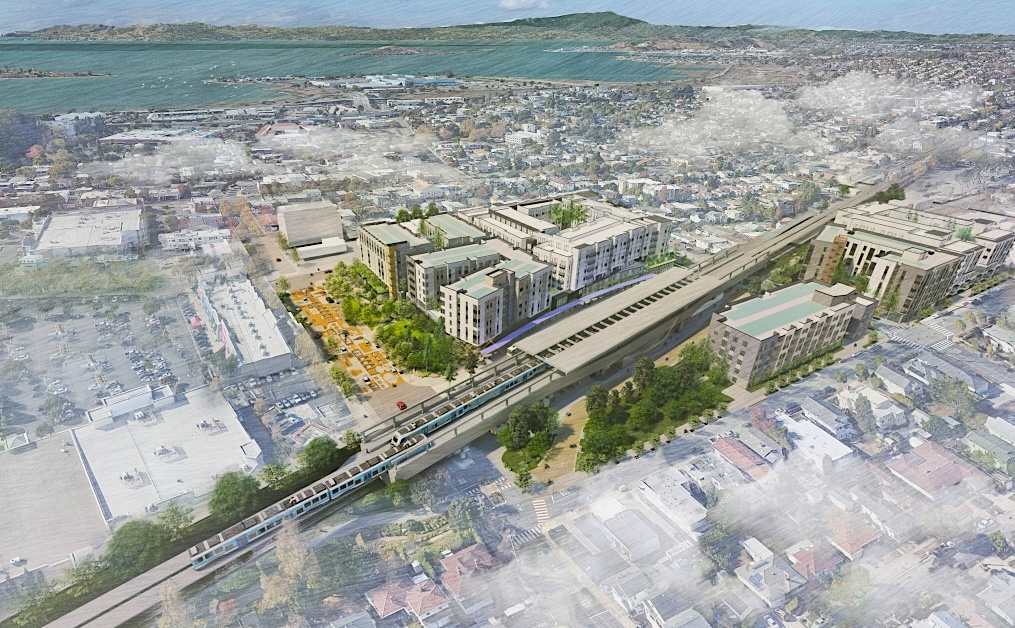
The East Bay city is building more than 700 housing units on BART parking lots.
For more than two years, I was one of the few in the Bay Area without a car.
I really didn’t need one. I took the bus, the train, or biked to grad school and work. There was a Lucky’s nearby for groceries, and a Trader Joe’s a few yards away from there, where I’d pick up whatever quirky, irresistible thing they were selling that week. A bookstore. A family-owned Vietnamese restaurant. A lauded dumpling place. And the most beautiful theater I’d ever seen, with a 1930s art-deco mural of dancing nymphs and a red velvet curtain veiling the screen. All within walking distance.
You might assume I lived in San Francisco, where nearly one in three households doesn’t own a car; or in Oakland, Berkeley, or somewhere in Alameda County. But no. This was in Contra Costa County, where the vast majority of households have a car, and my home was in southwest El Cerrito, where having one can actually be a choice.
Bay Area planners and officials have known this for a long time, and have for years planned a cleaner, car-free future for this area east of the little hill that gives the East Bay city its name. When its population exploded in the 1940s — fueled by wartime jobs at Richmond’s shipyards — El Cerrito became an emblem of postwar suburban development, and was known as the “City of Homes.”
Now, as planners across the region push back against that sprawling legacy and press for denser growth around transit corridors, El Cerrito is at the center of an urban development experiment. Six buildings with more than 700 housing units are expected to rise before the turn of the decade in parking lots surrounding the El Cerrito Plaza BART station, where I used to run to catch the train every morning, and where, later, I learned to drive. Beyond housing, the project aims to fully transform the area by giving El Cerrito something it’s never had: a downtown.
“We’re taking a big, empty sea of asphalt and turning it into nice places for people to live,” City Councilmember Lisa Motoyama says. “In El Cerrito, we don’t really have a downtown, so we hope that this becomes a gathering place.”
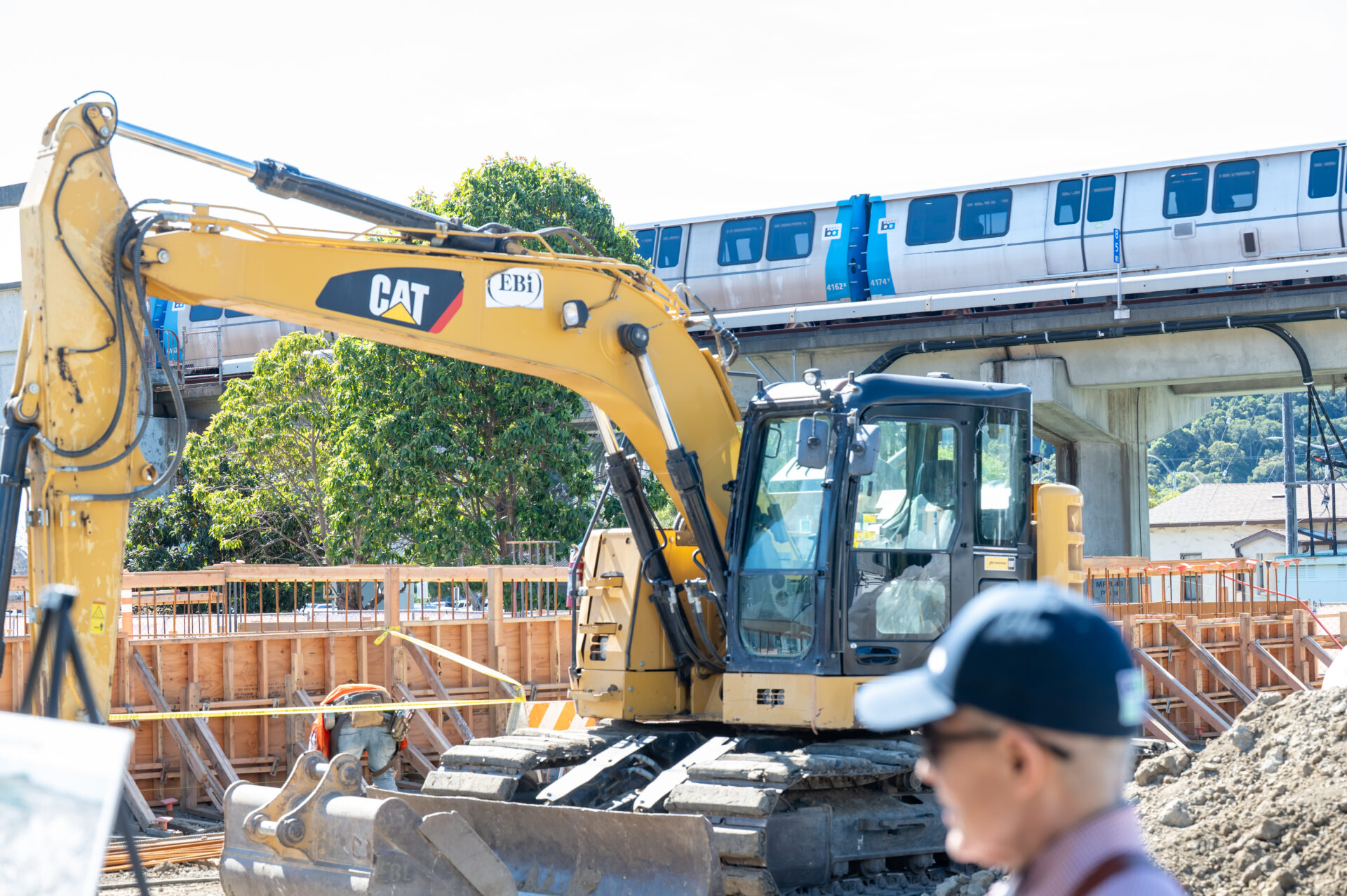
Groundbreaking for latest construction in March. Photo: Marcus Martinez
El Cerrito is one of the few cities in the region with two BART stations, and it’s tried for decades to capitalize on that by pushing for taller, denser development near those stations. In 2014, the city took serious steps to make that a reality by overhauling its development rules around the two train stations and San Pablo Avenue, the main artery connecting them. It was the concrete expression of the regional vision that the Metropolitan Transportation Commission and the Association of Bay Area Governments, now a combined agency (MTC-ABAG), had been pushing since 2008, when they established what they called “priority development areas” to both build more housing and reduce pollution by eliminating the need for cars.
Daniel Saver, MTC-ABAG’s deputy executive director for housing and energy, says those two goals are intertwined.
“Having more affordable housing is a part of the PDA program, but it’s also about having more housing near transit, because that’s more likely to actually reduce greenhouse gas emissions,” Saver says. “It’s also about creating more complete neighborhoods and more complete communities.”
That vision, however, has proved hard to translate into housing across the region. Karen Chapple, professor emerita of city and regional planning at UC Berkeley and director of the School of Cities at the University of Toronto, says the program has lacked the “carrots and sticks” needed to push cities to actually build.
“ABAG is a well-meaning agency but without many powers, without much funding, and without any way to punish cities that don’t collaborate,” she says. “That, if anything, has been the lesson: that you really need to have the power of the state of California.”
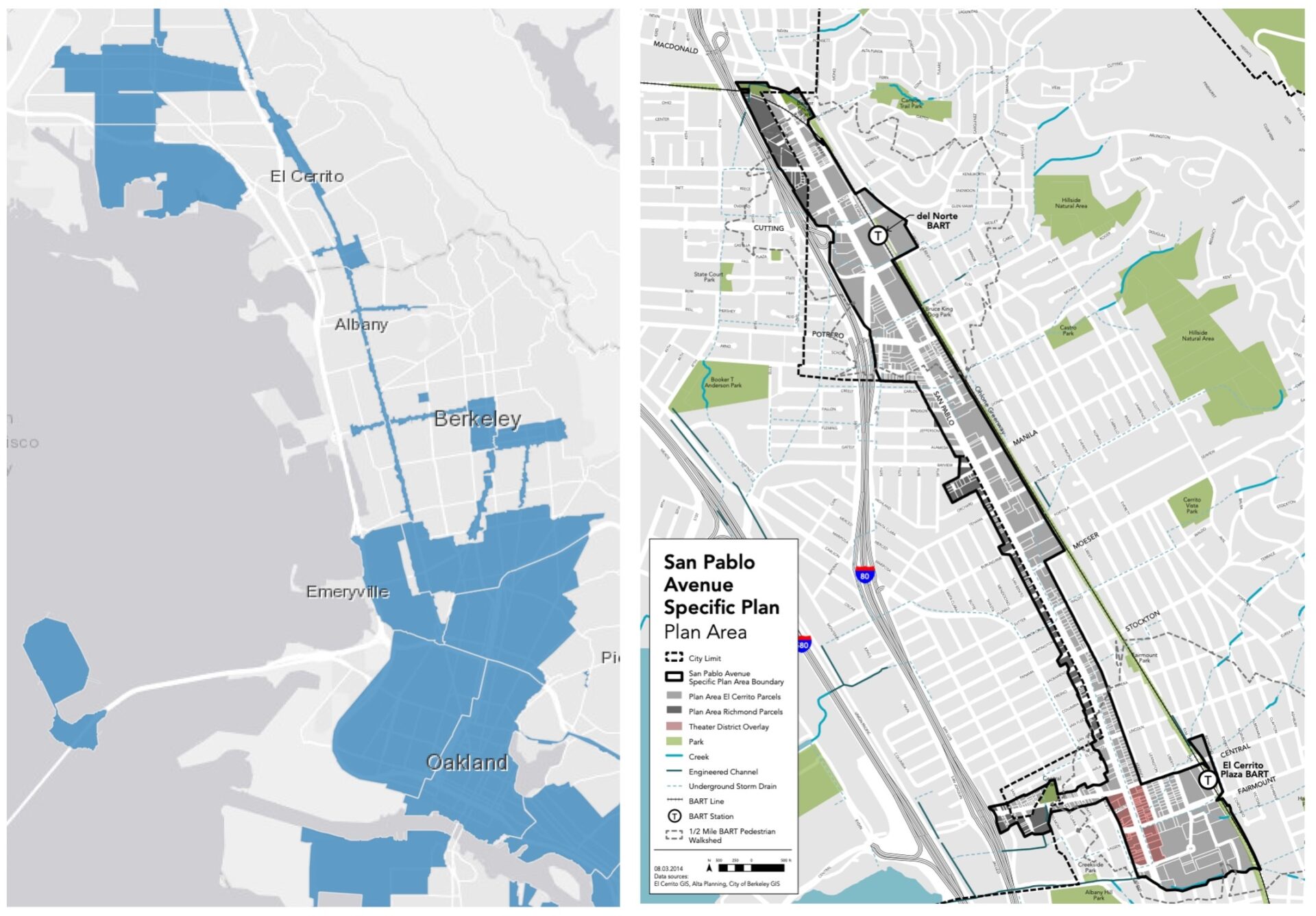
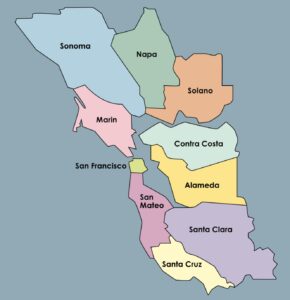
A map (right) of the San Pablo Avenue priority development area, with El Cerrito Plaza in the bottom right corner. Map (left) of surrounding PDAs in blue. Graphics: City of El Cerrito & MTC-ABAG
Unable to compel cities to build on their own, regional officials have been reshaping the program by conditioning funding on actual development and allowing MTC-ABAG to designate sites directly, rather than waiting for cities to volunteer them. To Saver, this shift represents a move toward real implementation and, more importantly, regionalism.
“This was in recognition of the fact that PDAs were not sufficient in the old model to get us towards our regional long-term goals,” he says (those goals including sufficient and efficient housing and transportation for all).
On March 5, Saver joined state, BART, and city officials at the groundbreaking for the first 70 affordable apartments at the El Cerrito Plaza BART station. As excavators dig and the first modular units begin taking shape, the project is already influencing the city’s political life. On June 2, El Cerrito voters will decide whether to fund a new public library through an annual parcel tax; if it passes, a 20,000-square-foot library on the ground floor of the BART development is among the options under consideration.
Former Councilmember Greg Lyman, who collected signatures in support of the measure, sees the library as the final touch on a not-so-distant future in which leaving the car at home would not only be possible, but also the smarter choice.
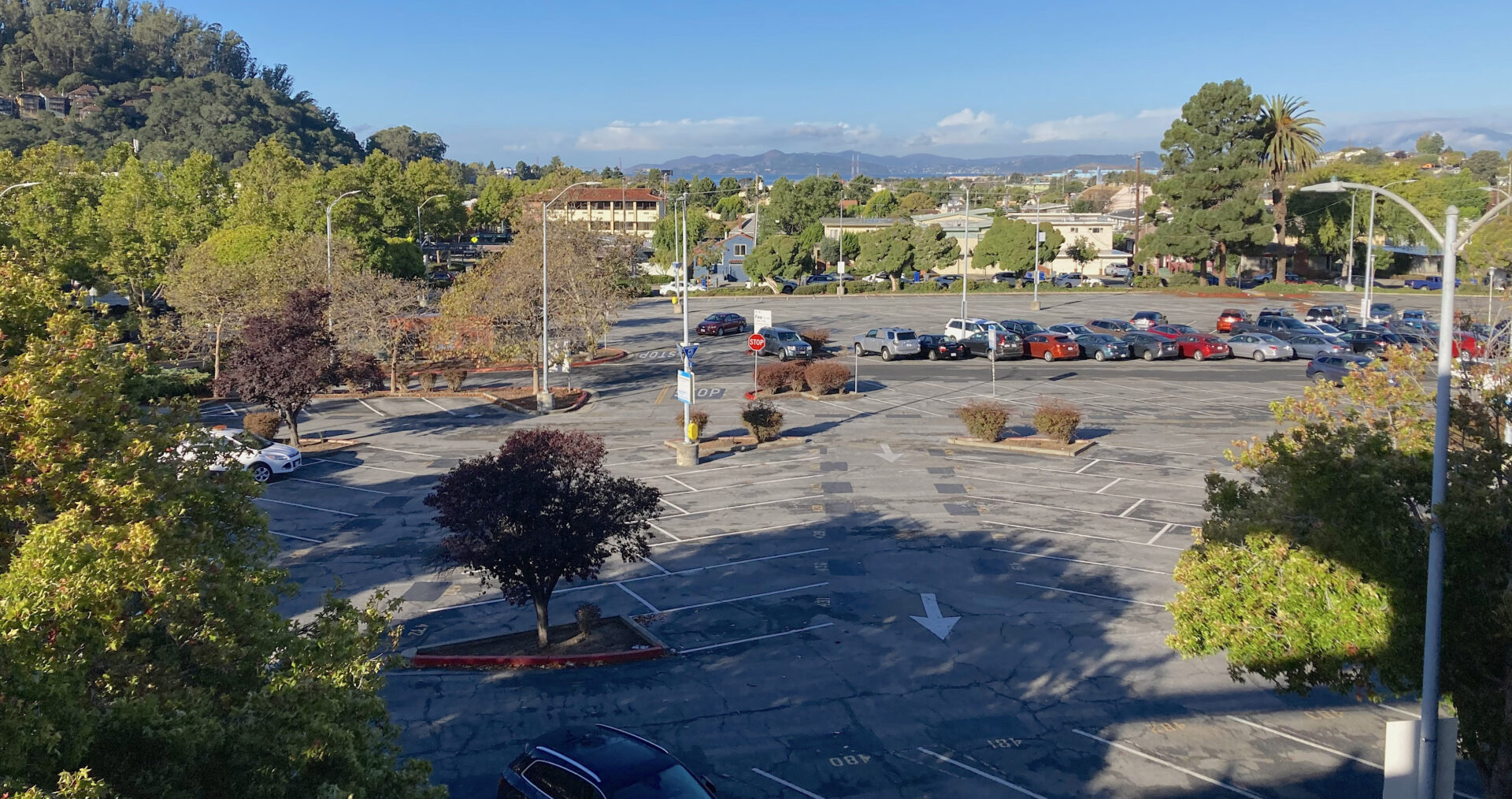
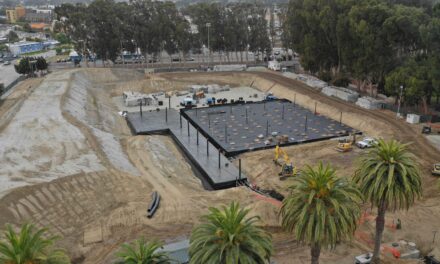
Current sea of asphalt at El Cerrito BART station. Photo: Juan Pablo Pérez-Burgos
“Somebody who lives within a quarter mile of El Cerrito del Norte station would go one stop, hit the library, maybe go to Trader Joe’s, pick up something at CVS, have lunch at Dave’s Hot Chicken, and then go home,” Lyman says. “So you’re reducing greenhouse gases because people who are coming to shop at Trader Joe’s, having a coffee at Starbucks, and going to the library are linking their trips.”
The Little Hill
When Rachel Melby moved to El Cerrito in 2015, she would take her newborn son for strolls along the hillside streets. Like most of her neighbors, she had a college degree and a white-collar job, and she arrived without knowing much of the place.
Those walks soon dissolved her assumption that the city was just a grid of dull, square mid-century boxes. Architecture had never been something she thought much about — she had a tech job in San Francisco — but before long, she found herself drawn to Victorian, Edwardian, and Tudor homes, and she started photographing and posting them on an Instagram account she called “the little hill,” the English translation of the Spanish El Cerrito.
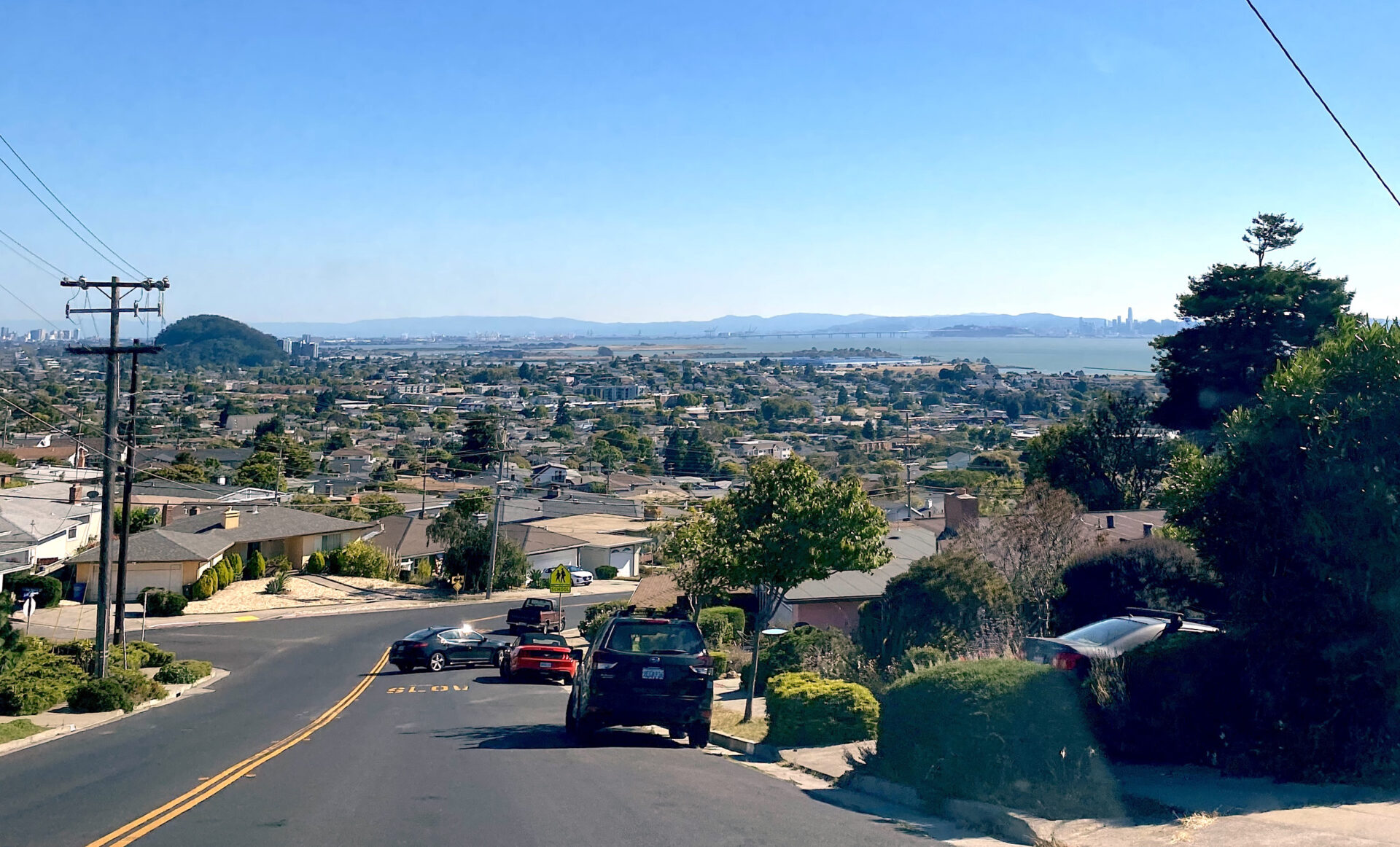
Views from El Cerrito’s hilly streets, with Albany Hill in the distance. Photo: Juan Pablo Pérez-Burgos
Through Melby, I began to learn more about the town I myself started calling home in 2022: about the shops that had once existed, the ones that remain, and the artists who drew murals along the Ohlone Greenway, the bike path that, below the BART tracks, connects Richmond, El Cerrito, Albany, and Berkeley. Even though I went to El Cerrito Plaza almost every day — for a latte, lunch, the Saturday farmers’ market, and to browse books — I didn’t know much about it. I wasn’t aware that the southern end of town, where the 700-plus planned units are bound to change the city’s face, had always been the city’s center of gravity.
“When you first come into town from the south [from the big Bay Area cities], it’s the first place you come to,” says David Weinstein, secretary of El Cerrito Historical Society. “Historically, it was always like that. Back in the day, streetcars would stop there.”
The history, though, began long before those streetcars. The Mexican government granted more than 19,000 acres to Don Francisco Castro in what is now El Cerrito in 1823. On that land, he built an adobe that, by the early 20th century, sat at the center of Bay Area nightlife.
“There were dozens of nightclubs ranging from really raunchy dives to places where you had to wear a tuxedo to even walk in,” Weinstein says. During World War II, the casino and dog track near the old adobe closed, and the city began its slow transition into what it would become: a suburb of Berkeley and San Francisco, or “the City of Homes.”
That new era got its monument in 1956, when two teenagers burned down the old adobe one Friday night just for kicks; on its ashes, El Cerrito Plaza was built.
Steve Price, a longtime El Cerrito resident and urban designer, has spent three decades trying to steer the city away from its “City of Homes” past. “Just homes? No neighborhood centers, no schools, no parks? It’s just insane for a community to condemn itself to that kind of future,” he says. He remembers the first plans to change that in the 1990s — including one produced by the Prince of Wales’s architecture school in 1997 — none of which materialized.
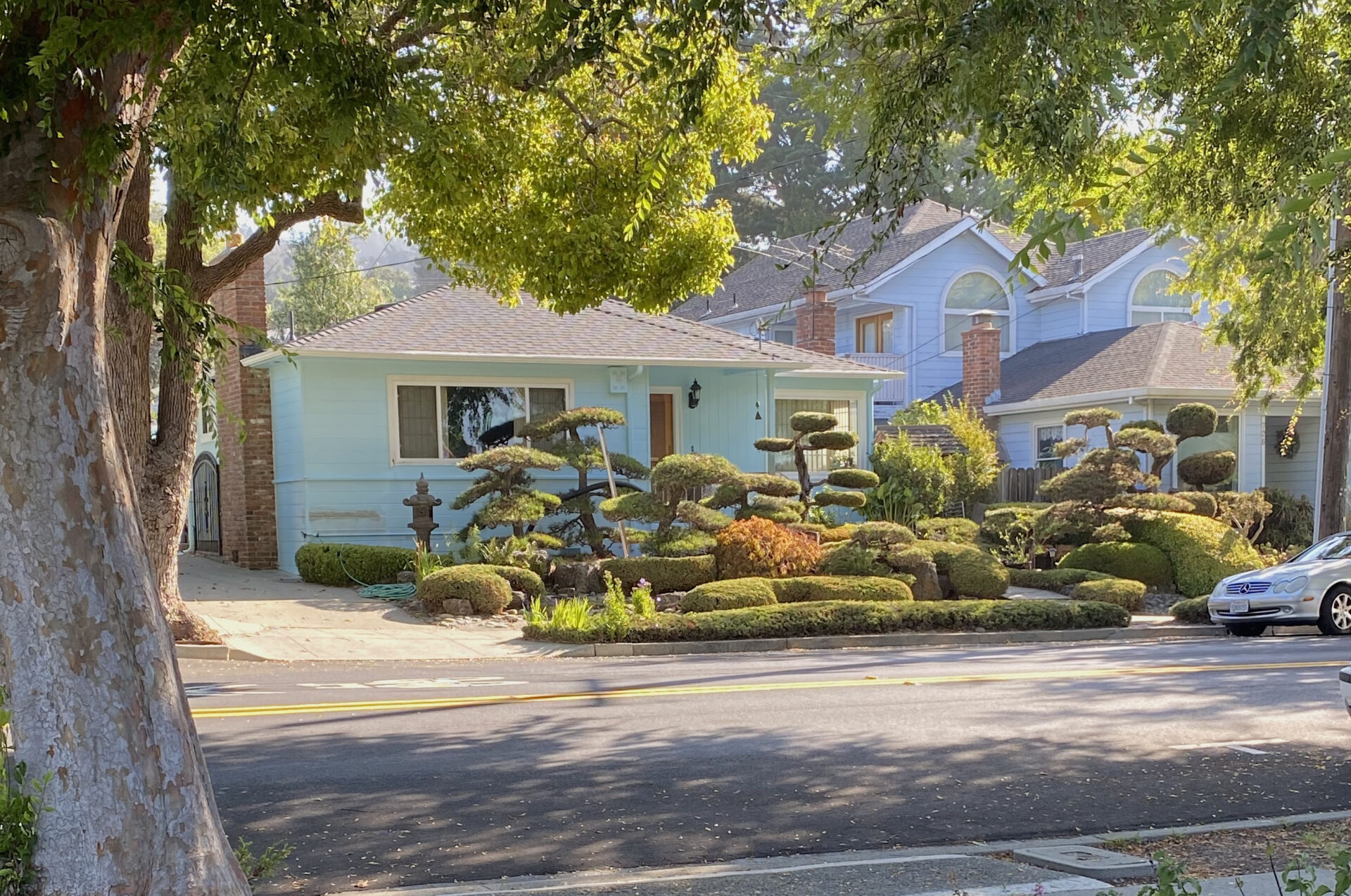
Single-family homes in El Cerrito, both an original small bungalow and a large remodel. Photo: Juan Pablo Pérez-Burgos
After the regional government worked with cities to choose the first priority development areas, it helped create the regulatory environment to encourage denser growth around transit. But the real turning point, according to El Cerrito Planning Manager Sean Moss, came in 2018, when Gov. Jerry Brown signed a law clearing the way for BART to build multi-family housing on its parking lots.
BART already had ambitions to develop the 250 acres of land it owns across the Bay Area, and had set a goal of building 20,000 units on its properties by 2040. But the 2018 law gave those ambitions teeth by requiring local jurisdictions to update their land use regulations to conform to BART’s standards. Combined with the transit-oriented plan that El Cerrito designed in 2014, Moss says the 2018 law “added fuel to the fire and streamlined the process” of advancing the roughly 700 units now in the works at El Cerrito Plaza.
BART hasn’t tracked the number of units built on its parking lots specifically since the law passed in 2018. But over the last 30+ years, the agency has completed 4,232 units around more than a dozen stations across the Bay Area, and another 4,040 are planned, including at the North Berkeley, Lake Merritt, West Oakland, and El Cerrito Plaza stops.
At the same time, Bay Area transit agencies are facing a severe financial crisis — as more people work from home, ridership has not returned to pre-pandemic levels, a problem that transit-oriented development could help address.
“When you have people who live near transit, they’re more likely to take transit,” Saver says. “That actually helps ridership, which helps raise money for the transit system.”
But producing enough of that housing has proved harder than anyone anticipated, even in a city that’s been striving to build.
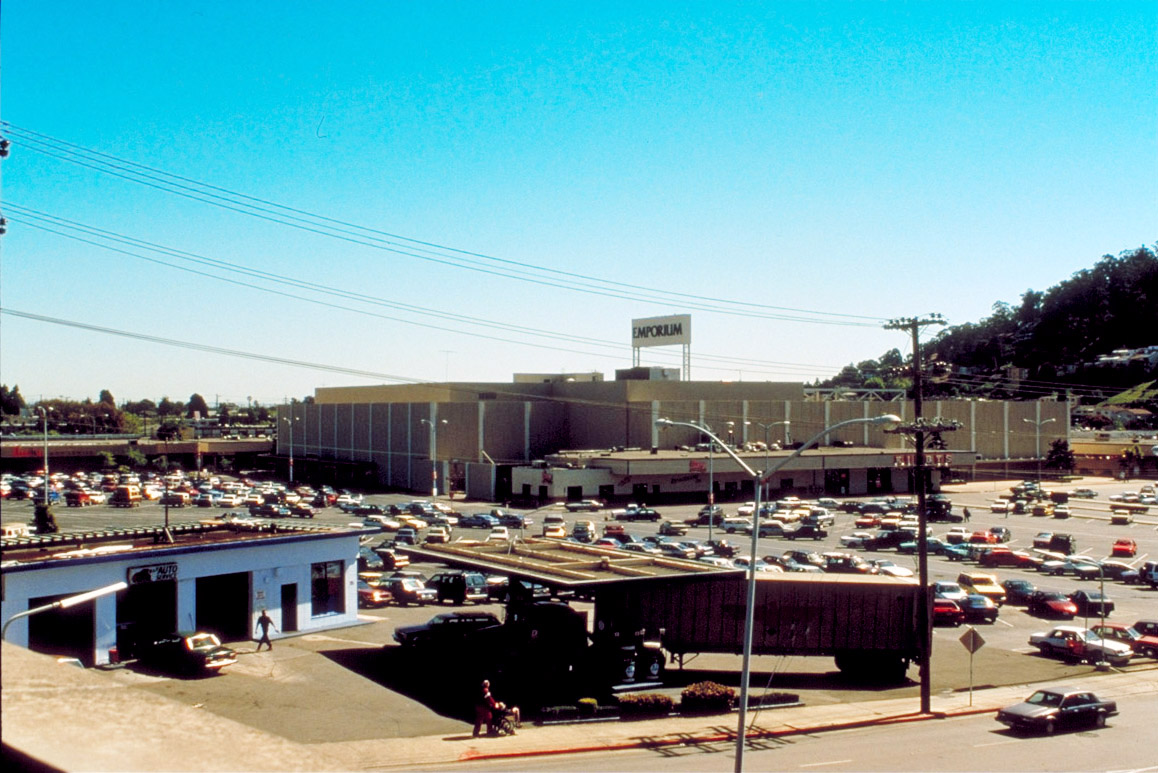
Car-culture of El Cerrito in the 1990s. Photo courtesy Steve Price
Different Layers of Housing
Walking down San Pablo Avenue today, you can see how much El Cerrito has changed in the last decade — and how much it hasn’t. El Cerrito is among 60 cities and counties that the state has designated as “prohousing.” But even that hasn’t been enough to build enough apartments for residents in need. Since the San Pablo Avenue Specific Plan was adopted 12 years ago, about 500 units have been built, and more than 1,700 have been entitled along the 208-acre corridor, which, after a 2022 update, is zoned for more than 4,200 units. The incentives, according to Chapple, the UC Berkeley regional planning professor, have not done enough.
“The market was sort of left on its own,” she says. “And the market said: ‘Well, we can probably sustain a couple thousand units on San Pablo, but that’s about it.’”
Things get more complicated when it comes to affordable housing. The problem, as El Cerrito Councilmember Motoyama puts it, is that it costs the same to produce as any other housing.
“The wood costs the same, the windows cost the same, the walls cost the same, and the contractor and the architect cost the same,” she says. Without a mandate or subsidy, there’s no incentive for developers to charge less. That’s why experts have noted that, to build more affordable units, you need the strong arm of the state — its sticks and its carrots.
“If you don’t mandate affordability, it doesn’t happen,” says Rachel Brahinsky, an urban and public affairs professor at the University of San Francisco.
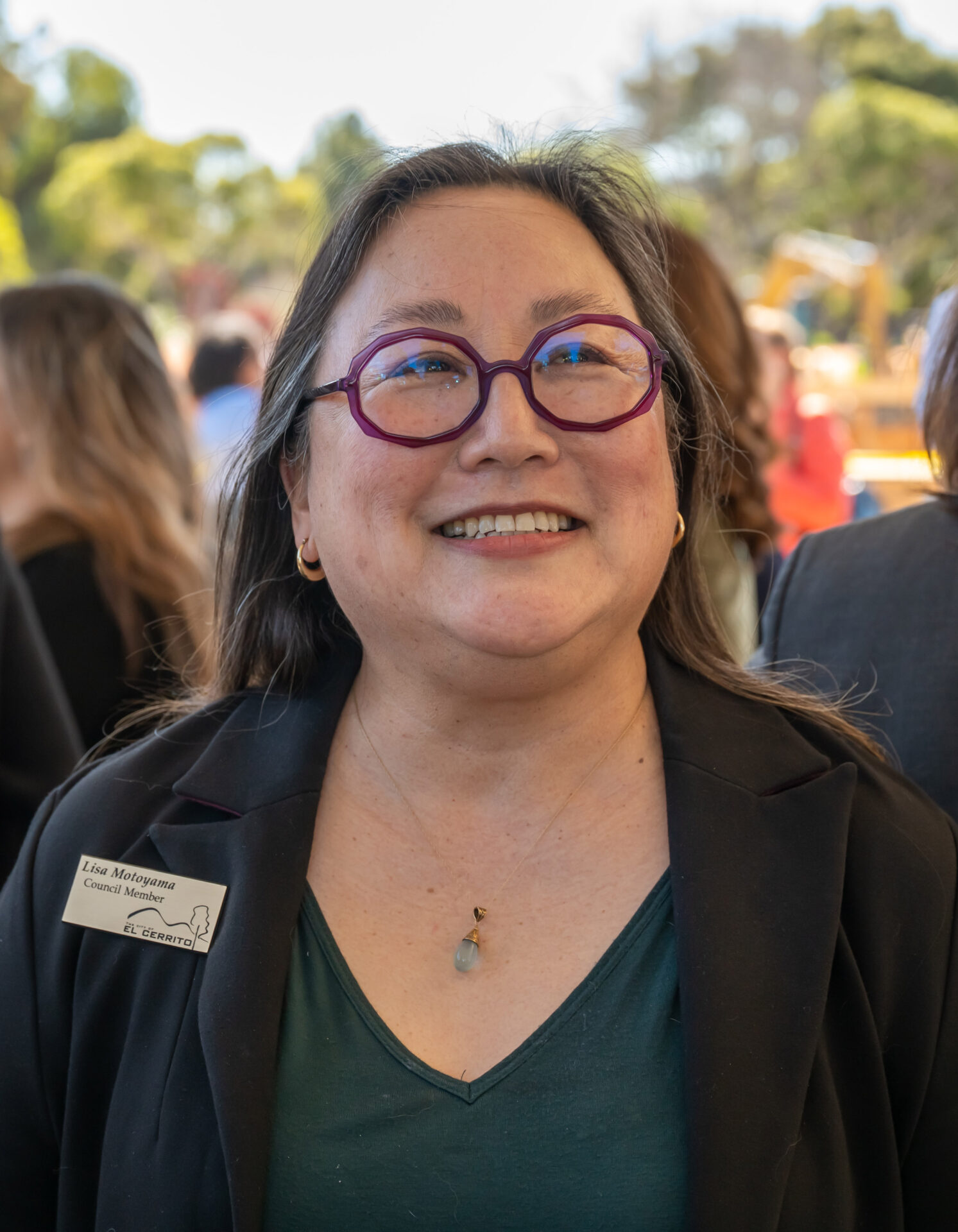
Councilmember Lisa Motoyama at the El Cerrito Plaza groundbreaking. Photo: Marcus Martinez
The El Cerrito Plaza project is the result of the city’s own push to build more, combined with regional and state efforts. The first of the six buildings, now under construction, will contain nearly 70 affordable units backed by a $39 million state grant and $10 million from ABAG during the planning phases. The project also aims to be a model for what transit-oriented development should look like in a climate crisis: all-electric buildings with no natural gas hook-ups, docks for 275 bikes, and more than half the units built through off-site modular factory construction, which reduces waste, shortens timelines, and cuts the carbon footprint. Yet the first building won’t be completed until 2027, despite planning beginning in 2019. The remaining five buildings are expected by 2030, though their future remains tied to the ability of developers to secure financing in a market where construction costs and interest rates have made even approved projects difficult to build.
“El Cerrito Plaza actually shows how long it takes, and how many different layers you have to touch to make it real,” says Saver. “Long ago, it was designated as a PDA. Then it got a planning grant. Then they changed the zoning. Then they started building homes with additional funding.”
Eight years to build 700 units is the new normal in California, but it’s a pace that shows how deep the housing crisis is. For those of us who grew up somewhere else, it’s almost unfathomable. Every time I visit my hometown of Bogotá — the capital of Colombia that has a similar population to the Bay Area but a fraction of its resources — I pass construction sites. The city doesn’t face a housing crisis, and buildings are going up and are completed within a year or two. Within a block of my parents’ apartment, I can count at least three eight-story buildings, each with more than 20 units, built in the last 30 years. Last year alone, nearly 50,000 units broke ground in Bogotá, more than 60% of them subsidized for lower-income families.
Of course, labor and materials are cheaper in Bogotá. But the entire Bay Area — one of the wealthiest regions on Earth and an epicenter of the global economy — produced fewer than 20,000 units in 2024, according to MTC.
“It’s harder to get financing for market-rate projects,” Saver says. “Even fully entitled projects where the city’s done everything it can, a lot of them are not getting built because costs are too high.”
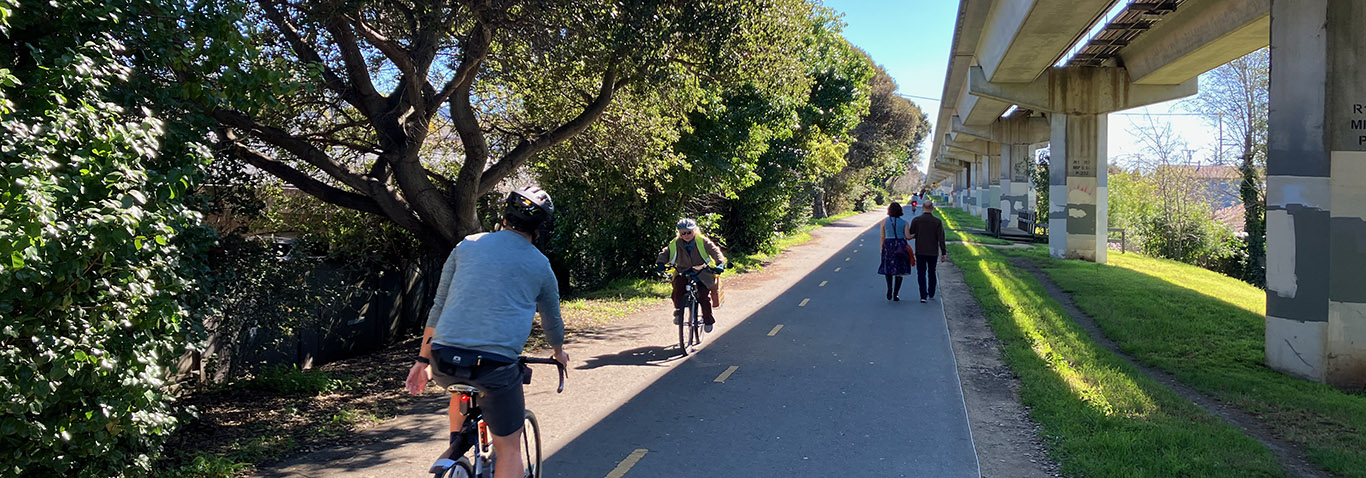
Cyclists on the El Cerrito Greenway. Photo: Steve Price
Still, El Cerrito made it work, and with the first shovel in the ground, the project has already divided the city. Some worry about parking, traffic, and the library’s cost. Others, like Melby, believe El Cerrito is on “the precipice of a great comeback.”
In August, I’ll return home after a short period away, and there will be a building going up next to the Ohlone Greenway, where I used to — and will continue to — run every weekend. For Steve Price, the new buildings will bring more people to the bike path he sees as the highway of the walkable future he has spent decades pushing for.
“It’s going to be more people on the greenway going back and forth,” he says. “All kinds of people from all kinds of ethnicities and nationalities; it will really make you feel like you’re part of the human community.”