



Oakland High Schoolers Sample Local Kayaking

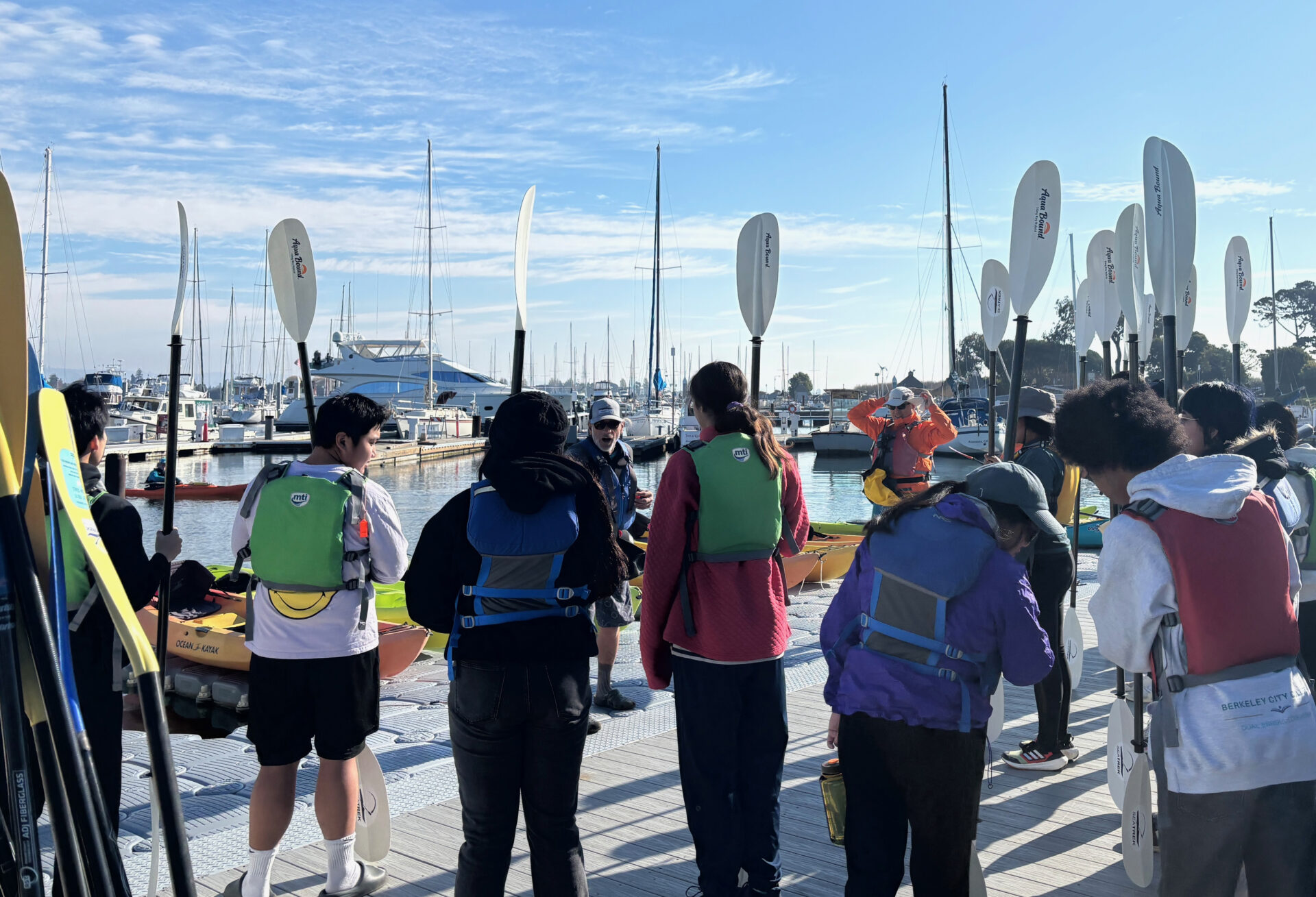
Two AC Transit bus rides and a mile walk later, 14 Oakland High School students arrived at Ballena Bay in Alameda on a sunny but crisp Thursday morning this fall.
The students buzzed with excitement, ready to swap their desk chairs for kayaks as the morning’s lesson escaped the classroom walls and onto the water. Aya Allen, who teaches sophomores and seniors at the high school, passed the baton over to SeaTrek staff, who geared the group up with life jackets and paddles, followed by instructions on water safety and kayaking fundamentals.
More than half the students had never been kayaking before.
Once everyone was ready, the SeaTrek guides led the students down to the dock, helped them into kayaks, and pushed them into the water.
In between playing games like sharks and minnows, screaming at the seals that swam by, and paddling out of the harbor to see the San Francisco skyline, students learned how to work together as a team and about the natural environment around them.
For Oakland High senior Saraby, the trip initially sparked a lot of nerves because she had never been kayaking before. “I thought I was going to fall,” she says. “In the morning, I was actually doubting if I should come on the field trip. But I’m really glad I did. It was really fun.”
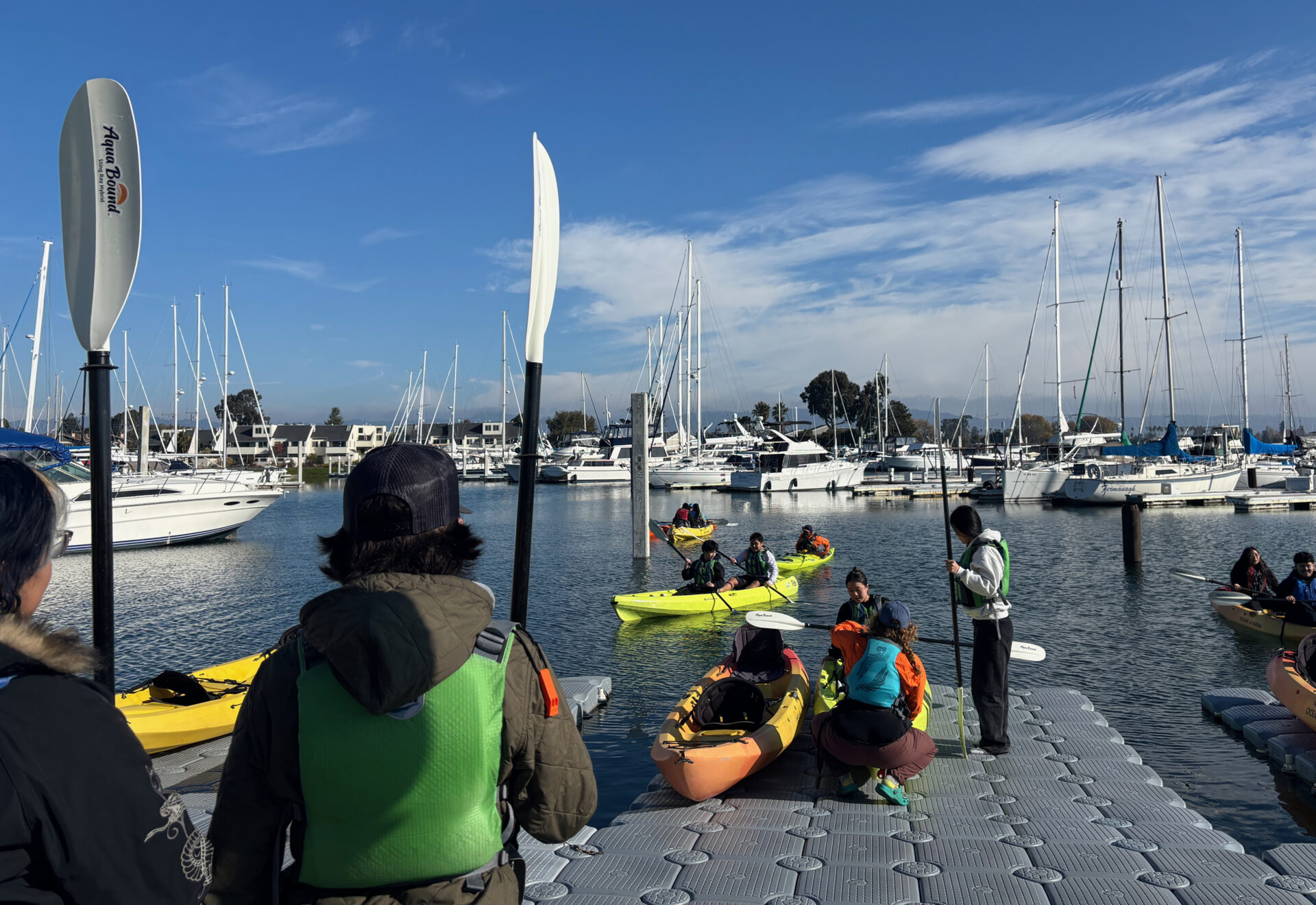
SeaTrek staff assist students into kayaks before pushing them out into the water. Photo: Riley Ramirez
Oakland Goes Outdoors, a program embedded within the Oakland Unified School District that provides accessible and equitable opportunities for Oakland youth to experience nature, organized and funded the outing.
Since 2018, the program has supported Oakland teachers and educators in taking students on all kinds of trips, such as kayaking, camping, hiking, backpacking, and rafting. Once teachers choose the activity best suited for their class and curriculum, Oakland Goes Outdoors provides transportation and covers other trip expenses, such as gear and materials, training, and additional personnel, even stipends for teachers and site leads.
“These experiences provide a really strong connection to academic lessons and phenomena that they’re learning in science,” says Kaitlin Levenstrong, executive director of Oakland Goes Outdoors. “It’s really meaningful to have hands-on, experiential-based education.”
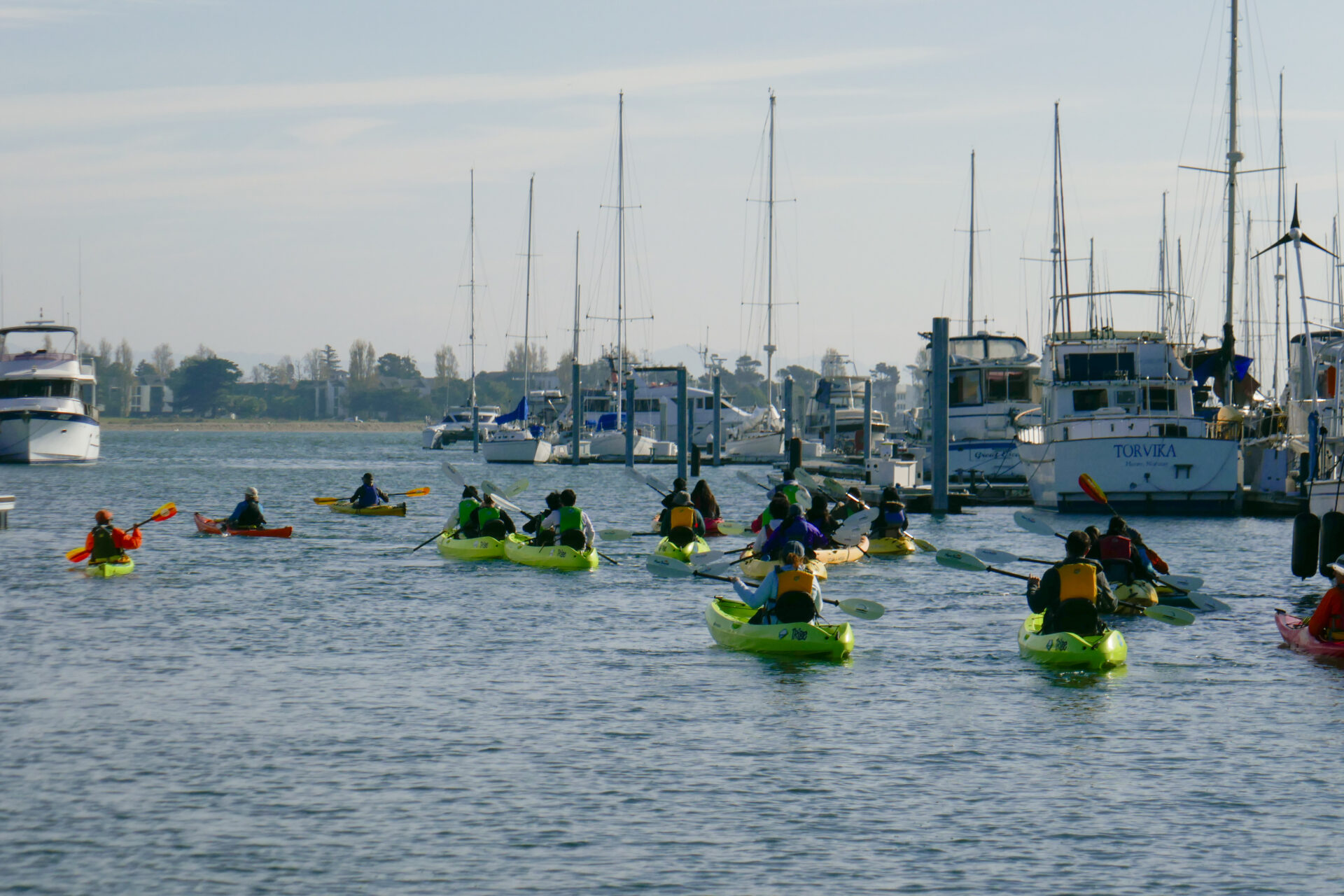
Photo: Riley Ramirez
The same day as the kayaking field trip in Alameda, the organization also supported a trip to Muir Woods for another group of Oakland High students. There, the group collected data on the ecosystem for their biology final projects.
Last year, Oakland Goes Outdoors served 23 schools and more than 6,200 students, helping plan and fund 268 trips across the greater Bay Area.
The program is funded primarily through a variety of private philanthropic sources, including the Riddell Family Fund, and state grants, including an Outdoor Equity Program grant from the California Natural Resource Agency. However, Jessica Oya, program coordinator for Oakland Goes Outdoors, says finding funding has become increasingly difficult over the past year.
“We’re in a climate right now where public funding is shrinking dramatically,” Oya says. “We are reducing the resources that we’re providing our public schools and public parks, and therefore it really requires more of our community to step in to help make these opportunities possible [for the students].”
Research has shown that spending time in nature is linked to an array of psychological, academic, and health benefits. But access to the outdoors is not equally distributed. Low-income and minority communities often lack readily available green space and recreational areas.
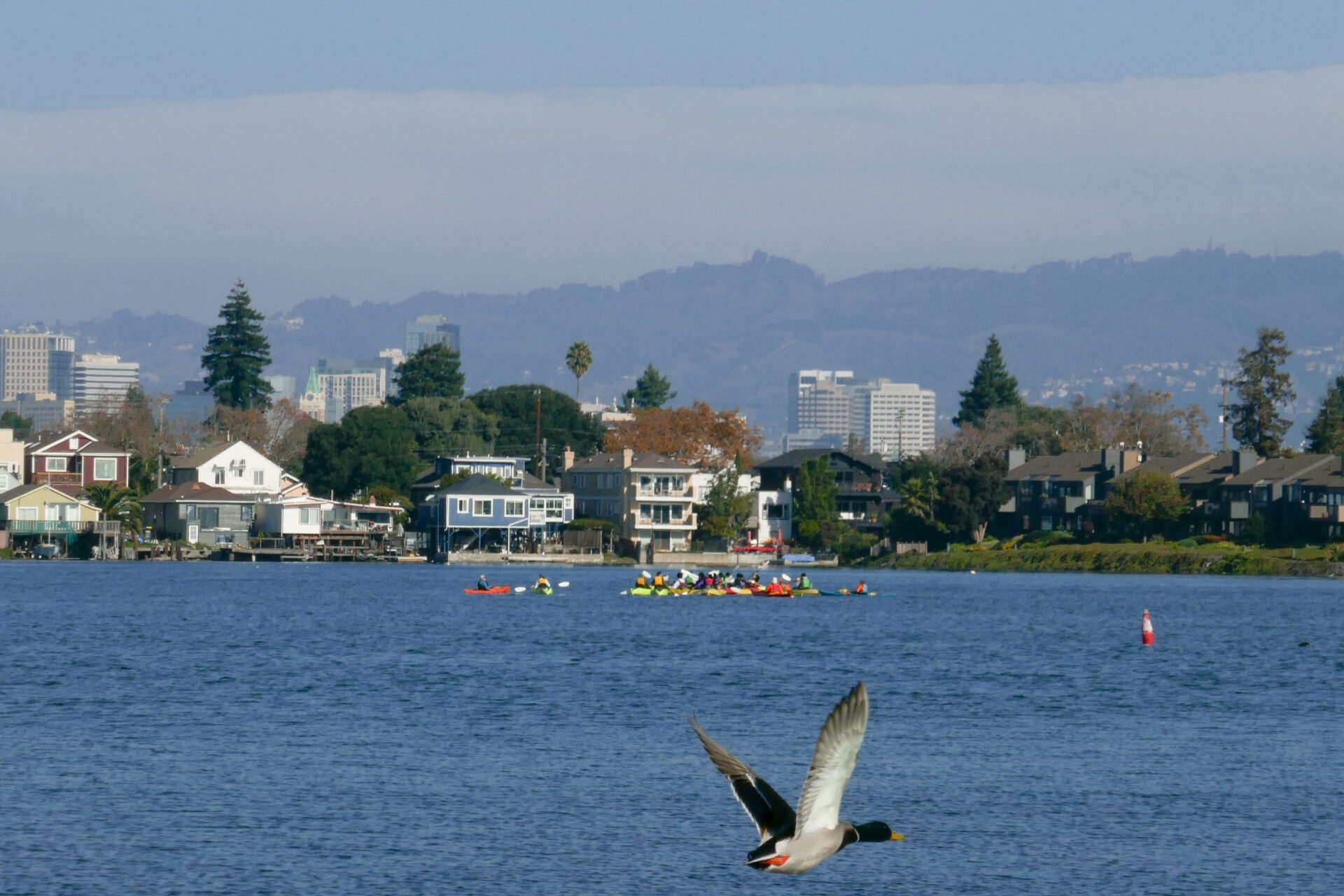
Oakland students see ducks and seals on their outdoor adventure. Photo: Riley Ramirez
Most of the schools that Oakland Goes Outdoors works with are Title I schools — meaning that at least 40% of the students are eligible for free or reduced-price meals. Many of these students face barriers to accessing outdoor recreation, and they also face environmental burdens that impact their health, like daily exposure to air pollution and intensified heat in the summer months.
By creating opportunities for kids to see and experience nature with their classmates and teachers in ways that they might not have otherwise, the organization, according to Levenstrong, is trying to show students that they do belong in the outdoor space — not only physically and recreationally, but also as future scientists, park stewards, naturalists, or environmental leaders.
“When kids spend meaningful time outdoors, they’re able to develop a personal connection to nature, which research shows is one of the strongest predictors of long-term climate awareness and care for the environment,” Levenstrong says. “I think that when someone feels joy or curiosity in a natural space, you’re building a bond that lasts far longer than a textbook lesson can.”
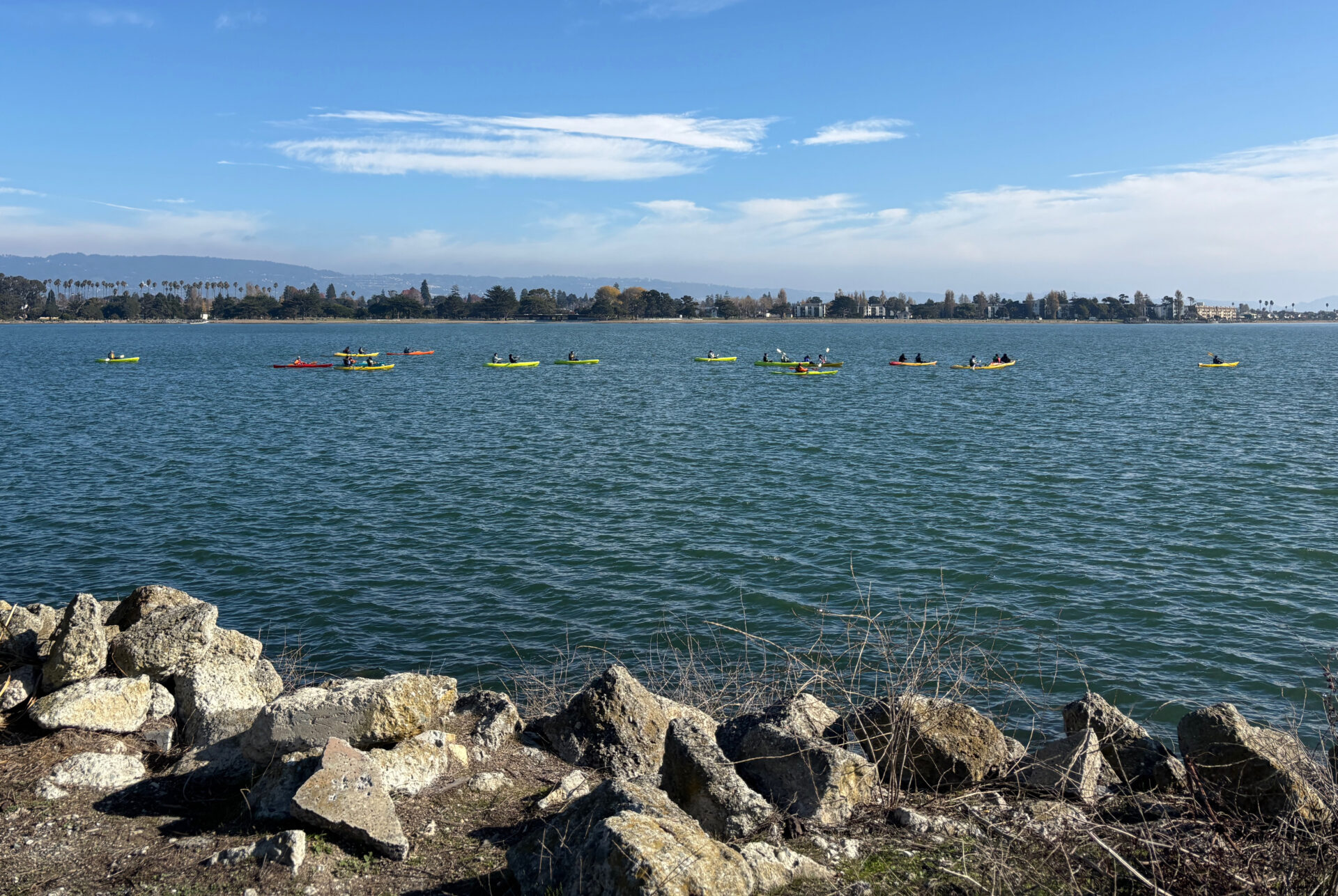
Photo: Riley Ramirez