Picturing Winter on Coyote Creek
In this photo essay, Megan King captures the Coyote Creek watershed swollen with water after winter storms. Last year, she explored something completely different: drought.
Read More
City & County Initiatives

Bay Area Regional Initiatives
Resilience Hub


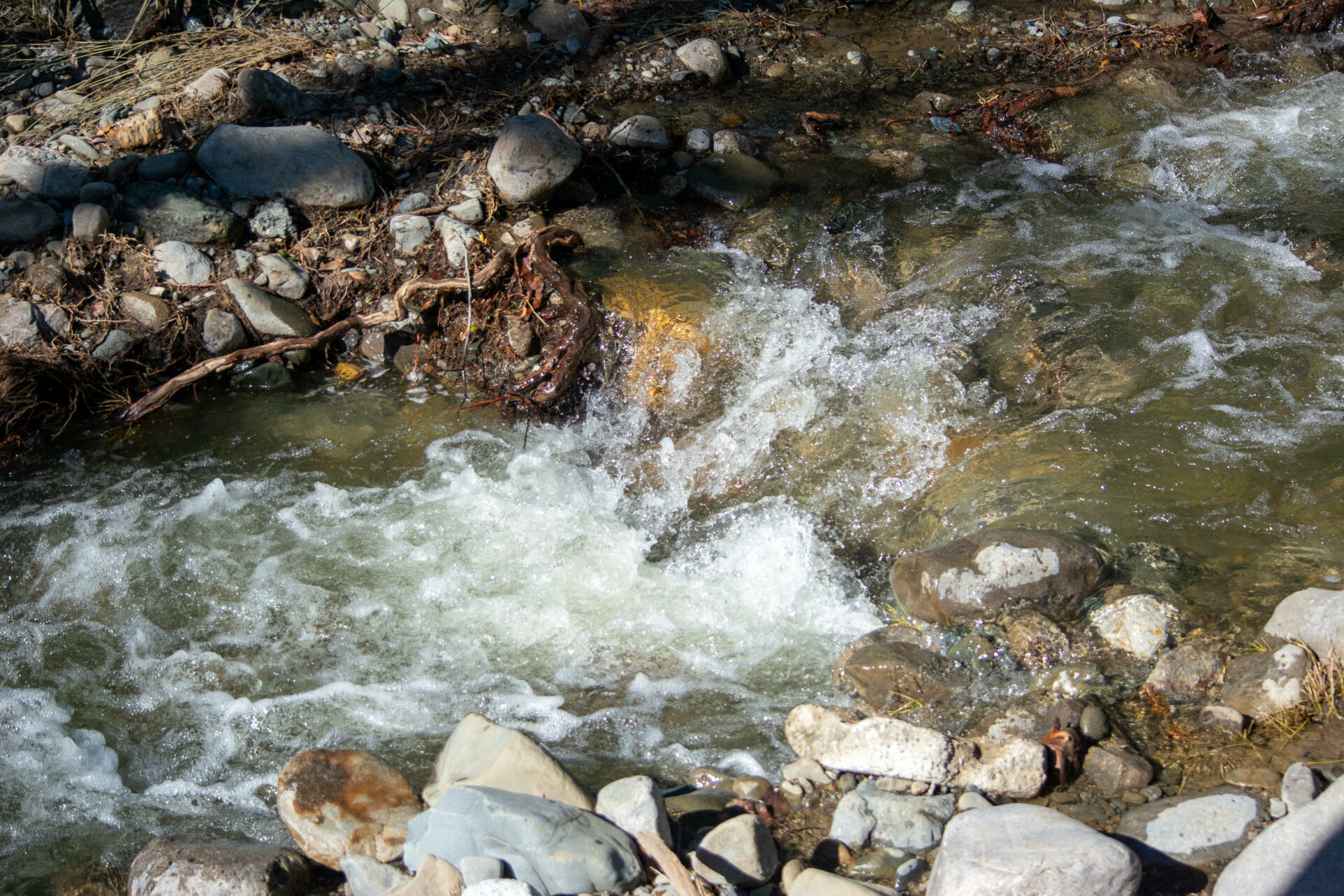
In this photo essay, Megan King captures the Coyote Creek watershed swollen with water after winter storms. Last year, she explored something completely different: drought.
Read More
Coastal erosion in Pacifica, drought in Brentwood, fires in the North Bay, flooding in Union City, and urban heat in San Jose. Anissa Foster takes us on a revealing virtual tour.
Read More
Carolyn, Skyline High School, Oakland
Read More
Climate change has a disproportionate impact on incarcerated Americans. Juan Moreno Haines, one of 2.3 million prisoners in the US, describes his experience.
Read More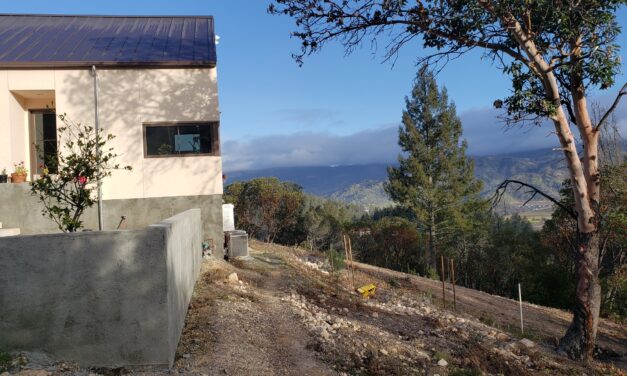
Oona Khan dreams about her home of the future, after losing her Malibu retreat to fire. Caught in a quagmire of legal battles with Southern California Edison, and surging construction costs, Khan is still waiting to start construction.
Read More
As climate change throws more extreme events at us, isn’t it time to think bigger, bolder, further ahead? Six young architects draw climate-resilient castles.
Read More
How housing is built and who it is built for are not only equity questions, but also climate mitigation questions. When people can afford to live near their jobs, their emissions from commuting go down.
Read More
On a clear morning in January, a group of tide worshippers gathered at the Santa Monica Pier to “celebrate the ocean and build our climate community,” said Laurene von Klan.
Read More
When we fled the house in the Santa Cruz mountains that we had been living in for just nine months, we knew exactly two of our neighbors.
Read More
In Part 1 FIRE, KneeDeep explores where to expect debris flows from burn scars, how one neighborhood became fire wise, and what schools are doing to become safe havens.
Read More
Typical flood protections rely on engineered structures. But there’s a new push at the national level of the US Army Corps of Engineers to prioritize working with nature. Storm surge plans currently underway in New York, Miami and San Francisco highlight a range of nature-based fixes.
Read More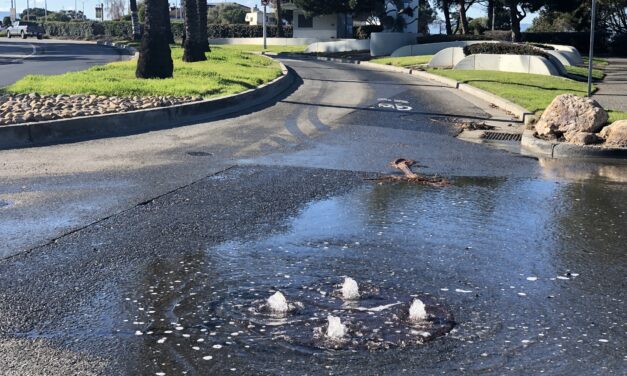
As Bay Area residents kayaked through flooded streets and bailed out buildings during California’s recent storms, they faced not only bursting creeks and pouring rain but also rising groundwater.
Read More
In November 2022 San Rafael launched a resilience planning project that has community-based organizations playing an active role in decision-making.
Read More
An Army Corps storm surge and flood plan for the New-York-New Jersey waterfront, now going through a public comment period, could be the most far-reaching coastal resilience project the region has seen thus far. The preferred alternative, however, is leaving advocates and community groups questioning if all the pieces will ever fit together.
Read More
The 14 graduates of the inaugural 2021 Oakland Shoreline Leadership Academy have new skills to confront the rising tide head-on. “It’s completely changed how I look at the environment,” confesses Academy alum Shy Walker.
Read More
It’s hard for me to imagine a scarier name for weather than bomb cyclone — the kind of California experienced on January 4, 2023 — and in the days leading up to the storm, the media frenzy amped up my fears even more. Next, PG&E and my internet provider warned me of service outages. Then, Governor Newsom proclaimed a state of emergency.
Read More
Grimes and Belvedere were the only two northern California towns that FEMA shortlisted this year for flood prevention funding. But flood protection is often more easily planned than done.
Read More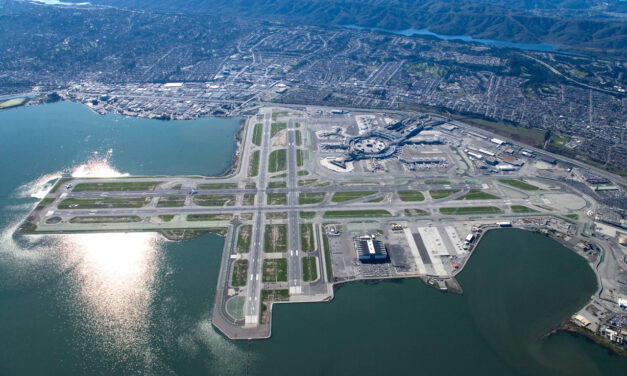
A plan to protect SFO could become a critical link in a chain of resilience projects along the San Mateo County bayshore. But projects that cross jurisdictional borders, get complicated.
Read More
We moved to Washington to be free of the smoke, but apparently we can’t escape climate change.
Read More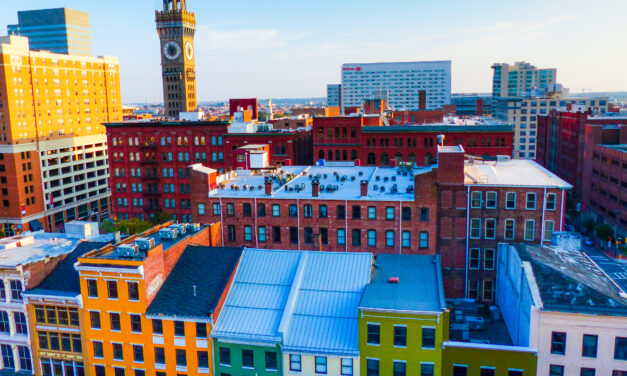
More than 800 climate adaptation professionals went to the national forum in October. KneeDeep asked attendees from the Bay Area for their takeaways.
Read More
Suisun City has been exploring ways to increase its resiliency to sea level rise and storm surges, including updating infrastructure, building an ecotone levee, and holding a resiliency workshop.
Read More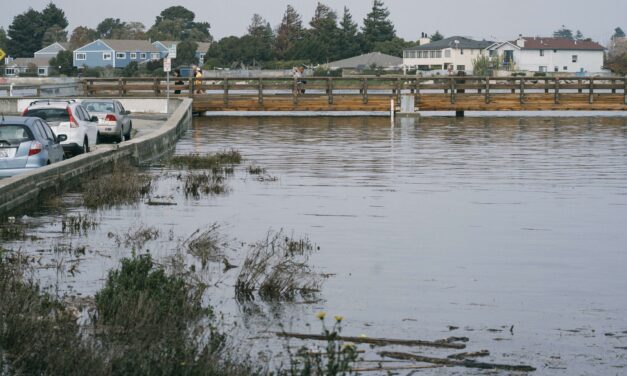
On an overcast June afternoon at Bay Farm Island’s Veterans Court, Danielle Mieler explains that if it weren’t for low tide, water might be at her feet.
Read More
The ironies pressed in on me: Here I am on a plane, helping to destroy the planet for a vacation, while reading Naomi Klein’s latest climate crisis book ON FIRE.
Read More
In the era of global warming, an invisible force, as primal as atmospheric chemistry, is coming to bear on human pocketbooks. Even if you don’t believe in climate change, insurance companies do.
Read More
To get the basics of pricing the risks of climate change, you could do worse than to talk to Dag Lohmann. He knows just how much creeping climate change is changing insurance arithmetic.
Read More
New Jersey’s Blue Acres program buys homes in flood-prone areas and converts them to open space. This not only moves frontline residents out of danger, but also protects neighbors.
Read More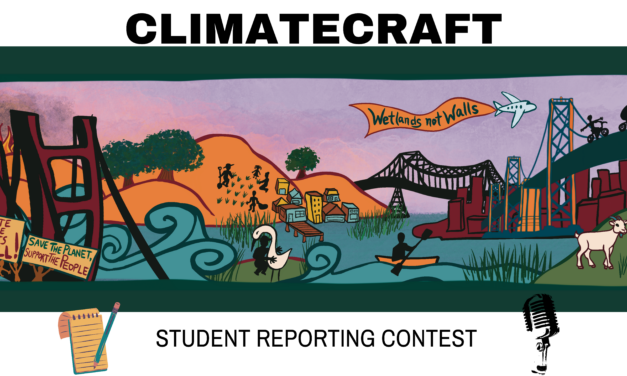
KneeDeep is seeking submissions for ClimateCraft, our college student climate reporting contest, in multimedia and written categories.
Read More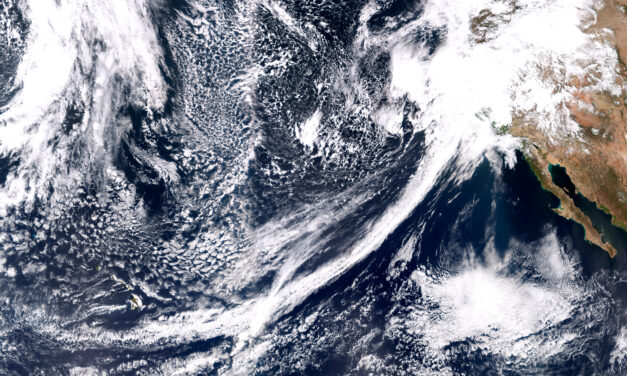
In California, our fate swings from drought to floods, depending largely on whether or not we get rainstorms called atmospheric rivers.
Read More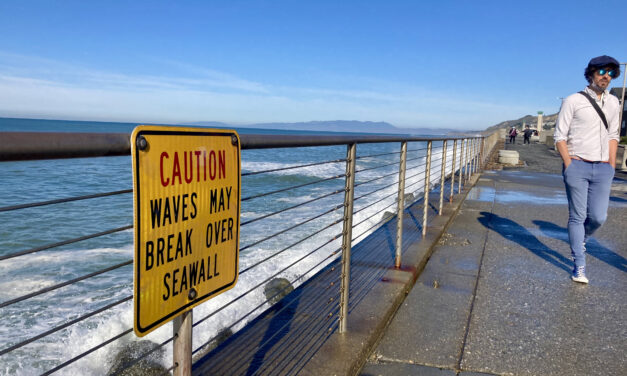
“Retreat can conjure failure, and nobody wants to be managed,” explained the study’s lead author Amanda Stolz at the California Social Coast Forum this March. Part of the problem is the term itself. One Pacifica resident quoted in the study commented, “Managed retreat’ is a code word for give up — on our homes and the town itself.”
Read More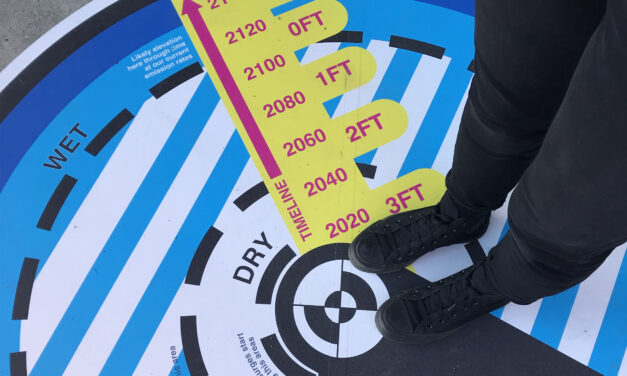
I set out for Heron’s Head Park on an early March morning. To my surprise, I had never heard of, nor visited, this site on the southeastern bayshore in my 20-plus years growing up and living as a visual artist in San Francisco.
Read More
Scientists are now more confident we should plan for up to a foot of sea-level rise on the Pacific Coast by 2050 than they were the last time they did the math.
Read More
Maladaptation, and failing to adapt in time, can be almost as dangerous as climate change.
Read More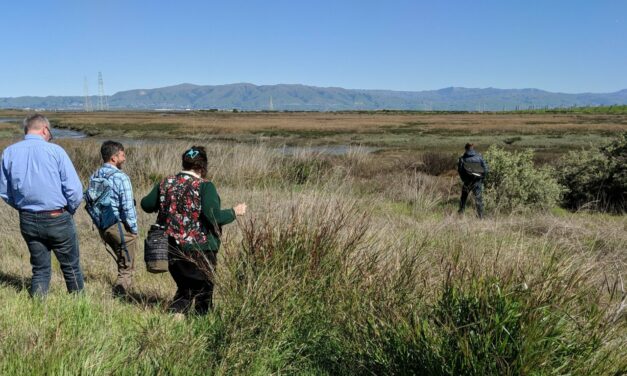
The specter of sea level rise, perpetual drought, and disappearing wetlands has put many sizes and shapes of horizontal levee on the region’s shoreline adaptation maps. What’s next?
Read More
The historically underserved community of Marin City has struggled with inadequate infrastructure, as a result of poor city planning and a lack of resources. Now, on the frontlines of extreme weather events, the community is finding their own ways to handle the climate forces of today.
Read More
Los automóviles que ingresaban a la rampa de la autopista en Mill Valley zumbaban a través de cientos de metros de agua salada hasta los tobillos. Junto a la pista del Aeropuerto Internacional de San Francisco, el agua de la bahía brotaba hasta la carretera desde un desagüe pluvial.
Read More
Agencies in San Mateo and Sonoma count are floating new rules for development in flood and fire prone areas. “Where and how you build can be among the most important decisions that are made in any community,” said a FEMA official.
Read More
Suisun City has always had the waterfront and nearby wetlands at its heart but it won’t be long before the entire area is vulnerable to flooding from sea level rise.
Read More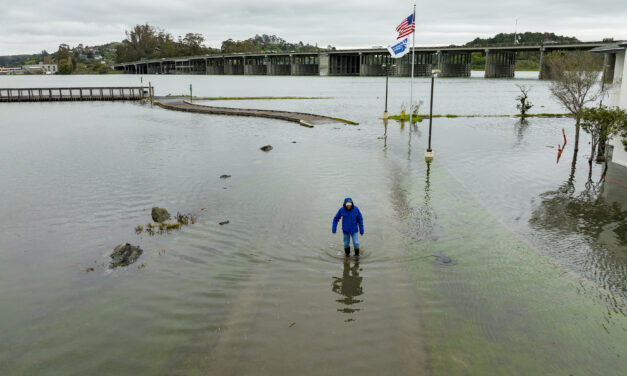
Cars entering the freeway ramp in Mill Valley whizzed through hundreds of feet of ankle-deep seawater. Next to the San Francisco International Airport runway, baywater burbled up into the road from a storm drain.
Read More
Wildlife need wild pathways — corridors of trees, streams, meadows, or other habitat that allows them to move through a landscape increasingly fragmented by human alteration. And as climate change upends formerly stable patterns, wildlife’s need for corridors must also shift, often in complex ways, in order for each species and ecosystem to remain resilient.
Read More
Worried about heat and how it disproportionately affects certain neighborhoods where you live? This resource gives a step-by-step guidance on how to integrate urban greening into general plans, along with a menu of policy examples, budget priorities, and model climate action plans to catalyze resilience action for citizens, municipalities, and community organizations.
Read More
Late October’s atmospheric river storm dumped record-breaking amounts of rain across the Bay Area, leading to flooding, fallen trees, mudslides, and other damage. Flood sirens whooped as residents in low-lying areas made preparations such as moving cars and stacking sandbags. Even so, there were reports of evacuations, street closures, and calls to shelter in place around the Bay, including in Santa Rosa, San Mateo, and San Anselmo.
Read More
After years of historical injustice, community action and vision, coupled with ballpark redevelopment opportunities, are raising East Oakland’s resilience.
Read More
The sun was just beginning to creep out of the fog on November 19th, when the kids and adults gathered at Graham Park in Marin City stopped what they were doing and pivoted to face the gazebo.
Read More
East Palo Alto faces escalating housing prices and declining affordability, gentrification, and a rising bay. Nuestra Casa is leading discussions about these issues with local parents, and paying them for their time.
Read More
October brought more than just a very welcome rainstorm to parched and fire-scarred California—it also saw big advances for three major efforts to help the state and the Bay Area plan for a climate-altered future.
Read More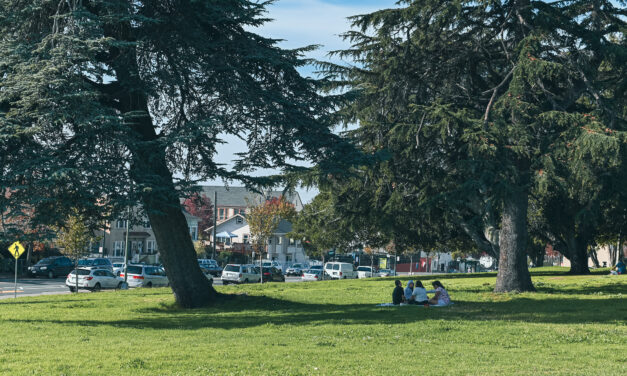
Trees do far more than add shade and property value to a city block; they can remove harmful pollutants from the air, reduce flooding, and perhaps most crucially in a changing climate, they can reduce heat. A 2019 investigation by NPR found that Oakland’s poorer neighborhoods are almost universally hotter than its richer regions (in fact, the city had one of the strongest correlations between heat and income in the country).
Read More
To help keep Highway 37 open despite heavy storms and rising tides, planners are assessing a wide range of options from elevating the road to rerouting it. But zeroing in on the right redesign may be trickier than anticipated. New research shows that, with sea level rise, protections for this troubled North Bay road can worsen flooding and economic damages as far away as the South Bay. The good news is that this work can also identify Highway 37 redesigns that avoid these catastrophic impacts.
Read More
While the weather is top of mind for many, others are riveted to congressional antics over the long-awaited massive spending bill designed to fix the nation’s roads, bridges, and broadband as September evaporates. We’ve rarely heard the word “infrastructure” bandied about so much. But for those devoted to designing all things climate-ready and habitat-friendly, infrastructure brings to mind oysters, marshes and willow-topped levees, not potholes.
Read More
With the aid of a $150,000 grant from the National Fish Wildlife Foundation, Santa Clara County embarked on a substantial new resilience planning effort this summer. In June the county’s Office of Sustainability convened the first meeting of the County Climate Collaborative, bringing together cities, CBOs and other key partners to identify adaptation and resilience priorities.
Read More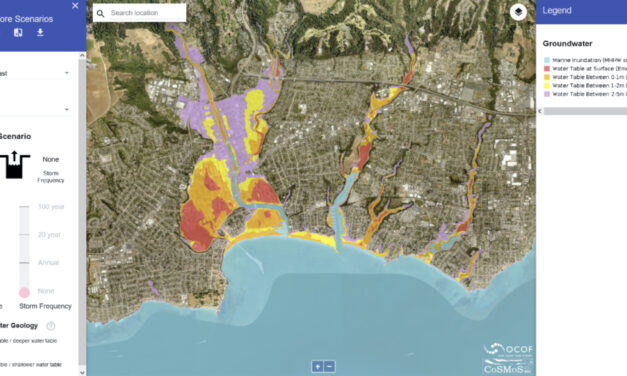
In the past decade sea level rise models have popped up faster than fungi after a storm: today it seems like every agency has one. However in August USGS geologist Patrick Barnard and colleagues at Point Blue Conservation Science unveiled a new feature of their Our Coast, Our Future (OCOF) tool that none of the others have: a projection of how sea level rise will impact local groundwater along the California coast.
Read More